
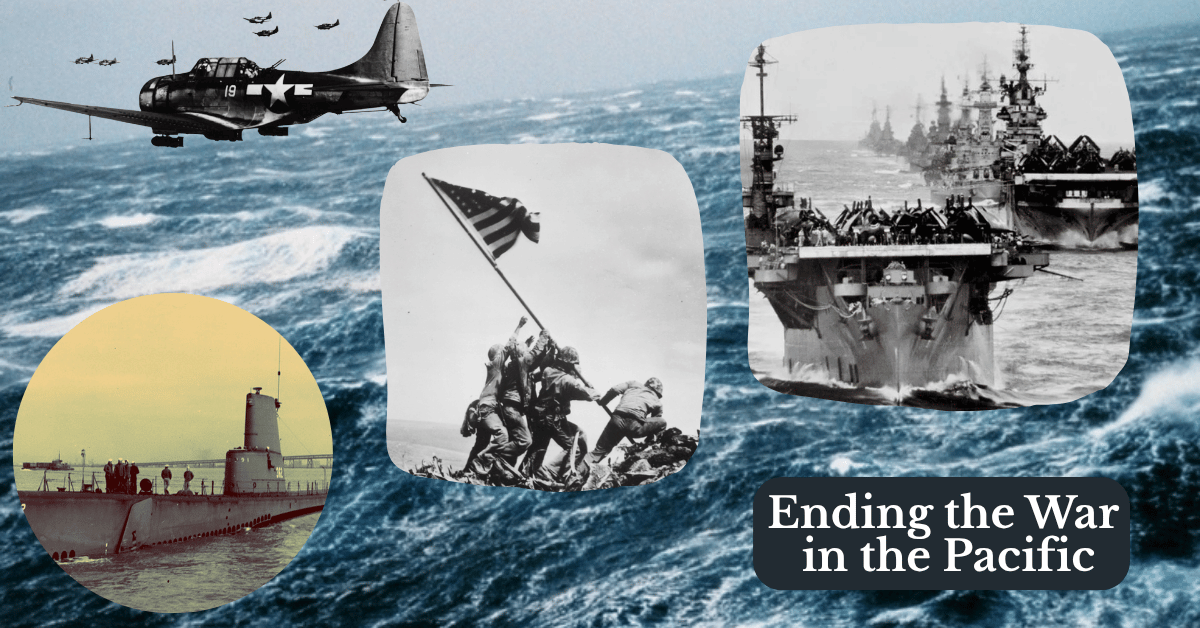
The Potsdam Declaration

We jump ahead on the timeline for a moment to complete the Allied thought that began at the  Jan 1943 Casablanca Conference: terms of surrender for Germany and Japan. 2.5 years after Casablanca, after Nazi Germany had unconditionally surrendered, the Allies prosecuting the war in the Pacific met. On July 26, 1945, US President Harry S. Truman, UK Prime Minister Winston Churchill, and President of China Chiang Kai-shek issued a document, which outlined the terms of surrender for the Empire of Japan. The Potsdam Declaration (Proclamation Defining Terms for Japanese Surrender) was a statement that called for the surrender of all Japanese armed forces. The ultimatum (and it was worded as an ultimatum) warned: “We will not deviate from them. There are no alternatives. We shall brook no delay.” The ultimatum was clear: if Japan did not unconditionally surrender, it would face “prompt and utter destruction.” By this time in the war Japan was already devastated by bombing and only possessed defensive capability. The war was all but lost by any conventional standard. The Potsdam statement was released only 11 days before the atomic bombing of Hiroshima.

Continue reading

Your faith has saved you

This coming Sunday is the 28th Sunday in Year C with the gospel taken from Luke 17. Green (The Gospel of Luke, 627) writes about the declaration, “your faith has saved you”:

Here, something more than healing must be intended, since (1) the efficacy of faith is mentioned and (2) all ten lepers experienced cleansing. The Samaritan was not only cleansed, but on account of faith gained something more – namely, insight into Jesus’ role in the inbreaking kingdom. He is enabled to see and is thus enlightened, itself a metaphor for redemption.

The Samaritan was enabled to see the Messiah and so “returned, glorifying God in a loud voice; and he fell at the feet of Jesus and thanked him.” The writer Robert Barron puts it another way:

Christianity is, above all, a way of seeing. Everything else in Christian life flows from and circles around the transformation of vision. Christians see differently, and that is why their prayer, their worship, the action, their whole way of being in the world, as a distinctive accent and flavor. What unites figures as diverse as James Joyce, Caravaggio, John Milton, the architect of Chartres, Dorothy Day, Dietrich Bonhoeffer, and the later Bob Dylan is a peculiar and distinctive take on things, a style, a way, which flows finally from Jesus of Nazareth.

Continue reading