
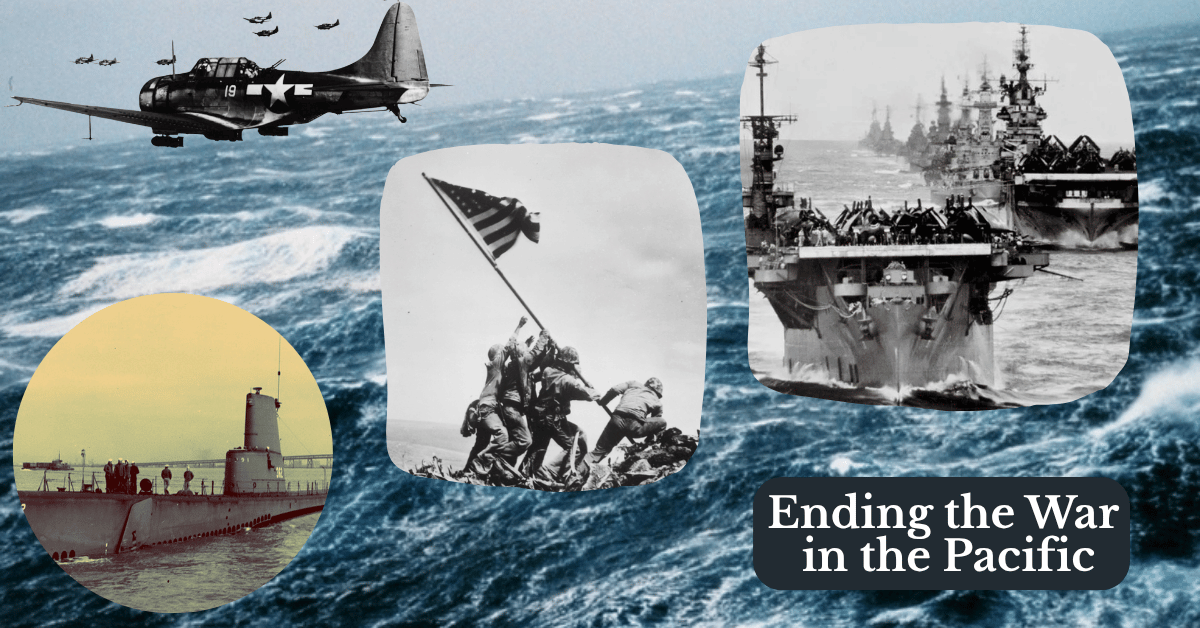
Exploring the Moral Landscape of the Asia-Pacific War (1937-1945)

The title may have caught your eye and caused you to wonder about the dates. Shouldn’t the War in the Pacific be dated from December 7, 1941, the attack on Pearl Harbor, until September 2, 1945 and the surrender of Japan aboard the USS Missouri? Certainly those are the dates which involved the United States and her allies. But war in the Asia-Pacific region had already started with the Sino-Chinese war, long simmering, but breaking out into open warfare in 1937. Japan had occupied Manchuria since 1931, but then invaded much of China from 1937 onward, including Beijing, Shanghai, Nanjing, and the coastal regions). French Indochina (Vietnam) was invaded next: the North in 1940 followed by the South in 1941. Well before Pearl Harbor troops were already in position to launch attacks against Cambodia, Laos, Thailand, Burma, Indonesia (Dutch East Indies), Malaysia and Singapore, Brunei and Borneo, Hong Kong, parts of New Guinea, the Marshall Islands, Truk, Palau, the Marshalls, and other Micronesian islands.  It should also be remembered that Japan ruled the Korean people during the 20th century.

The United States was drawn into a war already underway for more than 4 years.

Continue reading

Operation Downfall Planning

The preliminary planning for Operation Downfall – the invasion of the Japanese home islands of Kyushu and Honshu – began in the waning months of 1944. These were preliminary plans at best and were secondary to battle planning for Leyte, Luzon, Iwo Jima, Okinawa and the naval aircraft carrier raids on Formosa, as well as the massive logistics planning to support all the amphibious landings.

By April 1945 only the amphibious landings at Okinawa remained – the other islands had been secured, although scattered actions continued on Luzon until the end of the war. It was at this point that area commanders (Nimitz and McArthur) were ordered to develop detailed, actionable plans for the invasion of the southern island of Kyushu (Operation Olympic). As noted in the previous post there were multiple planning units that were providing estimates. The operations and logistics details were massive, but each unit knew the “hard question” would be their estimates of allied casualties for Operation Olympic. 

But that question depended on their battle plan/order of battle and intelligence estimates of enemy troop strength and deployment. As will be made clear in subsequent posts, all the above was a moving target that was being shaped by a range of factors from the concrete and measurable to the personal and not quantifiable. The first phase of planning occurred in the Pacific theatre of operation from Nimitz’s and MacArthur’s operations group. This planning phase (and its iterations) lasted until May 25, 1945 at which point the Joint Chiefs of Staff (JCS) issued a formal directive to Nimitz, MacArthur, and Arnold, instructing them to begin detailed planning for Operation Olympic. We’ll come back to that date.

Continue reading

The Kingdom Among Us

On the 28th Sunday in Ordinary Time the story of the 10 lepers and the portions of Luke’s gospel that precede those verses, dealt with forgiveness, faith and gratitude. There is a portion of Luke’s gospel that is passed over in the Ordinary Time sequence – Luke 17:20-37.  The passage is known in the New American Bible as “The Coming of the Kingdom of God” and “The Day of the Son of Man.” You can find the passage here. At first read this somewhat apocalyptic text seems misplaced – aren’t those readings located in Jerusalem just prior to the Passion? But Luke has a logic for inclusion of vv.20-37. 

The disciples had asked that their faith be increased and they were told that they did not understand the nature of faith (17:5-6). As almost a counterpoint, the one leper who returns in gratitude to Jesus (vv.15-16) is told that his faith has saved him (v.19). The experience of the leper, seeing his healing and praising God, offers an apt illustration that the kingdom of God is among you (v.21) even as the Pharisees ask in v.20 when the kingdom of God would come.

Continue reading