
Treasury of Merit

The Church teaches that it offers the grace of Indulgences from the “treasury of merit,” also called the “treasury of the Church.” This refers to the spiritual reservoir of merit accumulated through the infinite merits of Jesus Christ, especially through His Passion, Death, and Resurrection; the superabundant merits of the Blessed Virgin Mary, who is considered sinless and full of grace; and the merits of the saints, who lived lives of heroic virtue that manifested God’s grace into the world. These “merits” are not material or monetary, but spiritual benefits—graces that can be applied to others by the Church.

What gives the Church the “authority” to dispense the merits to others?

  • Christ promised his Church the power to bind and loose on earth, saying, “Truly, I say to you, whatever you bind on earth shall be bound in heaven, and whatever you loose on earth shall be loosed in heaven” (Matt. 18:18). As the context makes clear, binding and loosing cover Church discipline, and Church discipline involves administering and removing temporal penalties. 
  • One could also look to Matthew 16:19 where Peter is told by Jesus, “I will give you the keys to the kingdom of heaven. Whatever you bind on earth shall be bound in heaven; and whatever you loose on earth shall be loosed in heaven.” 

Most would look at those two verses and offer, “…OK, but that applies just to Sacramental Confession, right?” Sacramental Confession is the priest (the Church) acting as “sacramental steward” for God’s forgiveness. Let’s be clear. The priest does not forgive sins. He absolves which is the earthly action, the announcement, of the grace of God’s forgiveness.  Indulgences operate on the same principle. The Church sees itself as a steward of these spiritual goods, able to apply them for the benefit of souls.

“OK, but when did Jesus bless one person based on the merits of another? “And there people brought to him a paralytic lying on a stretcher. When Jesus saw their faith, he said to the paralytic, “Courage, child, your sins are forgiven.” (Mt 9:2) It wasn’t the faith of the paralytic, it was the faith of his friends. The merits of others were a gift to the paralytic. The “treasury of merit” is a gift by which God uses the Church when He removes temporal penalties. This is the essence of the doctrine of indulgences. 


Image credit: All Souls’ Day | Jakub Schikaneder, 1888 | National Gallery Prague | PD-US
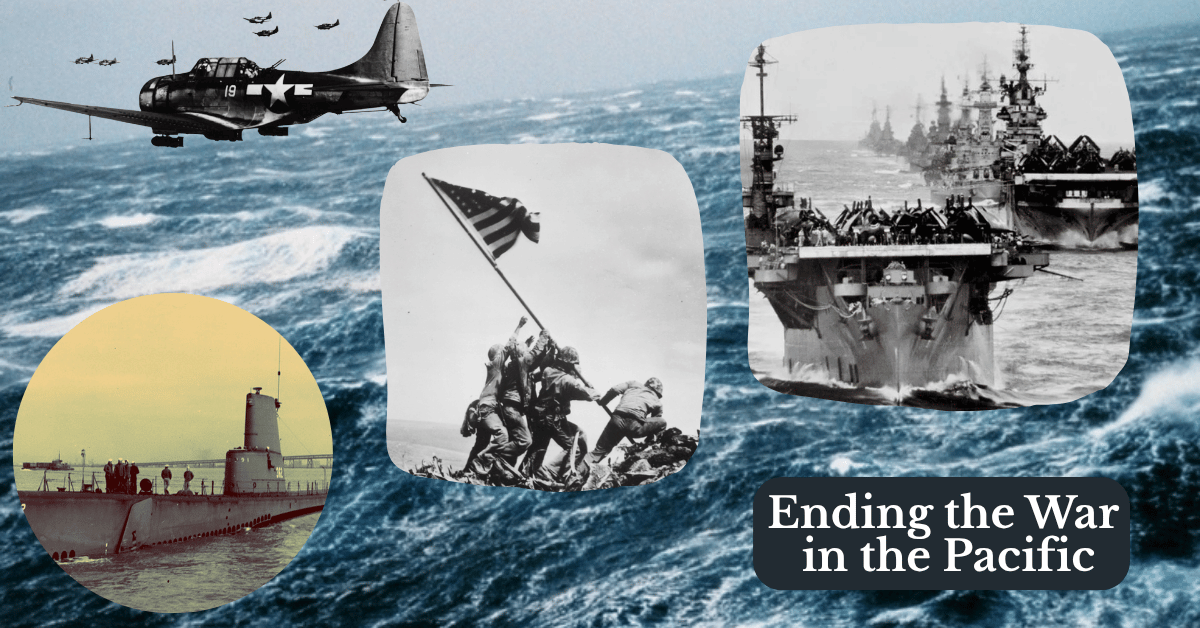
August 1945 – What is at stake

Having described the actual history of August 1945 in the previous post, it is time to consider our counter-factual: what if the US and Allies did not possess atomic weapons and did not expect to possess them any time in the immediate future? How does the Asia-Pacific War come to an end?

But then we need to be sure we are talking about the same war. Here is the most commonly offered timeline:

  • September 1, 1939 World War II began in Europe with Germany’s invasion of Poland
  • September 3, 1939 France, Britain, Australia, and New Zealand declared war on Germany 
  • September 6, 1939 South Africa declared war on Germany
  • September 10, 1939 Canada declared war on Germany
  • May 10, 1940 the Netherlands, officially neutral to this point, declared war after German troops invaded.
  • July 10, 1940 Italy, an Axis ally, declared war on Britain and France after seeing German success. It is generally thought Mussolini felt it was an opportune moment to enter the war on Germany’s side, believing France was on the verge of defeat and that Italy could secure a place at the eventual peace negotiations with minimal cost.
  • June 22, 1941 Germany declares war on Russia and begins the invasion. Russia did not technically declare war … They were busy fighting against a blitzkrieg. 
  • December 7, 1941 Japan declared war on the United States (but failed to deliver the diplomatic message prior to the Pearl Harbor attack)
  • December 8, 1941 Japan attacked Singapore, Hong Kong and Malaya. Diplomatically no message was delivered to Britain who learned about the attack via military channels. In Japan the information was printed in the newspapers.
  • December 8, 1941 the United States, Britain, Australia, Canada, New Zealand and the Netherlands declared war on Japan after the Pearl Harbor attack. Interestingly the following countries also declared war on Japan that same day: Cuba, Costa Rica, Guatemala, Panama and the Dominican Republic.
  • January 11, 1942 Japan declared war on the Netherlands the same day it launched its invasion of the Dutch East Indies
  • May 22, 1942 Mexico declares war on Japan, Germany and Italy. Thousands of Mexican citizens enlisted in the US armed forces but most notably the Mexican Expeditionary Air Force’s Escuadrón 201, also known as the “Aztec Eagles,” fought alongside the U.S. in the 1944 and 1945 Philippines Campaign.
  • August 8, 1945 – late to the battle, Russia declared war on Japan. Russia’s goal was control of the inland sea, warm water ports, Manchuria, Korea and possibly the resource rich Hokkaido.

With that all the major combatants were formally engaged in World War II. At least these are the dates that are given from a western perspective. When did it all end?

  • September 3, 1943, the Italian government formally agreed to an armistice with the Allies although the German-backed Italian Social Republic in northern Italy continued fighting until April 29, 1945. 
  • May 8, 1945 Germany unconditionally surrendered its military forces to the Allies
  • August 15, 1945 Japan announced it accepted the unconditional surrender terms (with one condition – maintenance of the kokutai). The formal surrender was signed September 2, 1945. 

Six years and 1 day after the start, it was finally over – at least from a western perspective.

Continue reading

Indulgences

Let’s be clear: an indulgence is not a permission to commit sin.  It is not a permission to indulge in some behavior that would ordinarily be considered sinful.  It is not something that you pay for to get forgiveness. The Catholic Church teaches that indulgences are a means by which the faithful can obtain the remission of the temporal punishment due to sin, the guilt of which has already been forgiven. This teaching is rooted in the Church’s understanding of the interconnectedness of sin, repentance, and the effects of sin on the soul and the community. The Catechism of the Catholic Church provides a thorough explanation of indulgences, particularly in Paragraphs 1471-1479.

An indulgence is a “remission before God of the temporal punishment due to sins whose guilt has already been forgiven [emphasis added], which the faithful Christian who is duly disposed gains under certain prescribed conditions through the action of the Church which, as the minister of redemption, dispenses and applies with authority the treasury of the satisfactions of Christ and the saints.” (CCC 1471)  An important point is that an indulgence does not apply to an eternal punishment (perdition; hell) but only to the temporal punishment for sins that have already been forgiven. And you may have noticed that indulgences are not limited to being applied to the faithful departed, but can be received by the living if disposed under the prescribed conditions.

Continue reading