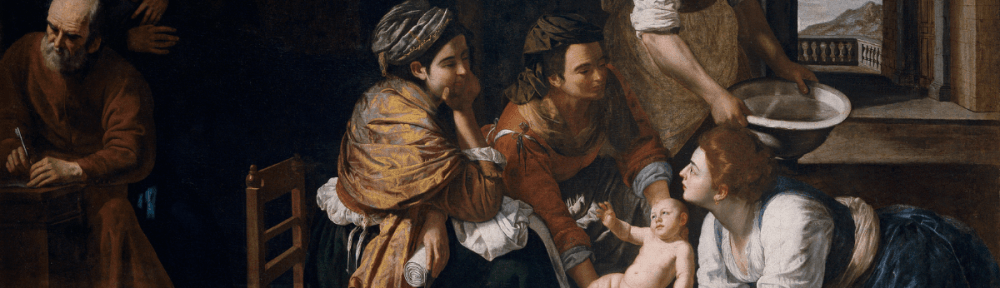
The gospel for the 4th Tuesday of Advent is from Luke 1:57 and following, describing the birth of John the Baptist. With the birth of John, God continues to fulfill what he promised in Luke 1:5-25. John’s father, mute till now, regains his power of speech as soon as the name designated by the angel is confirmed. The people are filled with fear — not terror, but awesome reverence in the face of God’s wonderful deeds. They are not simply shocked but show their awareness of deeper meaning in the events.
The birth and circumcision of John emphasize John’s incorporation into the people of Israel by the sign of the covenant (Genesis 17:1-12). The narrative of John’s circumcision also prepares the way for the subsequent description of the circumcision of Jesus in Luke 2:21. At the beginning of his two-volume work Luke shows those who play crucial roles in the inauguration of Christianity to be wholly a part of the people of Israel. At the end of the Acts of the Apostles (Acts 21:20; 22:3; 23:6-9; 24:14-16; 26:2-8, 22-23) he will argue that Christianity is the direct descendant of Pharisaic Judaism.
Though children were often named at birth in the Old Testament (Gen 25:25-26; 29:32-35), it appears that sometimes such naming was associated with circumcision. The presence of the parents at circumcision shows them as pious, law-abiding Jews (Gen 21:4; Lev 12:3). However grounded in custom, many features of the naming of John are surprising.
The crowd fully expects custom to be followed. They wish the child to be named Zechariah. Children were often named after fathers or grandfathers (1 Maccabees 1:1-2; Josephus Life 15; Antiquities 14.1.3 10; 20.9.1 197; Jubilees 11:15). Elizabeth rejects the crowd’s desire and goes her own way. The name she chooses is the one the angel gave Zechariah in v.13. The text is silent on how she knew this name, but that detail is unimportant. The choice of the surprising name indicates that God’s will has been fulfilled through human obedience.
The protest of the crowd shows that they are unaware of what God is doing. Surely the father of the house will not sanction this breaking of custom. So they motion to Zechariah to find out what the name of the child should be. By repeating the name his wife gave, Zechariah echoes the instructions of the angel, not the crowd and custom. In typical Lucan fashion, the responses of the people are (1) amazement (thaumazo, v. 63) and fear (phobos, v. 65). Both of these words occur more often in Luke than in the other gospels. They are not words of faith. In addition, there is a possible contrast between Zechariah’s reaction and his neighbors. “He was speaking (laleo –something he couldn’t do in 1:20, 22). What was he speaking? Praises to God (v. 64b). The neighbors talk about or discuss [dialaleo] these things with one another (v. 65). The only other time this second word is used in Luke, it is the Pharisees who are filled with anger and discuss what they might do to Jesus (6:11).
The praises to God are captured in Zechariah’s song, traditionally called the Benedictus from its first word in Latin. It is the NT canticle sung at Morning Prayers. Culpepper (“Luke,” New Interpreter’s Bible, p.59) writes:
The progression of thought in the Benedictus shows, however, that the true end of God’s redemption is not merely deliverance from political domination — as important as that is — but the creation of conditions in which God’s people can worship and serve God without fear…The ultimate purpose of God’s salvation presupposes deliverance from the enemy but is in fact undisturbed worship. Deliverance makes worship in peace — unhindered worship — possible. [p. 59]
Johnson (Luke, Sacra Pagina, 48) says much the same thing:
The canticle gives the reader the first sure sense of what “liberation” means for Luke. It is defined in specifically “religious” rather than political terms. Negatively defined, freedom means release from the power of enemies. But its positive content is worship and holiness of life. Thus John’s role in preparing the people for “restoration” involves the forgiveness of sins rather than the rallying of troops. Likewise the Messiah’s role is not one of violent revolt but rather of leading the people “in the path of peace.”
Previously, Johnson had noted how Zechariah fulfilled this canticle: “Luke has thereby made the experience of Zechariah a miniature enactment of his canticle: God’s mercy liberates the people to worship fearlessly; Zechariah’s release from muteness is expressed in praise” (p.57).
Zechariah’s canticle, like that of Mary, weaves traditional Hebrew quotations and themes into a hymn of praise. His hymn can be described as a “prophecy” under the inspiration of the Holy Spirit. Prophecy in this fundamental biblical sense does not mean primarily a foretelling of the future, as in modern parlance, but a divinely enlightened proclamation of the meaning of events. Zechariah sees in the birth of his son God’s remembrance of his covenant promises to David (2 Sam 7:8–16) and the definitive salvation for all the people. In the first part of the canticle, the salvation hoped for sounds roughly like the overthrow of national enemies (a concept of Messiah that would plague Jesus during his ministry), but in later verses salvation is understood more profoundly as freedom for worship.
The birth event of John the Baptist displays three unique features: (1) the old have given birth, (2) the child has an unexpected name, and (3) Zechariah’s handicap is taken away, whereupon he launches into praise about what God is doing. Such remarkable events cause the crowd to fear and reflect. Something different and surprising is happening, things worth remembering and considering. So they wonder, “What, then, will this child be?” Luke wants his readers to consider the same question. The story’s close indicates that “surely the hand of the Lord was with him.” Luke continues his purpose of giving the reader assurance of God’s faithfulness.
Luke’s way of ending this story of John’s birth is a good indication of his technique in keeping the reader’s attention on one episode at a time, even though several events are interlocked. Verse 80 has John growing up from infancy to manhood and taking his place in the desert even before Jesus’ birth is described. He is stationed there for his next appearance in the story thirty years later (3:1–3).
Image credit: Birth of St. John the Baptist, Artemisia Gentileschi, Prado Museum Madrid, Public Domain
Discover more from friarmusings
Subscribe to get the latest posts sent to your email.
 friarmusings