
At the beginning of the Edo Period, Daimyo Hideyoshi had grand visions of a Pan-Asia empire that included China. Under the leadership of the Tokugawa Shogunate, the country set clear restrictions that mostly isolated Japan from face-to-face contact with the world. The nation remained open to commercial trade but not to social corruption from outside influences. Through the Dutch in Nagasaki, the advances in science and technology were available to them. But their world was largely an “internal” world. What was the impact of all this on their self-view vis-a-vis other peoples and nations?
With the advent of the Asia-Pacific war in the 20th century, there was a clear doctrine of racial, cultural and national superiority whose rightful destiny was as leader of the Asia Pacific regions (and perhaps more). But was that present in the 19th century when Japan became more open to the world?
What emerged was a layered self-view of cultural centrality and moral distinctiveness. The Tokugawa Shogunate did not view itself in terms of being the center of an empire, but it did see itself as a center of a superior civilization. Its criteria included moral cultivation, ritual propriety, and social harmony, governed by proper hierarchy and order.
This can be seen by its changing view of China. Where once China was the center of learning, governance, religious thought and social order, that view was increasingly a distant memory. Classical Chinese learning was still revered but in the present the Japanese held that the Chinese had lost their moral position in the world (Confucian) by internal revolts and external wars. Japan now viewed themselves as the true heir of classical civilization. They made this judgment as an ethical and historical assessment, not a judgement on the Chinese people.
Westerners were often described as technically skilled, morally crude, and socially disordered. Christianity was seen as a western import and was condemned not as “foreign” per se, but as socially destabilizing and politically subversive. Westerners were not viewed as racially inferior, but as culturally dangerous to the higher Japanese civilization and morally undisciplined. At the same time, the Japanese became far more certain and confident in their own institutions and traditions, becoming somewhat immune from foreign moral claims. Where once the Japanese looked to China and others for recognition and approbation, they no longer sought it or needed it.
Sakoku was certainly cultural insulation, but one that did not mandate superiority. It is later thinkers in another time that would radicalize the fruits of the Tokugawa Shogunate to become the Japan facing the world in the 20th century.
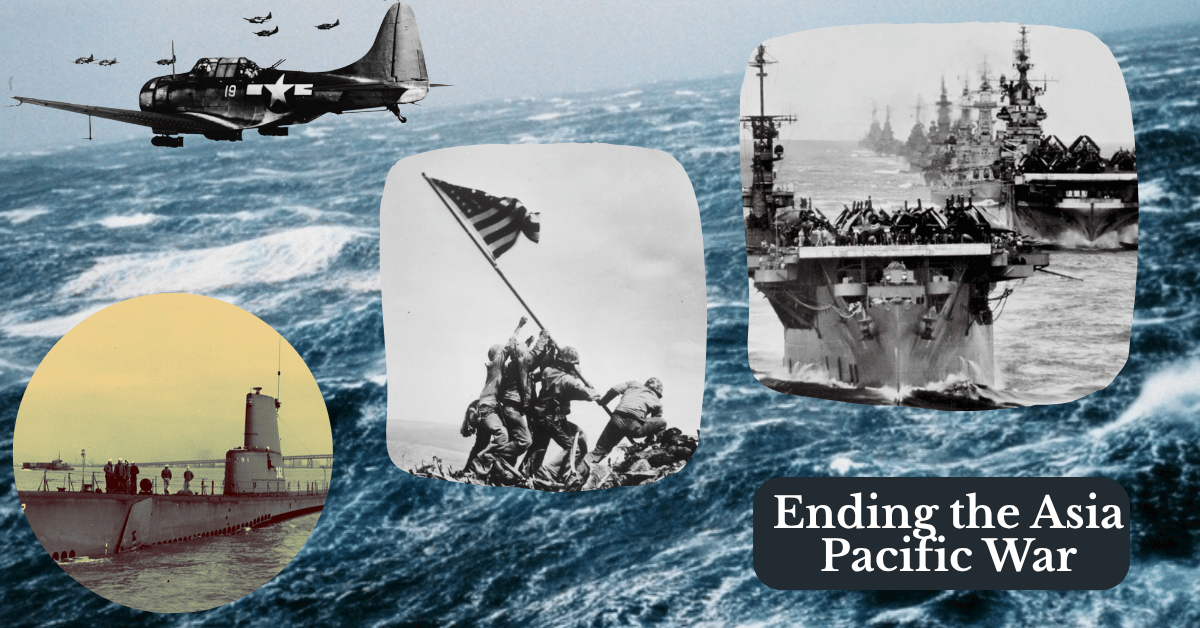
Image credit: various photographs from Naval Aviation Museum, National World War II Museum, and US Navy Archives.
 friarmusings