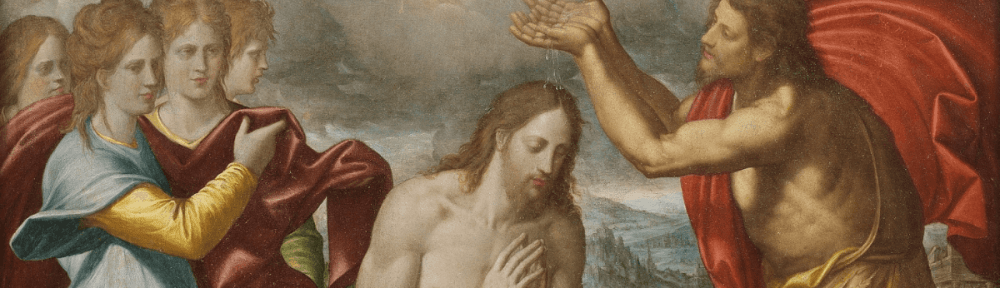
This coming Sunday we celebrate the Baptism of the Lord. “And a voice came from the heavens, saying, ‘This is my beloved Son, with whom I am well pleased.’” (Mt 13:17). The voice from heaven speaks the words that are repeated at the scene of the Transfiguration (Mt 17:5) and reveal God’s proclamation of Jesus’ full identity. After Jesus’ acceptance of John’s baptism as the will of God for him, God declares his pleasure because of the obedience and more fundamentally, declares the unique relationship between God the Father and his Son.
The words of the declaration are usually understood to be derived from one or both of Isa 42:1 and Ps 2:7. “Here is my servant whom I uphold, my chosen one with whom I am pleased.” (Isaiah 42:1) and goes on to say that God has put his Spirit upon him, which links closely with what we have seen in v. 16. “You are my son; today I have begotten you.” (Ps 2:7) in which God addresses his anointed king
The echo of both passages lend themselves to Matthew’s focus of fulfillment passages. While his primary fulfillment focus will be Jesus as the One to come, greater than Moses, Matthew is attentive to other fulfillments: son, servant, king.
As R.T. France points out: “God is not quoting the OT, nor setting a puzzle for scripturally erudite hearers to unravel. He is declaring in richly allusive words that this man who has just been baptized by John is his own Son in whom he delights. From this point on Matthew’s readers have no excuse for failing to understand the significance of Jesus’ ministry, however long it may take the actors in the story to reach the same christological conclusion (14:33; 16:16; 26:63–64). It will be this crucial revelation of who Jesus is which will immediately form the basis of the initial testing which Jesus is called to undergo in 4:1–11: “If you are the Son of God …” (4:3, 6). And there, as in the account of the baptism, Jesus’ sonship will be revealed in his obedience to his Father’s will.” (Matthew, 124)
Image credit: The Baptism of Christ, Juan Fernández de Navarrete, “El Mudo” | Museo del Prado, Madrid | Wikimedia Commons | PD-US
Discover more from friarmusings
Subscribe to get the latest posts sent to your email.
 friarmusings