The Gospel of John begins with the well known prologue that proclaims Jesus as the preexistent and incarnate Word of God who has revealed the Father to us: “And the Word became flesh and made his dwelling among us, and we saw his glory, the glory as of the Father’s only Son, full of grace and truth.” (John 1:14) The rest of the first chapter forms the introduction to the gospel proper and consists of the Baptist’s testimony about Jesus. John is presented as “a man sent from God” who “came for testimony, to testify to the light, so that all might believe through him. He was not the light, but came to testify to the light.” (John 1:6-8) That naturally raises the question – who exactly is this wilderness character? Which is exactly what the Jerusalem delegation asks of him. They want to know if he is some end-time figure: the Christ, Elijah, the promised great prophet like Moses (cf. Deut. 18:15, 18)? After denying each one of those identities he finally tells the delegation who he is. He is the end-time figure spoken of in Scripture. He is “the voice of one crying out in the wilderness, ‘Make straight the way of the Lord’” (1:23)
That phrase often heard in the season of Advent is taken from Isaiah 40:3 which, interestingly, reads slightly different than the Baptist’s response. In John 1:23 it is the voice of the one crying out in/from the wilderness – in other words, telling us the location of the messenger. In Isaiah the messenger cries out, “In the wilderness prepare the way of the Lord.” – in other words the messenger is speaking to those who are in the wilderness. Why the difference? The Hebrew version of Isaiah 40:3 is slightly different from the Greek translation of Isaiah in the Septuagint (LXX). John 1:23 is clearly taken from the LXX.
John the Evangelist adapts Isaiah’s message to the person of John the Baptist. If God intends people to be prepared in the wilderness, it makes sense for the voice to cry in the wilderness to call for such preparations. Another important part of the message is that God will come to his people through the wilderness. The wilderness reference echoes many such OT references, for example, Habakkuk 3:3 – “God came from Teman, the Holy One from Mount Paran. His glory covered the heavens, and his praise filled the earth.” Both Teman and Paran are wilderness areas. In particular, Paran is connected to Israel’s wandering in the wilderness after the events in and around Mt. Sinai (Num 10:12; 12:16). Paran is described as the place from which God’s glory “shone forth” in Moses’ Blessing (Deut 33:2). The wilderness is a fitting figure for the desolate condition of God’s people in the Baptist’s day. There is a sense that the Spirit of God that Ezekiel saw leaving the Jerusalem Temple during the Babylonian siege of Jerusaleam almost 600 years prior, is now returning – not to the Temple – but to the people.
How are God’s people to prepare the way for this moment in salvation history? While, again, not explicitly stated, the probable answer is by way of repentance. If Yahweh is to return, his people must prepare the way by repenting of the sins that caused them to be led into exile. This is borne out clearly by the Baptist’s own message: “Produce good fruit as evidence of your repentance.” (Mt 3:8). As Isa 40:1–2 makes clear, God’s ultimate purpose for his people is not judgment but salvation, life rather than death (cf. the Fourth Evangelist’s words in John 3:17–18; and Jesus’ words in John 12:47). According to the Johannine Gospel, the Baptist’s witness centered on Jesus’ role in the divine plan of salvation as the “Lamb of God who takes away the sin of the world” (1:29, 36). At its very heart, the purpose of John’s baptism and ministry is described as being bound up with revealing Jesus’ true identity to Israel.
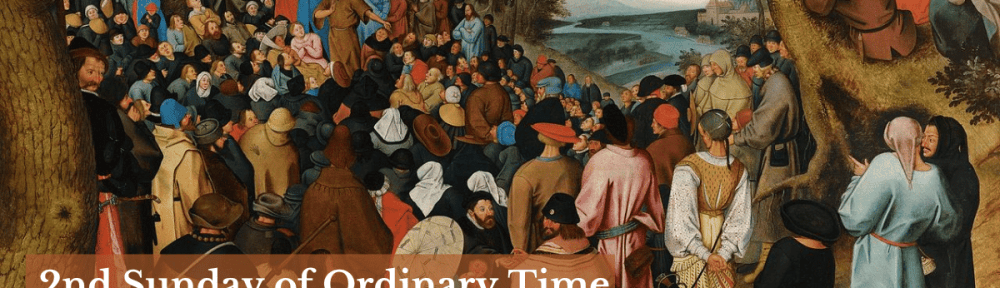
Image credit: Saint John the Baptist Preaching to the Masses in the Wilderness | Pieter Brueghel the Younger | Galerie de Jonckheere, Paris | Wikimedia Commons, PD-US
Discover more from friarmusings
Subscribe to get the latest posts sent to your email.
 friarmusings