
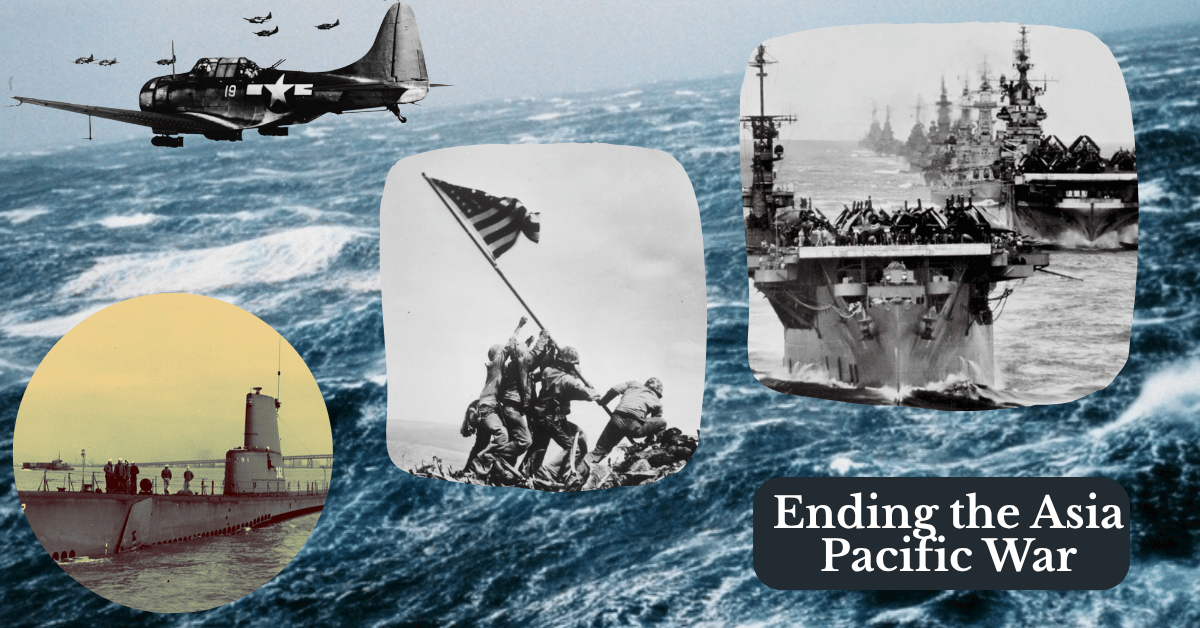
When the Meiji era began in 1868, just as the nation was in transition from the Shogunate to a Constitutional Monarch, the Japanese military was undergoing a similar radical transformation. The underlying impetus was national survival. Having witnessed the fate of China in the face of more modern and powerful western militaries, Japan concluded that they too required a modern, Western-style military. They dismantled the Tokugawa samurai-based system and built a centralized national force modeled on European powers.
At the beginning of the Meiji period the army was a fragmented, transitional force composed largely of former samurai from the victorious domains that had initiated the downfall of the Shogunate. It was not yet a national army as the soldiers’ loyalty was often domain-based. Training was uneven and nascent and not anywhere near the standards required to face western military power. There was a limited amount of modern rifles, some firearms left over from the previous age, but a wealth of samurai weaponry. But even if there were adequate manpower and suitable training, there was no professional officer corps with an understanding of modern warfare, tactics such as combined arms combat (soldiers and artillery support), and the necessary general staff to wage and support an army in the field under combat. All semblance of modern western military capability was lacking.
The Navy was a small, underdeveloped fleet inherited from the late Tokugawa period. There were sailing vessels and a handful of modern steamships, many purchased from abroad. While they possessed good seamanship and ship-to-ship engagements, fleet engagements were foreign to them, and even then lack the capital ships common to the western fleets, namely, battleships, cruisers, destroyers, auxiliary ships, and logistics capability to be a “blue water” navy. In the beginning they are best described as a coastal-defense force.
Twenty years later the army was fully centralized, conscription was in place, training was based on the ideal of Bushidō and Prussian organization and tactics. The army possessed a professional officer corps and general staff (logistics, intelligence, planning, medical services and more). Weaponry was modern in terms of rifles and artillery. Command and control functions were Prussian: centralized, disciplined and bureaucratic. It was a modern national army, capable of coordinated large-scale operations overseas.
The Navy had been reorganized and closely modeled the Royal Navy. Ships were constructed of steel and consisted of a range of large and small capital ships. A professionalized officer corps was in place, well versed in modern navigation, gunnery, and signaling. Even more, their role was integrated into a larger national planning to support Army operations with control of the sea, troop transport and blockade capabilities. In the Asia-Pacific region, apart from western fleets, they were the premier naval force.
At the start of hostilities, the IJN Combined Fleet composition was :
- 12 modern warships (primarily cruisers),
- 8 corvettes,
- 1 ironclad warship,
- 26 torpedo boats, and
- Numerous auxiliaries, armed merchant cruisers, and converted liners used for transport and support
There was a similar buildup and expansion of the Army. All of this came at a cost, but also with benefits. Among the benefits of the military buildup in the late-19th century was the acceleration of Japan’s industrial economy. The state invested heavily in shipyards, arsenals, steelworks, railways, and telegraph lines all of which helped create the foundations for heavy industries which were later transferred to private firms. The build up also stimulated existing sectors such as coal mining, metallurgy, engineering, and shipbuilding. The military buildup acted as a state-led industrial catalyst.
All of this needed to be funded, financed and paid for. To this end the government implemented the land tax reform, creating a stable, cash-based tax system. Revenue became more predictable and as a result enabled long-term military and infrastructure planning. This radical shift in central planning and finance strengthened the modern fiscal state but increased pressure on rural society where the land tax burden landed.
Military expansion was expensive, leading the early Meiji governments to run budget deficits. This problem was compounded by issuing paper currency accelerating inflation throughout the 1870s into the early 1880s. Military spending diverted resources from social welfare, rural investment, and development of the consumer sector of the economy. As a result, the citizens, especially the peasants bore much of the cost through taxes, while economic benefits were unevenly distributed. The social unrest came to a head in the Satsuma Rebellion, a revolt of disaffected samurai against the central government. The rebellion was very expensive for the government, which forced it to make additional monetary reforms including leaving the gold standard. The conflict effectively ended the samurai class. Economic discipline only stabilized in the early 1890s.
Military procurement fostered close ties between the state and emerging industrial conglomerates (zaibatsu such as Mitsubishi). These firms benefited from government contracts, subsidies and technology transfers, and access to capital and overseas markets. This helped create a modern capitalist elite aligned with state goals. Overall, military expansion stimulated economic modernization, but it did so through top-down coercive extraction, embedding a long-term pattern in which economic growth was closely tied to military and imperial priorities.
Image credit: various photographs from Naval Aviation Museum, National World War II Museum, and US Navy Archives.
 friarmusings