
The previous posts have focused on the Japanese military in the period 1905-1930. After the conclusion of the Russo-Japanese War in 1905, the Imperial Japanese Army (IJA) was implanted in Korea (annexed in 1910) and in Manchuria with control of vital sea ports of Liaodong and the connected South Manchuria Railroad. This was the foundation of Japanese settlement in those areas and the start of exporting resources and food supplies to the home islands. This was part of Japan’s strategic buffer, but when Japan became dependent on the exports, the strategic buffer needed to expand, giving additional mission focus to the IJA to move south/southwest into China and northwest toward Inner Mongolia.
The Imperial Japanese Navy (IJN) enjoyed a period of extended accomplishments, namely, the defeat of the Russian Imperial Fleet at Port Arthur and most importantly at the Battle of Tsushima. The First World War expanded their mission as an ally of the British, securing Britain’s trade routes from the Pacific into the Indian Ocean, even supplying a destroyer flotilla to Mediterranean service. The goal of maintaining a first-world fleet ran headlong into the realities of post-war financial constraints. The goal became to reach an arms limitation treaty with Britain and the United States that limited their fleets to a size that Japan could proportionally build for themselves. The U.S. initiated Washington Naval Conference was the answer to Japan’s need – as described in the previous post.
Back Home in Japan
Now, if you consider these three treaties, it does not look like Japan came out all that well. It did not get the 10:7 naval tonnage ratio it wanted – but got close. Japan did get the commitment from the U.S. not to build west of Guam or the Philippines. Japan lost the China port/area of Shandong taken from the Germans during the war, but then it got formal recognition of dominance in Manchuria – which it already had. And…formal commitment to the China Open Door policy was a draw at best.
But Japan did get the one essential element it wanted: avoidance of a naval arms race in the Pacific against a country it had no hope of matching – the United States. But also inherited something it did not want: deep division within the Navy’s officer corps. For that we need to drop back in time and “into the weeds.”
The key Japanese figures in this mini-drama are:
- Hara Takashi, the Prime Minister of Japan who was in favor of arms limitation talks as a means of helping steer the nation into a peacetime economy.
- Vice Admiral Katō Tomosaburō, a career naval officer, hero of Tsushima, who had fleet commands before becoming Navy Minister in 1915. He was a realist understanding that an arms race with the United States was to be avoided, but defense of Japan and her holdings was also a goal
- Admiral Katō Kanji, the chief naval aide. He represented the “fleet faction” that strongly favored Japan’s naval power, contrasting with Katō Tomosaburō’s support for avoiding an arms race.
Hara promised to give Katō Tomosaburō the political “air cover” he needed to make the best decision for Japan as the circumstances allowed. Hara was assassinated before Katō reached Washington DC. During the Conference, Kanji the aide, maintained separate cable communications with others of a group that would come to be known as the “fleet faction.” They were against the entire idea of the Washington Conference. His goal was to foster opposition and dissent within the ranks of naval officers, something heretofore unknown.
Unbeknownst to Katō and Kanji, all the cables to/from Washington were being read by the United States as the diplomatic code had been broken for some time. Japan was at a distinct disadvantage in negotiations and forced to make decisions that Katō believed were the best to be obtained but sure to bring dissension on the home front.
Upon return home Katō became Prime Minister but died in 1923 but was able to instill commitment to the treaties within the Navy Ministry. Kanji served as the Chief of the Navy General Staff. He was able to foster a cadre of naval officers opposed to the treaties. The split of the IJN into the Treaty Faction and the Fleet Faction after the Washington Naval Conference had deep, long-lasting ramifications that extended far beyond naval policy. It reshaped Japanese civil–military relations, weakened moderate leadership, radicalized strategic thinking, and contributed directly to the collapse of the interwar international order in East Asia.
Fallout of the Naval Factions
The Treaty Faction accepted the 10:6 ratio as a realistic acknowledgment of Japan’s industrial limits and the impossibility of winning a naval arms race with the U.S. and Britain. It believed security lay in diplomacy, alliances, and high-quality fleets with well trained sailors. They were dominant in the early 1920s naval leadership.
Fleet Faction rejected the ratio as a humiliation and proof of the systematic racial prejudice against Japan that would always foster an Anglo-American alliance for Japan’s national inequality. This faction argued for unfettered fleet expansion and a posture of preparedness for war with the U.S. They gained support among younger officers, hardline nationalists and sections of the Army.
One of the key fallouts was the shift of Navy planning to be more ideological than technical. From the civilian perspective they used to be able to count on naval strategies as expert-driven, now they were sure and both sides were directly appealing to the Emperor, using the press and public opinion to promote their views. Not that the civilians had much control other than budgetary, but the once disciplined Navy was becoming less governable and more like dealing with the Army.
The Fleet Faction was more effective and practiced at framing the issues for public consumption. They framed treaties as a national humiliation, evidence of Western racial exclusion, and a betrayal by elites. The line of argument greatly resonated with the public after news of the 1924 Immigration Act became known. The net result was that naval issues were now linked to nationalist ideology. Disagreement became a question of loyalty and compromise was recast as treason.
This factional rivalry distorted naval development and planning. Where the Treaty Faction favored balanced fleets with an emphasis on quality, training, and technology, the Fleet Faction advocated for bigger battleships as a means of an outward show of symbolic parity and national pride. The Fleet Faction remained fixated on the Mahanian “decisive battle”. In the short term (with long term implications) this led to an often incoherent strategy and compromised on design with an overconcentration on capital ships.
One of the great ironies of the naval war in the Pacific was that there never was the great “decisive battle” between the great battleships. Japan committed itself to the super battleship Yamato and her sister ship, the Musashi. Both were sunk. Meanwhile the most effective naval component of Japan’s fleet were the small ships, especially the destroyers and their long lance torpedoes.
By the 1930s the Treaty Faction leaders were marginalized; some were assassinated or silenced. More and more younger officers gravitated toward the Fleet Faction. Slowly institutional memory of restraint was lost. In a way there was a cross-service convergence of attitude that reinforced a militarist dominance that undermined moderates in both services. All this encouraged a worldview of inevitable conflict. The Navy’s traditional role as a moderating influence weakened.
Japan did not attend the 1930 London Naval Conference and in 1935 tendered its resignation from the 1922 treaties – although by then it had long abandoned treaty limitations in its building program.
Within the Japanese Navy, acceptance of war with the U.S. moved from being plausible to being inevitable. This would eventually morph the Mahanian idea of the decisive battle to one of preemptive strike. All of this diverted attention to the problem of logistics and economic sustainability in a short-term war or a long-term war.

The map above shows the maximum extent of the Japanese Empire in June 1942. Before the war, almost 70% of all merchant ships carrying supplies to Japan were not Japanese-flagged merchants; the majority were actually British flagged. Japan’s emphasis on combat ships and the focus on battleships as a symbolic pride of the nation, failed to pay attention to the basics. At the start of the war, Japan had only 8 fleet oilers. This would be the achilles heel that US unrestricted submarine warfare would exploit.
The Treaty Faction had been correct on the fundamentals: Japan could not outbuild the U.S. and a protracted war meant defeat. But being right was not politically survivable in the late 1920s and early 1930s. The Fleet Faction won the institutional battle even though it would lose the war to come. The “split” transformed the IJN from a professional, coalition-capable force into a polarized institution increasingly driven by ideology rather than strategy, with consequences that became tragically clear in 1942 and beyond.
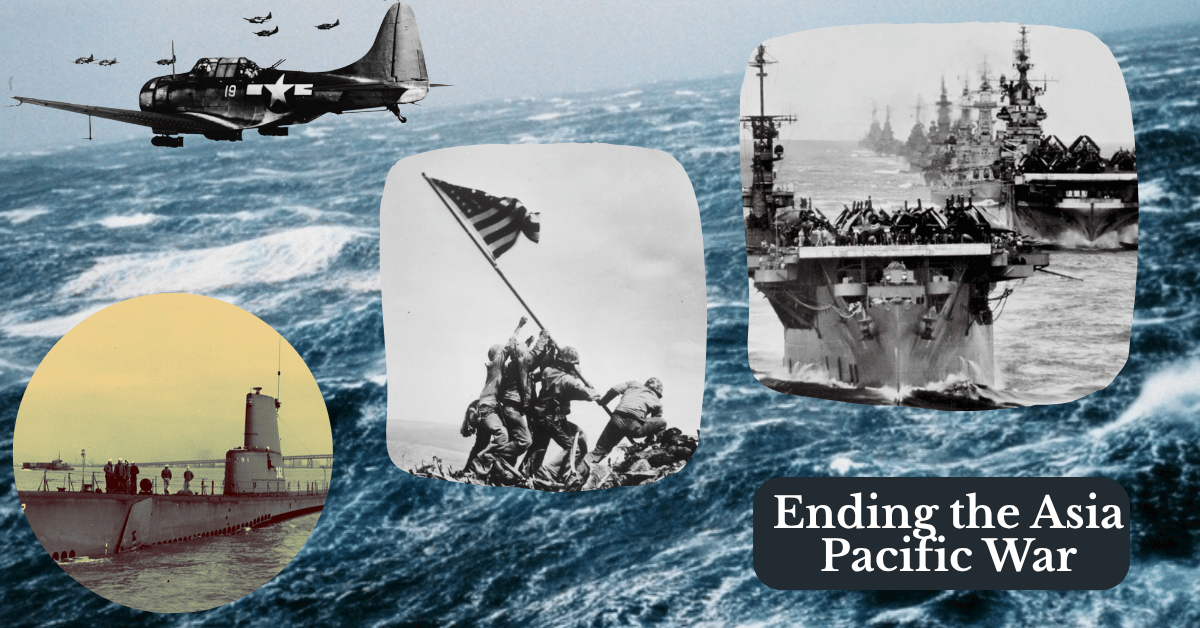
Image credit: various photographs from Naval Aviation Museum, National World War II Museum, and US Navy Archives.
 friarmusings