
After the First World War Japan experienced a political shift as liberal and democratic thinkers and politicians gained popularity. While there are many reasons for the shift, at the popular level it was clear that the winners of the war were the liberal democracies triumphant over the militaristic nations. At the same time there were currents within the Imperial Japanese Arm (IJA) that felt such a move might imperil the nation. While the political arm of the nation sought to form foreign relations, take their cooperative place in the world order of nations, the military continued to operate out of the long-held view that Japan needed a strategic buffer of allies or controlled lands that placed China and Russia at arm’s length. In addition, Japan was not able to feed its own population and as such was dependent on imports of food especially from Korea and Manchuria. Nor did Japan have room in the home islands for its burgeoning population; the late 19th and early 20th century saw extensive migration of Japanese citizens to these lands. Lands that were rich in resources needed for the continued industrialization of Japan, especially its heavy industries. The IJA saw it as their role to ensure the strategic and tactical future of Japan regardless of changes in the internal political landscape.
Other posts in this series address have (or will) speak to the interservice rivalry between Army and Navy as well as the factional divides within each service. The reasons for these fracture lines include budgetary competition, difference in strategic vision, loyalty stretched to ultranationalism, and even what we might understand as end-of-the-world religious movements. Coupled to this is a divide between the old guard senior officers and the more radical junior officers; a division that was connected to trends in the national education that increasingly emphasized national destiny, racial superiority, and loyalty to the Emperor-and-the nation (the kokutai). The result was a military and nationalist movement that came to believe radical action was needed to keep the civil government “on the right track.”
It is important to keep in mind, unlike the U.S., the Japanese military had no civilian controls. They reported directly to the Emperor. This connection inspired and followed an emperor-centric ideology that also found a populism in non-urban areas that also held hostility towards capitalism and Western influences. If violence was necessary to keep the nation on the true, destined path, it was the sacred duty of the military to “correct” the civil government – at least in the eyes of the more radical elements, especially within the IJA. Assassination became a recurring political tool.
Setting the Stage at Home
The era of assassinations began at a key juncture of Japanese history. Prime Minister Hara Takashi was assassinated on November 4, 1921, amid growing backlash against political party government and perceived political corruption in early Taishō-era Japan (Hirohito’s father as Emperor). As Japan’s first commoner prime minister and leader of the Seiyūkai party, Hara symbolized the rise of parliamentary politics, which alienated conservative elites, ultranationalists, and sections of the military who believed political party rule weakened imperial authority and national unity.
Hara’s pragmatic policies such as restraint in military expansion, moderation in foreign affairs, and cautious handling of universal male suffrage angered extremists who viewed him as insufficiently patriotic or decisive. His reliance on party patronage and ties to bureaucratic and business interests also fueled public resentment, especially in the aftermath of the Rice Riots (1918), which exposed social inequality and government indifference to popular suffering.
The assassin, a right-wing railway switchman, acted independently but was motivated by a broader climate of anti-party sentiment, nationalism, and disillusionment with democratic politics. Hara’s murder reflected a widening crisis of legitimacy for parliamentary government and foreshadowed the increasing political violence and erosion of civilian control that would mark Japanese politics in the 1920s and 1930s. The event shocked the Taishō democracy system but it continued on.
On the International Stage
Zhang Zuolin was a Manchurian warlord and leader assassinated on June 4, 1928 by elements of the Kwantung Army (Japan’s standing army in southern Manchuria). Although Zhang had long cooperated with Japan and protected its interests in Manchuria, by the late 1920s he appeared unable to halt the advance of Chiang Kai-shek’s Nationalist China forces that sought to reestablish Chinese control in the area. Japanese officers feared that Zhang might accommodate the Nationalists or lose control of Manchuria altogether, threatening Japan’s strategic, economic, and military position in the region.
Acting without authorization from Tokyo, radical Kwantung Army officers assassinated Zhang by bombing his train. It was hoped that his death would justify direct Japanese military intervention or allow the installation of a more compliant Manchurian ruler. Instead, the plot backfired: Zhang’s son, Zhang Xueliang, consolidated power and soon aligned Manchuria with the Nationalist government. The assassination exposed deep divisions between Japan’s civilian government and its military, demonstrated the growing autonomy of field officers, and foreshadowed the later escalation of Japanese aggression in Manchuria, culminating in the Mukden Incident of 1931. It also showed the lack of will for the Japanese Courts to punish those responsible.
Prime Minister Tanaka Giichi and the civilian cabinet were outraged once it became clear that officers of the Kwantung Army had acted without authorization. Tanaka promised the Emperor a full investigation and punishment of those responsible, recognizing the act as a grave breach of civilian control and international law. However, Tanaka failed to follow through. Faced with resistance from the Army General Staff and fear of provoking a political crisis, no meaningful disciplinary action was taken. When Tanaka later attempted to revive the issue, he lost imperial confidence and was forced to resign in 1929, weakening civilian authority further.
Army leadership protected its own. While some senior officers privately acknowledged the recklessness of the act, the institutional priority was to avoid setting a precedent that officers could be punished for “patriotic” actions. The perpetrators were neither court-martialed nor seriously reprimanded. Many younger officers interpreted the outcome as proof that bold action would be tolerated or even rewarded if framed as serving national interests.
The lack of any punishment sent a dangerous signal: the military could act independently of the civilian government with impunity. This episode directly encouraged later acts of insubordination, most notably the Mukden Incident (1931). In hindsight, Japanese historians often identify this incident as the turning point in the erosion of constitutional government and the rise of military dominance in policy-making.
The League of Blood Incident
The League of Blood Incident was a series of political assassinations in early 1932 carried out by ultra-nationalist extremists who believed Japan was being betrayed by corrupt political, financial, and party elites. Rooted in the ideological climate of the late Taishō and early Shōwa (Hirohito) periods, the violence reflected deep frustration with parliamentary democracy, capitalism, and perceived moral decay – a theme recurring for the better part of a decade.
The central figure, Inoue Nisshō, a religiously-inspired nationalist preacher, promoted a radical vision that fused emperor-centered loyalty, agrarian idealism, and spiritual renewal. He and his followers believed that the continuing problems, outlined above, were caused by a small group of powerful politicians and business leaders who had subordinated the national spirit to selfish interests.
The assassinations of former Finance Minister Inoue and Mitsui Corporation director Dan Takuma were intended to awaken the nation through “one man, one killing”, provoking a moral and political rebirth so as to purify the nation under direct imperial rule. The perpetrators expected punishment but sought martyrdom to inspire others.
Although the conspiracy was limited in scale, public sympathy for the defendants and relatively lenient sentences revealed widespread disenchantment with party politics and contributed to the normalization of political violence. The incident further weakened civilian government and foreshadowed the more extensive military-driven radicalism that followed later in the 1930s.
The May 15th Incident
The May 15th Incident was an attempted coup and political assassination carried out on May 15, 1932, by radical Imperial Japanese Navy junior officers, aided by army cadets and civilian ultranationalists. It culminated in the assassination of Prime Minister Inukai and marked a decisive blow against the political parties that dominated government in Japan.
The incident grew out of intense dissatisfaction with parliamentary politics, which many young officers viewed as corrupt, weak, and dominated by self-interested party leaders and zaibatsu elites (large corporations, oligarchies, industrialists), failing the nation. Many officers also resented the 1922 naval arms limitation treaties, which they believed dishonored Japan and undermined national security.
The plotters were influenced by emperor-centered nationalism, agrarian populism, and the belief that direct imperial rule, free from parties and capitalism, was necessary for national renewal. They claimed loyalty to the Emperor while rejecting the constitutional system that mediated imperial authority through civilian institutions. The assassins expected that killing the prime minister would spark a popular uprising or force a political realignment. Instead, while the coup failed militarily, the public and judicial response was strikingly lenient, with widespread petitions pleading for mercy. This reaction legitimized political violence as patriotic action and effectively ended party-led cabinets, accelerating the rise of military influence in Japanese governance throughout the 1930s.
The May 15th Incident reflected the collapse of faith in democratic politics and demonstrated how unchecked radicalism within the armed forces fatally undermined civilian rule.
February 26 Incident
The 1936 incident was an attempted military coup launched by radical Imperial Japanese Army junior officers associated with the Kōdōha (Imperial Way) faction. They too were motivated by a belief that Japan was in an unresolved moral and political crisis. The officers sought to overthrow the existing government and initiate a “Shōwa Restoration” under direct imperial rule of Hirohito, the Shōwa Emperor. The roots of the incident were almost identical to the May 15 incident. Some four years later there was not sufficient change and so arose the belief that only violent action could purge selfish leaders and restore national unity.
The rebels held to a more intense emperor-centered mysticism and as such rejected constitutional governance in favor of what they believed was a purer, moral form of imperial authority. Finance Minister Takahashi and former Prime Minister Saitō were chosen for assassinaton was they were held to symbolize fiscal restraint, moderation, and compromise with civilian politics that endangered the nation. Also killed was the Inspector General of Military Education. Unlike earlier incidents, the coup failed because the Emperor explicitly condemned it, ordering loyal forces to suppress the rebels. The conspirators were executed but not for murder. The charge was insubordination.
The fallout from this was pivotal: political parties were sidelined; the Courts became reluctant to harshly punish defendants who claimed loyalty to the Emperor, even when their acts were illegal; the military was able to exercise even greater degree of autonomy from civil government and civil courts. Paradoxically, all this served to strengthen military dominance in national decisions.
The After Effects
Many historians conclude that after this period leaders made conscious choices under coercive pressure, shaped by the lesson that resisting radical nationalism could be fatal. Political violence worked not because it happened constantly, but because it had happened before and everyone remembered. This milieu had a lasting effect in several key policy areas.
Civilian leaders became hesitant to challenge IJA and IJN initiatives. As a result, budgets were rarely cut and the earlier violence ensured some degree of compliance without the application of current lobbying or force. Civilian cabinets increasingly deferred to military demands to preserve political survival. This fear-driven deference directly enabled escalation in Manchuria, North China, and later full-scale war with China in 1937 as unauthorized military actions in China were often retroactively approved rather than punished. There was a general reluctance (…tending towards inability) to restrain the military.
And “the military” was too often junior officers making field decisions. Aggressive expansion was framed as unavoidable once initiated by field officers. Looking back, historians describe this as a shift from policymaking to policy ratification. This was an ongoing dynamic in China and continued into the war even after the U.S. entered the conflict.
Over time, both civilian and military officers who favored diplomacy or fiscal restraint were marginalized, transferred to “backwater” assignments or removed from office. There was a fear of being labeled “weak” or “unpatriotic” unless one fell inline with the more nationalistic voices. The art of moderation or compromise was slowly eroded. The most immediate effects were a hardening of foreign policy and institutionalization of military autonomy from civilian control
In 1900, a government ordinance (not part of the Meiji Constitution) required that the Army and Navy Ministers be active-duty generals or admirals. Up to this point, this gave the services an effective veto over cabinet formation, since they could refuse to nominate an officer. That was relaxed in 1913 to allow retired officers to fill those roles – but the service still exerted strong influence. After the February 26 Incident (1936), the military successfully pressured the government to restore the active-duty requirement. From this point forward the Army and Navy could, and did bring down cabinets by withholding nominees requiring the Emperor to appoint a new Prime Minister to form a new cabinet. This became a key mechanism by which the military dominated Japanese politics without disturbing the constitutional order.
The service Ministers were not the chiefs of the services. The leading general and admiral reported directly to the Emperor thus enabling other means of strong influence. In the 1940s a special council, sometimes called the “War Cabinet” or the “Supreme War Council” consisted of the two service ministers, two service chiefs, the Foreign Secretary, and War Minister (often also a military officer). From 1941 on, this became the de facto cabinet. It shows how over a 20 year period the military came to dominate all aspects of Japanese life.
Later historians will argue that, before Pearl Harbor, there was a moderate wing of the government that could be reasoned with to avoid U.S. participation in the already ongoing war in Asia-Pacific. It seems to me a difficult argument to make if one understands the hardening of control by the military and nationalist parties.
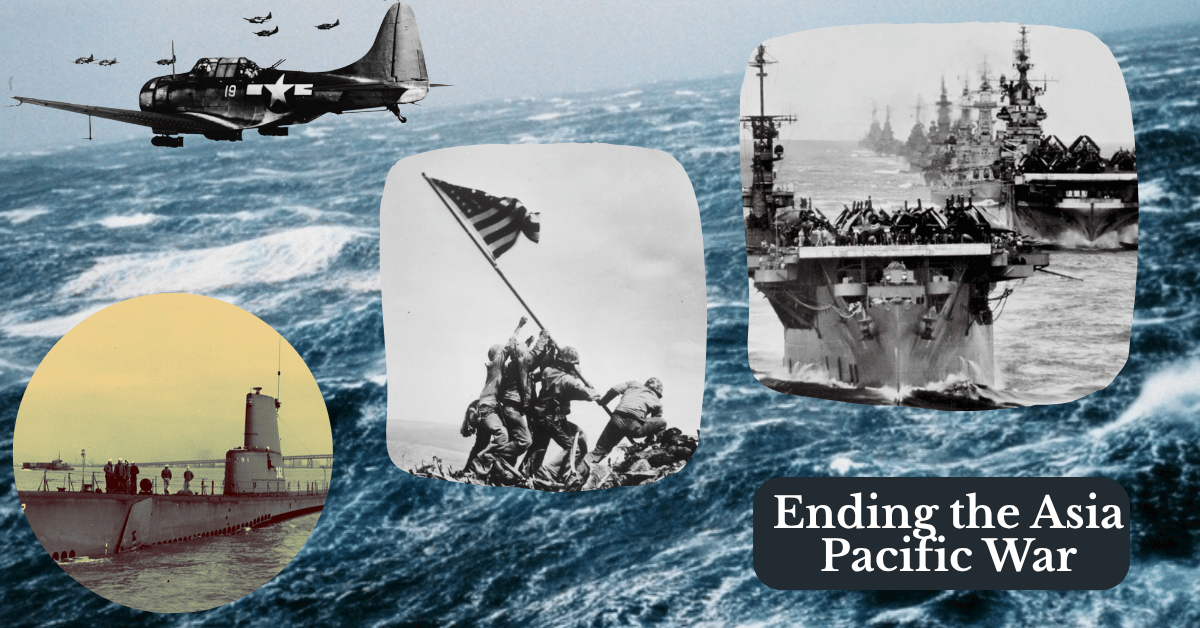
Image credit: various photographs from Naval Aviation Museum, National World War II Museum, and US Navy Archives.
 friarmusings