In the gospel Jesus tells the crowd that what truly defiles a person is not what comes from the outside, but what comes from within. What comes out is likely an indicator of the conversion happening within. Take someone’s intentions, attitudes, choices, words – what do they reveal? Holiness? Evil? Either can be rooted in one’s heart.
At the same time Jesus challenges the crowd’s comfortable assumptions about the purity and holiness rituals and laws. They are the external acts that are meant to call people to holiness, to keep them clean and acceptable. But Jesus pushes them beyond that familiarity and says: holiness is not about what goes on outside of you. It is about what is going on inside your heart and are you willing to make that journey of conversion.
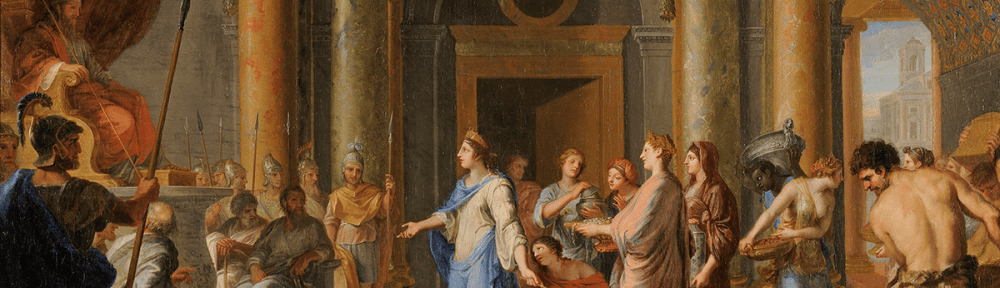
The first reading presents a striking image: the Queen of Sheba traveling a great distance to see Solomon. She is drawn by what she has heard: reports of wisdom, order, and blessing. When she arrives, she is overwhelmed. The splendor of the court, the clarity of Solomon’s answers, the abundance of his kingdom and more. Scripture tells us it quite literally takes her breath away. She is impressed.
But at the core of these readings is the challenge we face to understand the difference between what impresses us vs. what converts us.
What matters most is not that the Queen is impressed, but that she is willing to leave what is familiar in order to seek what is true. She risks the journey. She asks hard questions. And in the end, her admiration leads her beyond Solomon himself to praise the Lord who is at work through him. What begins as amazement becomes recognition of God.
That movement from being impressed to being converted is exactly where Jesus leads us in the Gospel. Our encounter with this life is meant to be transformative.
Let’s be honest, we are easily impressed. We are impressed by appearances, by success, eloquence, beauty, efficiency, even by religious performance. We can be impressed by the look of faith without allowing faith to change our hearts.
Conversion, however, works quietly. It does not always look dramatic. It happens when pride gives way to humility, when resentment gives way to mercy, when self-protection gives way to trust. Conversion shows itself not in what we display, but in what flows out of us. Especially when no one is watching.
External practices are easier to manage. They can be seen, measured, and admired. Interior conversion is harder. It requires honesty. It asks us to confront our intentions, our resentments, our fears, and the ways we protect ourselves.
The danger Jesus points to is subtle but real: we can remain impressed by faith without ever allowing it to change us. We can admire holiness from a safe distance while avoiding the inner work of conversion.
The Queen of Sheba models something different. She does not stay where she is comfortable. She does not rely on secondhand knowledge. She seeks God beyond what is familiar, and because she does, her encounter leads to praise and transformation, not just admiration.
Faith always asks us to move, to travel beyond ease, beyond routine, beyond the exterior practice of religion. What impresses us may catch our attention. But only what converts us reshapes the heart.
Image credit: Salomon recevant la reine de Saba | Jacques Stella, 1650 | Museum of Fine Arts of Lyon, France | PD
Discover more from friarmusings
Subscribe to get the latest posts sent to your email.
 friarmusings
Dear Father,
It is no accident that I stumbled upon this particular entry of this particular blog today. I don’t even read blogs! 😅 But this morning I fell down an Internet rabbit hole while looking to learn more about St. Francis, 🐇 and I landed here… and, wow! I saw myself in those Mass readings and in your words. You see, I used to be a “puffed up” Catholic, but I didn’t realize it! You know, doing everything “right” on the outside, while something was not “right” on the inside! “Impressed” by our faith, just like you said, but without allowing it to deepy penetrate my heart.
It’s a long story, but the reason I left the Church was because my family was, sadly, yet another victim of the clergy sexual abuse scandals. But I have missed Jesus sooo much, especially in the Eucharist. Oh, how I have missed Him! Yet, in the time that I’ve been away, I can see how much I’ve changed, and how my heart has softened. I can see that I was in denial then; 🫣 well, I hope to be a quietly, continually-converting Christian this time around. 💗(“External practices are easier to manage. They can be seen, measured, and admired. Interior conversion is harder. It requires honesty.”)
You are clearly educated and eloquent; I am a simple person– so I just hope my words even make sense! 🙏😅 Bottom line: thank you for writing this beautiful post. And I thank the Holy Spirit for leading me here!! Please pray that God will grant me the grace– and the courage!– to “allow the inner work of conversion,” just like you said! 💞
(Please do not share my name or address, as I wish to protect my family.)
Yours in Christ,
D