
In the previous post, we considered the actions taken by the United States in response to the Japanese occupation of Southern Indochina. In short, with the Export Control Act of 1940 already in place, in July 1941 President Roosevelt authorized the Treasury to freeze all Japanese assets held in US institutions. The export of goods to Japan required an export license and the approval of the FFCC (Foreign Funds Control Committee) to release funds to pay for the commodities – including and perhaps especially oil.
Edward S. Miller’s book, Bankrupting the Enemy, was an in-depth and interesting exploration of the financial aspects of US financial and foreign policy. It is filled with statistics, graphs and all manner of things that are probably not the reading fare of most people. But he uses all that data to make his case and take a new approach toward the U.S. financial and trade sanctions against Japan by treating “embargoing” and “bankrupting” of a hostile nation’s economy as two different economic sanction strategies. The author suggests that the trade embargoes (both export and import controls) that the Roosevelt administration employed against Japan, although discriminatory enough to hurt the Japanese trade and their feelings, did not produce desired outcomes, and he even goes so far as to argue that the abrogation of the 1911 Commercial Treaty in January 1940, traditionally considered as an important step in U.S. economic sanctions against Japan, was “a meaningless gesture because the United States did not invoke any trade penalties” (p. 83).
Miller points out that as early as 1933 the Roosevelt administration was aware that Section 5(b) of the Trading with the Enemy Act of 1917 empowered the president to regulate American financial dealings with all foreign countries and entities, and Roosevelt momentarily flirted with the idea of a financial freeze against Japan when Japan invaded China in July 1937. However, his administration continued to rely mainly on moral embargoes partly because U.S. financial experts at that time did not believe that Japan could wage a long war because of its lack of hard currency. Unbeknownst to them, Japanese banks had hidden a reserve of U.S. dollars large enough to postpone its bankruptcy perhaps to 1943. The moral embargoes were ineffective.
Leading up to the summer of 1940, the Economic Control Administration (ECA) undertook vulnerability studies of Japan’s strategic resources, including commodities essential for the Japanese people such as food and clothing on the premise that in total war there should be no distinction between soldiers and civilians. Miller’s discussion of the vulnerability studies by the ECA reveals the extent of the U.S. government’s understanding of the state of Japan’s economy and its vulnerabilities and how to exploit them. The U.S. government was fully aware that petroleum was the most vulnerable resource for Japan’s economic life and especially for its military, and that petroleum supplies from the United States were irreplaceable.
Any consideration of freezing Japan’s assets was not something in isolation, but was part of a larger action that froze the assets of Germany and all nations under Nazi control. At this point one has to consider “financial freeze” as having some element of being an offensive weapon. Unfortunately for Japan, at this same time Germany invaded the Soviet Union. The effect was that Japan no longer had access to the Trans-Siberian Railroad to ship/receive goods from its European trading partners. This made the U.S. dollar Japan’s only medium of international exchange but it was sorely lacking in trading partners. But Japan had put in place contingency plans.
Immediately before the FFCC was established, as of June 1941, Japanese companies had already obtained approved licenses for 7.1 million barrels of gasoline, 21.9 million barrels of crude oil, and 33,000 barrels of lubricants, altogether worth about $50 million. This was already licensed, but not shipped. It would have been sufficient, above and beyond current Japanese reserves, to supply all of Japan’s needs until the end of 1943. With a single stroke of an FFCC pen, it was possible to cut U.S. exports to Japan to zero despite the approved licenses for oil purchase Japan had already obtained. Under Secretary Dean Acheson who served on the FFCC was the one who ensured FFCC approval was not obtained.
In Going to War With Japan: 1937-1941, the author Jonathan Utley argues that the intent of the dual track arrangement of Export Controls and the FFCC was not to cut off all oil, but to ration it at a rate that let Japan know we control the spigot. This was the understanding of Hull and Sumner Wells. Utley asserts that Acheson, an advocate for a complete embargo, used his position to implement the de facto embargo from the FFCC side. Hull and Sumner were away from Washington on summer vacations and were unaware. There is good indication that Roosevelt was well aware and did nothing to alter Acheson’s actions. It was September before Hull became aware of the extent of Acheson’s action and by then any change in de facto policy would send the wrong signal to Japan.
Miller’s book’s main argument is clear: the U.S. government’s actions to date had done nothing to deter Japan from its “New Order” policy announced by Prime Minister Konoe. The announcement of a true embargo was a declaration of war – not a path that Roosevelt wanted to take in the summer of 1941 – but some response and action that was new and had some possibility of deterrence was needed given Japan’s move into Southern Indochina. Miller’s argument is that this was the point when the U.S. deliberately pursued the policy of using financial leverage to ratchet up the pressure on Japan. From Japan’s point of view, it was a declaration of economic “warfare.” All of Japan’s reserves for foreign trade were US dollars, including the assets banks had secured out of sight of the international banking system – but with Germany’s attack on the Soviet Union, the only trading partner available with the needed supplies was the United States. Japan was facing potential bankruptcy even with funds available to purchase needed supplies. But the one supplier judged all those supplies to be supporting the war machine that was Japan in East Asia.
Miller holds that it was the financial freeze that was the most devastating effect in that by not approving oil sales it could halt military operations, but the financial freeze’s impact also affected every aspect of Japanese life on the home islands. Miller argues that the U.S. attempt to defeat the enemy by moving them in the direction of bankrupting its economy provoked the enemy into the very war that the Roosevelt administration hoped to avoid.
Miller points out that although the U.S. already possessed enough data to have analyzed the effects on Japanese civil society, it did not do that specific analysis until after Peart Harbor. Miller argues that if key U.S. leaders had known, they would have made other choices. I can’t say that I agree. Via embassy staff and a network of information streams, the Departments of State and Treasury knew the conditions.
If anyone would have objected to the actions it would have been Secretary Hull, but he had just finished three months of secret discussions with the Japanese Ambassador to the United States and the Prime Minister. It reinforced two impressions: Japan was not an honest dialogue partner and the moderate wing of the Japanese government had no significant influence. The military/nationalist wing was clearly in charge. The New Order Policy was announced and intelligence clearly pointed to repositioning of military assets moving towards Southwest Asia. To this point Hull’s policy had been to press for fundamental agreements that could become lasting treaties and along the way to do nothing to aggravate the Japanese. The combination of three fruitless months of talks plus the move into Southern Indochina was the tipping point for Hull. Now, apart from Ambassador Grew, the U.S. was committed to more positive action in an attempt to change Japan’s aggression.
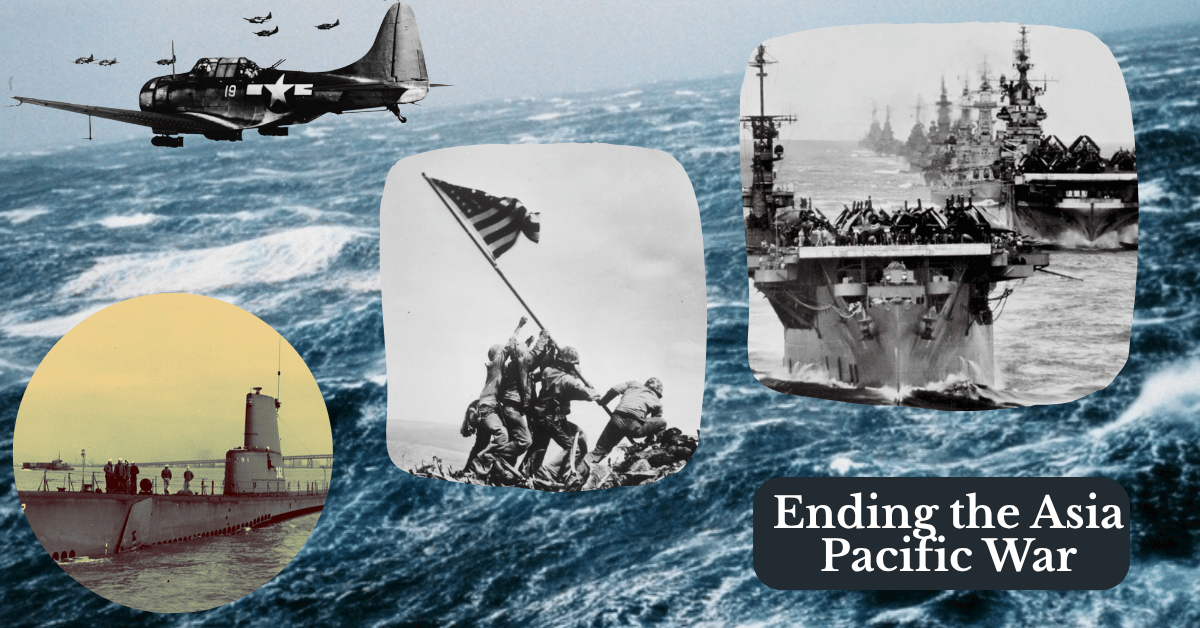
Image credit: various photographs from Naval Aviation Museum, National World War II Museum, and US Navy Archive. | Source credit: Bankrupting the Enemy: The U.S. Financial Siege of Japan before Pearl Harbor, by Edward S. Miller – and and Japan Prepares for Total War: The Search for Economic Security, 1919-1941 by Michael A. Barnhart
 friarmusings