
The Japanese – U.S. relationship was difficult, ambiguous, conflicted at times and never seemed to find a “spot” where simple co-existence had any endurance. There were many actors in this drama, but one actor is often overlooked in the popular understanding of the dynamics leading up to Pearl Harbor: Prince Fumimaro Konoe. Prince Konoe was one of the most influential, and in a way, one of the most tragic figures in Japan’s descent into total war from 1937 until 1945.
A scion of one of Japan’s oldest aristocratic families, Konoe served three times as prime minister (1937–1939, January–July 1940, and October 1940–October 1941) and occupied a unique position at the intersection of civilian politics, imperial authority, and an increasingly autonomous military. Although he often recognized the dangers of war, most notably with the United States, his actions and indecisions ultimately contributed to Japan’s expansion in China, its southward advance into Southeast Asia, and the breakdown of diplomacy with the Western powers.
Entering the Political Realm
Konoe emerged from the prewar aristocratic elite with a troubled family history, his father dying when Konoe was 12 and his step-mother a distant and aloof person. But he was taken under the wing of Prince Kinmochi Saionji, one of the genro, who had guided Japan into the Meiji era. Saionji took the 27 year old Konoe to the Versailles Peace Conference of 1919. After the conference he wrote an essay denouncing the Conference as an “Anglo-American Peace.” In that essay, Konoe’s world view was evident: the division of nations into “haves” and “have-nots.” He viewed Versailles as the Western Powers rigging an international system to protect the status quo and their privileged position. This world view was present in his later basic approach to foreign affairs. The essay did not mention that Japan, an ally in WW I, was also the beneficiary of all of Germany’s Asia-Pacific colonies and territories from China’s Liaodong Peninsula to the Mariana, Marshall and Carolina Islands. This experience shaped his enduring belief that Japan must assert itself as a great power independent of Western dominance.
Konoe – Prime Minster
As a prince he gained a place in the House of Peers, the upper chamber of Japan’s parliament, and took his place in Japanese politics. His ascent in political stature was flamboyant, not without mistakes, and while he gained popularity in many circles, his mentor, Saionji, began to suspect Konoe’s judgment. Nonetheless, his bon vivant and youth stood in contrast to the drab, older political figures around him. His sense of courtesy engendered wide public support and confidence as well as within some political circles. He was the “John F. Kennedy” of his day, the new hope to lead Japan out of its many problems. As already noted, he ascended to the role of Prime Minister in 1937. There he discovered his charm only went so far. He discovered being Prime Minister was akin to herding cats: it was difficult to impossible to control the various factions. It is also important to know that Japan’s Prime Minister was not like Britain’s. The word in Japanese translated as Prime Minister basically means “head of the meeting” which was an apt description for the role that lacked direct control over cabinet ministers.
Konoe garnered a reputation for indecisions, short-sighted decision making, and seemed to believe he could control or at least shape forces beyond him: namely, the Japanese military. He recommended two of his cabinet appointments as a means to show favor to the military and exert increased influence in that sector. It proved to be fateful. Foreign Minister Yosuke Matsuoka and Army (War) Minister Hideki Tojo. Yosuke, a supremely confident peer although low born, was a favorite of the Army. Tojo was a career Army officer, who served as a military attaché in Germany in the early 1920s, promoted to general in 1934, was assigned as chief of staff of the Kwantung Army leading military operations against the Chinese before eventually joining Konoe’s cabinet. He was known as the ultimate loyalist to the Emperor and an officer respected by all the factional divisions within the Army.
Yet, Konoe was never a militarist ideologue. He distrusted the army’s radical factions and feared Japan’s industrial inferiority relative to the United States. His dilemma was structural: as prime minister, he lacked constitutional authority over the armed forces, which answered directly to the emperor and were protected by custom and political intimidation – hence the two appointments.
The first goal of Konoe’s cabinet was establishing a comprehensive war economy with two goals in mind: resolution of the China quagmire and to position Japan for the coming change of the international order.
Foreign Policy
Yosuke’s role – which in itself is a fascinating story – was highlighted by the signing the Tripartite Pact with Germany and Italy and then later negotiating the Russian-Japanese Neutrality Act. The Tripartite Pact was viewed extremely positively within Army circles as it aligned itself with the country where Japanese officers served as attaché (none served in Britain or the U.S.). It was equally unpopular with naval officers, most of whom served in the U.S. or Britain, fearing that such a pact would eventually draw them into naval combat with the U.S. – a war they did not believe they could win.
Interestingly, the Tripartite Pact was written in English possibly to signal the target of the agreement. The agreement was an absolute commitment to attack any nation who attacked a member of the Pact. Japan had reservations specifically about how this would apply to the United States. Yosuke and Germany’s Foreign Minister Eugen Ott devised a “side deal” that effectively gave Japan the option to engage or not engage the U.S. This was a nod to the Navy’s concerns. However, the German requirement was that the “side deal” remain secret. After signing, Ott did not deliver the agreement to Germany. While Yosuke viewed the agreement as the means to acquire allies – those allies were half a world away. When the Pact was made public, all Japan really gained was potential enemies (U.S., Britain, Australia, New Zealand, and the Netherlands). They already did not trust Japan and this did not improve their view. Although Yosuke imagined and promoted himself as the “grand master” who would reshape Japan’s place in the world, the first “act” of a diplomacy whirlwind was not his idea. He admitted that the Army was the “playwright” and he was but the “actor.” This relationship would reappear again as regards Indochina.
China
Konoe’s first term coincided with the outbreak of full-scale war with China following the Marco Polo Bridge Incident in July 1937. Initially, Konoe hoped the conflict could be localized and resolved quickly. Instead, he presided over a dramatic escalation. He sanctioned military expansion in China, despite limited strategic objectives and no clear exit strategy and approved the capture of major Chinese cities, including Beijing, Shanghai, and Nanjing. His distrust of the more radical elements of the Army proved valid as he and Tojo were unable to restrain the army’s operational autonomy, culminating in atrocities such as the Nanjing Massacre, which severely damaged Japan’s international standing. Perhaps his most significant failure in judgment was issuing the 1938 declaration rejecting negotiations with Chiang Kai-shek, effectively committing Japan to a prolonged war of occupation.
In late 1938 Konoe endorsed and announced the idea of a “New Order in East Asia” (Tōa Shin Chitsujo). While vague, it implied Japan would reshape China politically, not merely extract concessions; existing treaty-based diplomacy was obsolete; and peace would not come through compromise. Konoe’s rhetoric boxed him in and closed off any path to negotiating with Chiang Kai-shek, the symbol of resurging Chinese nationalism and sovereignty. Any return to conventional diplomacy would look like retreat.
It wasn’t just his rhetoric that boxed him in. The army did as well. They were clear that they did not view Chiang Kai-shek as a legitimate negotiating partner, demanded that the “new order in East Asia” be under Japanese leadership, and insisted that only total political restructuring of China could secure Japan. Going against them risked the resignation of the army minister which would automatically collapse Konoe’s cabinet. Given recent history, potential violence or coup threats by radical officers was to be feared. In addition Konoe feared a loss of imperial confidence in his ability to govern.
In Japan’s political culture, seeking peace too early after the army’s string of victories could be seen as implying that Japan’s enormous sacrifices had been unnecessary. He would lose popular support, internal support and be accused of betraying the “spirit” of the imperial mission. Konoe was also concerned that he lacked “strategic air cover” that while Hirohito expressed concern about the war’s direction, he did not explicitly order Konoe to negotiate. Without such a directive, Konoe was reluctant to challenge the army directly.
Konoe did not initiate the war in China but he legitimized it politically and foreclosed diplomatic solutions. His initial belief that Japan could force a settlement through military pressure proved catastrophically wrong as he and others misread Chinese resilience and the leadership of Chiang Kai-shek. As a result they locked Japan into a conflict that further radicalized domestic politics and moved the nation towards authoritarian controls by nationalist/militarists.
Resignation
The Konoe cabinet collapsed on January 4, 1939 when Konoe resigned. The immediate cause was a political deadlock over how to end or even manage the war in China, combined with Konoe’s loss of control over the army. Konoe recognized the war was becoming open-ended and economically draining, but lacked the authority to impose negotiations. At the same time cabinet unity broke down as the army and navy pushed very different strategic postures for the nation (the North vs. South Expansion). Facing the risk of being blamed for an unwinnable war, Konoe chose to resign.
In what would prove to be another questionable judgement, after resigning in 1939, Konoe remained politically influential. He came to believe that party politics were obsolete and that Japan required national unity to survive in a hostile world. This belief culminated in his sponsorship of the Imperial Rule Assistance Association (IRAA), designed to replace competitive party politics with a mass mobilization structure under elite guidance (meaning him). With this Konoe abandoned even the remnants of liberal constitutionalism in favor of a vague, authoritarian leadership, one that ultimately empowered the very forces he feared.
Konoe was reappointed Prime Minister in July 1940 because Japan’s leadership wanted a prestigious, non-party figure who could unify the nation, manage the military, and stabilize foreign policy at a moment of deep crisis without provoking the army. As a prince of the ancient Fujiwara line, Konoe carried symbolic authority acceptable to both the emperor and the military, there was a political vacuum, and Konoe promised to transcend party politics via the IRAA. In essence, Konoe was brought back not because he had solved Japan’s problems before, but because he seemed the least dangerous compromise. He was a figure who could command legitimacy without challenging the military head-on.
Indochina
The Army had aligned Japan with Germany via Matsuoka, the Foreign Minister, and the Tripartite Pact. The fall of France in 1940 “orphaned” French Indochina and left it under the control of the Vichy French government – an ally of Germany. The local French governor understood only too well what this meant. Even before formally asked by Japan he suspended all trade and arms traffic to China. But the Army wanted more. They wanted to be the enforcement of suspended trade and wanted to position and move troops through Indochina to attack southern China. The Army General Staff wanted an immediate invasion. The Army Ministry wanted diplomacy. Diplomacy won the day and French Indochina agreed to terms and conditions acceptable to Matsuoke and Army Minister Tojo. But not to the Army General Staff.
In a series of events, as byzantine as it comes, with orders, counter-orders, forged orders and flagrant insubordination and refusal to follow orders, an armed invasion crossed the border on September 23, 1940. Combat operations continued after direct orders to stop but did not. When the dust settled the Kwantung Army had invaded (unnecessarily) and occupied Northern Indochina. General Tojo took immediate measures to restore chain-of-command and discipline. Offending officers – including the one who forged imperial orders – were dismissed and transferred to other duties, but no court martial actions were taken. The junior officers remained in place but were warned next time severe punishment would follow. All the senior officers eventually returned to important wartime commands. This all followed the pattern of the Mukden Incident that started the Sino-Japanese War.
Southern Expansion
Facing resource shortages exacerbated by the China war, Konoe endorsed the “southern expansion” into Southern French Indochina and Southeast Asia (he was again Prime Minister). These moves were intended to secure oil, rubber, and strategic depth but they directly challenged American and British interests. In July 1941, Japanese forces entered and occupied Southern Indochina (South Vietnam). The reaction was decisive as the U.S. froze Japanese financial assets and slow-rolled approval of required export licenses for oil, gasoline and other critical supplies. It was a de facto oil embargo. The details of this were covered in “The Financial Freeze.”
Final Attempt at Peace
In the late spring and summer of 1941 quiet negotiations – of a sort – were being conducted between the U.S. Secretary of State, Cordell Hull and Japan’s Ambassador to the U.S., Admiral Kichisaburō Nomura. This will be covered in a later post, but in short the talks were fruitless. This was also approaching the time when “Plan A” and “Plan B” were proposed by Japan (also covered later) as a way to forestall war. Meanwhile in Japan, it had already been decided to initiate combat in the Southwest Pacific and against Pearl Harbor – with one caveat. The Emperor insisted that there be one more attempt at some diplomatic solution to forestall war. With approval of the Emperor, Konoe made a genuine, if belated, effort to avoid war with the United States. He sought a personal summit with President Roosevelt, hoping imperial prestige and personal diplomacy could break the deadlock. The summit was opposed by Hull and in the end was never acted upon by Roosevelt.
Konoe resigned in October 1941, clearing the way for Army Minister Tojo to become Prime Minister and at the same time continue as Minister of the Army (now increasingly called “War Minister”).
Why this long post?
There are a number of revisionist historians (meaning later working with newer sources) who hold that the U.S. was culpable for what followed by not taking the summit with Konoe. There is an argument to be made that given both sides felt they were rapidly approaching the threshold of war that any dialogue was better than no dialogue at all. But by this time the U.S. had broken “Code Purple”, the diplomatic code (sometimes referred to under the general rubric “MAGIC”). We were able to “look behind the words.”
By late September 1941 we knew that Japan was repositioning military assets to move on the Southwest Pacific and the moderate wing of government had no leverage to change the tide of war. If these were reason enough to prepare for the inevitable, it must be remembered that Konoe “came to the table” with a history.
Konoe had never been able to enforce civilian control over the military. In addition, Kanoe was the author of the “New Order in East Asia” (Tōa Shin Chitsujo) which at its root was, from the U.S. perspective, the core problem. Kanoe had not started the war in China, but he had expanded the war. Later he was unable to stop the occupation of Southern Indochina. In the view of the State Department – “new boss, same as the old boss.” Japan was still not considered trustworthy given their history of vague diplomacy, military aggression apart from civilian control, and a habit to ask specific current actions of the U.S. while pinning their commitments to future events that might or might not happen. There was nothing in Konoe’s resume that indicated there would be anything new.
And finally, intercepted diplomatic cables made clear, Japan would not offer anything new not already considered in Plan A and Plan B.
And now they were proposing Konoe as the new voice of diplomacy and he could not offer a coherent negotiating position before the summit. In the end the summit came to nothing. Konoe resigned in October 1941, clearing the way for General Tōjō, whose government would authorize war.
In his book, Tower of Skulls, historian Richard B. Frank describes part of Konoe’s story in a chapter rightly called “Japan’s Prince of Self-Destruction.” Prince Kinmochi Saionji, his early mentor, was prescient in wondering if Konoe possessed a keen sense of judgment.
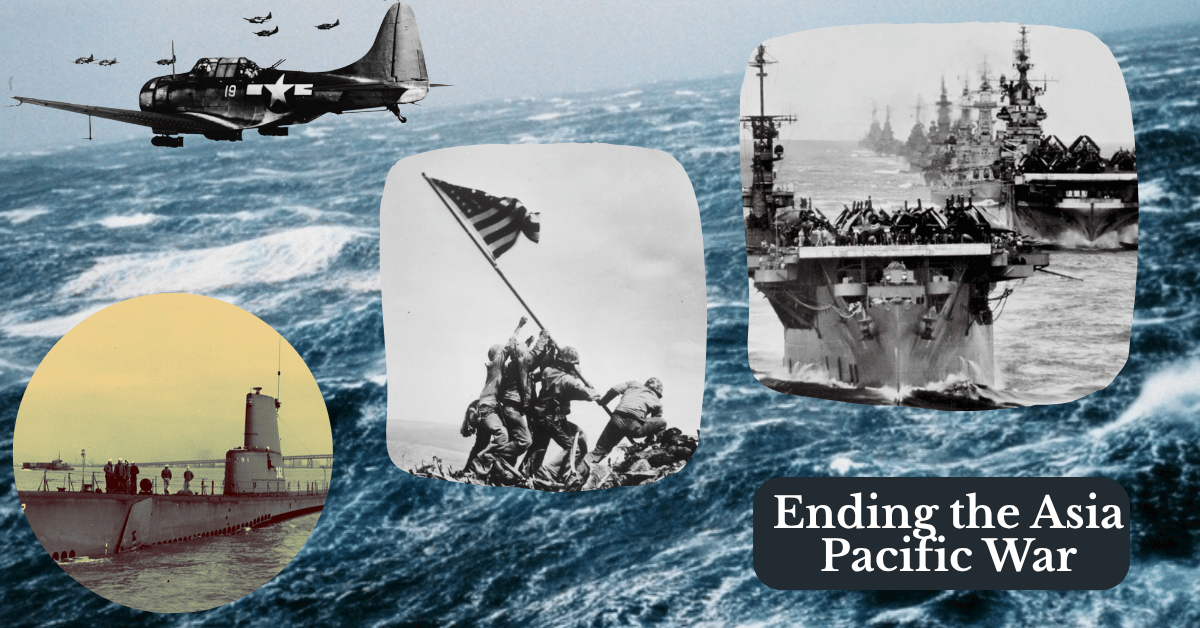
Image credit: various photographs from Naval Aviation Museum, National World War II Museum, and US Navy Archive. | Source credit: Tower of Skulls by Richard B. Frank notably the chapter “Japan’s Prince of Self-Destruction”
 friarmusings