Middle Aged Milestones

There are many “milestones” that mark the passage from “young” to middle-aged. I’m too old to remember them all having given up the notion that I am still in either category. But Joey Knight, a sports writer for the Tampa Bay Times, notes that the Tampa Bay Buccaneers football team has a double marker of middle aged:

  • They are about to start their 47th preseason training camp, and with
  • a 45-year old starting quarterback

In speculating on the possible fortunes of the Bucs in the coming season, Knight writes: “We cite Rocky Balboa here: Time is undefeated. Brady can continue with his revolutionary training methods, meticulous diet and general defiance of the natural order. At some point, he’s going to regress. Will it be this season? So far, there is zero evidence of that. He’s coming off one of his most prolific seasons ever (5,316 passing yards, 43 touchdowns) and was spinning the ball as crisply as ever during the recent mandatory minicamp. But no one — not even the NFL’s resident freak of nature — lasts forever.”

Well… not in this life. But we are all in the “preseason training camp” of this life, preparing for the life to come! Amen!

The Battle of Britain

July 10, 1940: On this day in history, in the midst of World War II, the Battle of Britain began as the Luftwaffe started attacking southern England. The Battle of Britain was a military campaign  in which the Royal Air Force (RAF) and the Fleet Air Arm (FAA) of the Royal Navy defended the United Kingdom against large-scale attacks by Nazi Germany’s air force, the Luftwaffe. It has been described as the first major military campaign fought entirely by air forces. The Battle of British lasted until 31 October 1940, which overlaps the period of large-scale night attacks known as the Blitz, that lasted from 7 September 1940 to 11 May 1941.

The burdens

From time to time this summer I have been commenting on the first reading, recently from the prophets Amos and Hosea. Their words have been direct and challenging to any who would listen: this is how you are seen in the eyes of God. It was a rough encounter. While it promised doom to those whose heart remained hardened, there was always the call to turn back to God, back to the covenant. Continue reading →

The Trombone

On July 4th I attended a neighborhood house party in Leesburg, Va. It was a festive gathering made even more festive by the presence of the Jefferson Street Strutters, an ensemble of folks who play New Orleans jazz in the style of the 1910s-1930s. While listening I began to wonder how a slide trombone works. Mobile phone in hand my question was quickly answered with a search. Later on, chatting with the trombone player, I got an even more detailed answer. Along the way, my etymological interests were also entertained. The word “trombone” comes to us via the Italian: trumpa – trumpet and one – large. Basically it means a large trumpet. It is good that our word comes from the Italian and not the middle English. Until the early 18th century, the English word for trombone was “sackbut.” It has its own linguistic evolution from the French, but it is just an unfortunate rendering in English.

Fourth of July – Leesburg VA

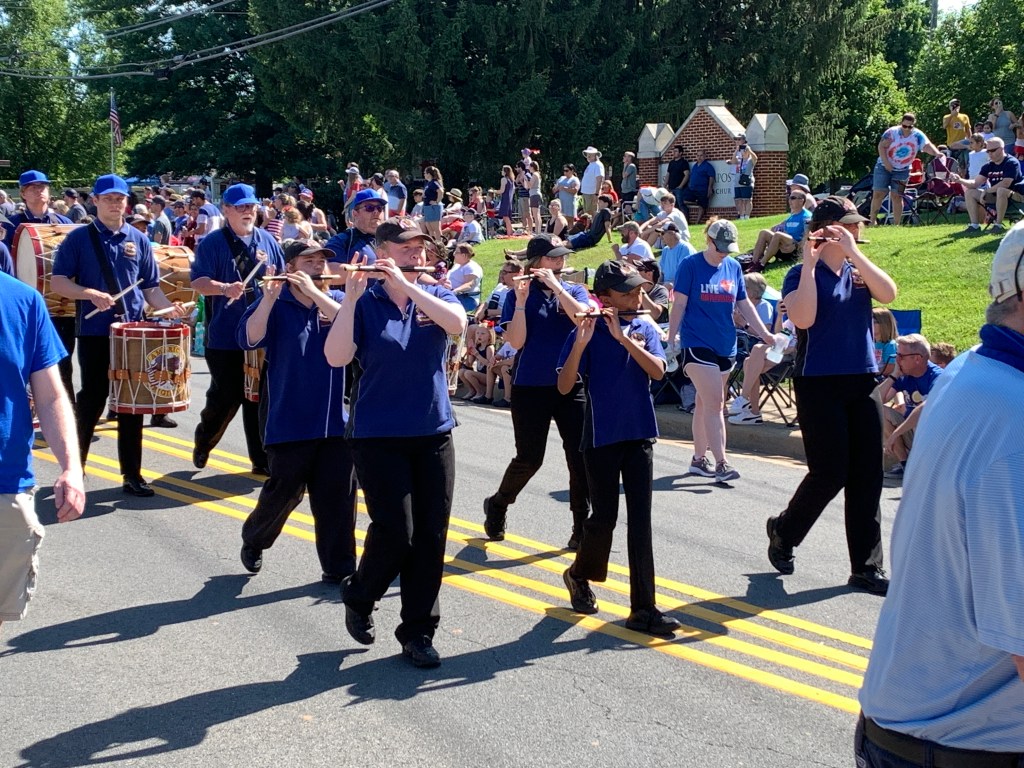
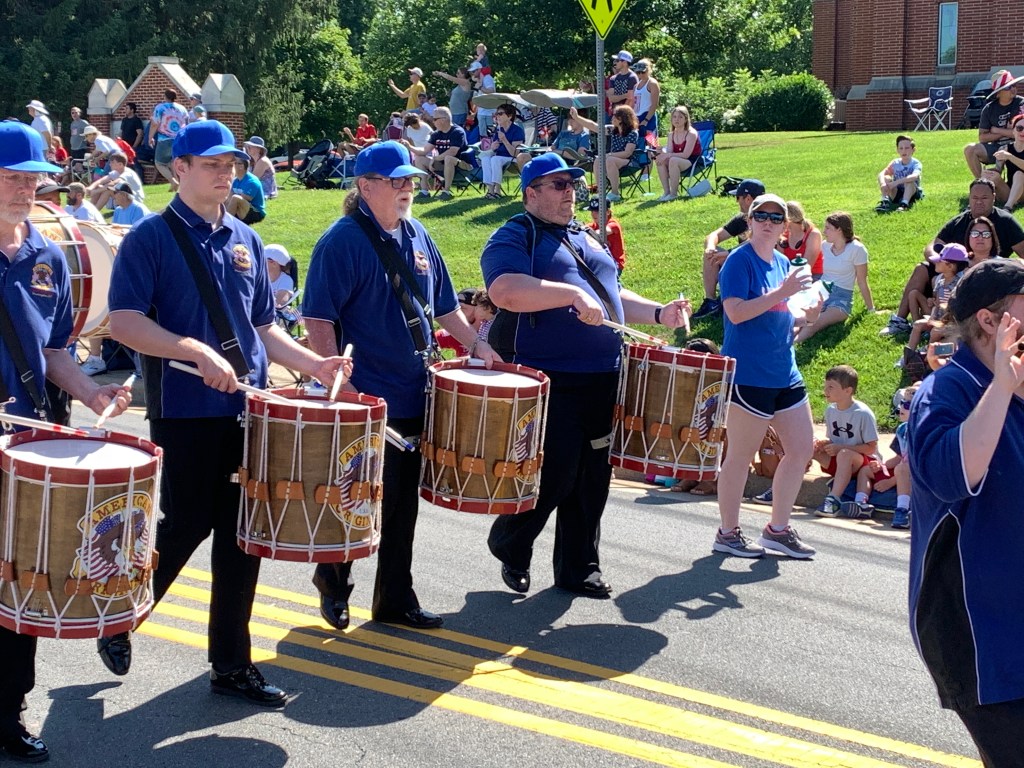
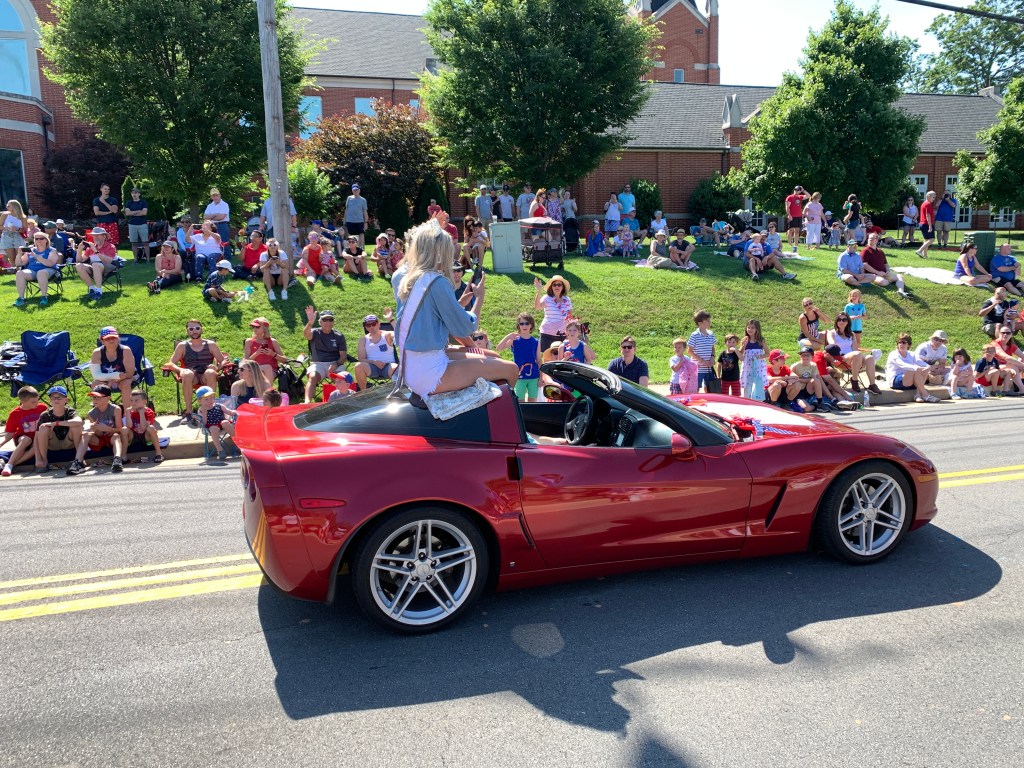
Spent the 4th of July weekend with long-time friends Rebecca and Doug Lynes who reside in Leesburg, VA. This morning we enjoyed the town 4th of July Parade. Complete with floats, fire trucks, tractors, classic cars, fife & drum corp, and lots of politicians running for office. The most unique group? The Roller Derby Ladies of Loudoun.  Very fun morning. Just s few of the many pictures taken. Enjoy.

Saints Together

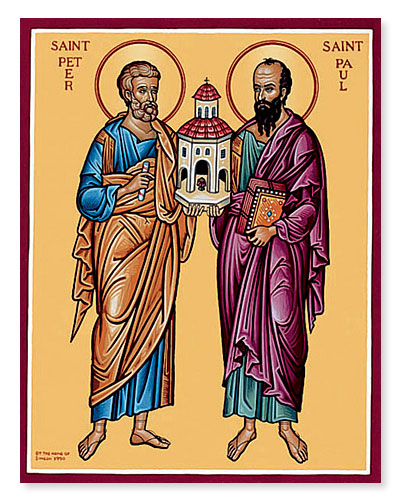
sts-peter-and-paul-1Most of the apostles and lots of saints have their own feast day, but how about the two most famous saints of the early church? There is February 22nd in which the Church celebrates the “Chair of Peter” the sign that Peter was the first among the apostles and the one designated to lead the early Church after Jesus’ Resurrection and Ascension. But there is no “Feast of St. Peter.”

St. Paul, although not one of the Twelve, was an Apostle commissioned by Jesus. There is the January 25th celebration of “The Conversion of St. Paul” which commemorates the Damascus Road episode described in Acts of the Apostles: 9:1-31, 22:1-22, and 26:9-24. It is the scene made famous by the “Conversion on the Way to Damascus” painting by Caravaggio. But there is no “Feast of St. Paul.” Continue reading →

Deaf to the Word of God

The refrain from the psalm response of today’s readings is well paired with the first reading from the Book of Amos: “Remember this, you who never think of God.” In the first reading the prophet Amos is addressing the people of the Northern Kingdom of Israel during the prosperous reign of Jeroboam II (786–746 B.C.).

Amos’ prophetic book begins with a sweeping indictment of Damascus, Philistia, Tyre, and other pagan nations surrounding Israel. (Amos 1:3-2:16). The indictment begins with the expression, “For three crimes…and now four.”  This expression is frequent in poetry of the times (e.g., Prv 6:16–19; 30:18–19). The progression “three” followed by “four” suggests a climax. The fourth crime is one too many and exhausts the Lord’s forbearance. The prophecy of the utter destruction of “nations” does not mince words.

But he saves his climactic denunciation for Israel in which he denounces the hollow prosperity of the Northern Kingdom. He denounces their injustice and idolatry as sins but sin especially against the Light and Covenant granted to her. Just like the nations, Israel could indeed expect the day of the Lord. The coming destruction prophesied the overthrow of the northern sanctuary, the fall of the royal house of the North, and the captivity of the people by their enemies.

“For three crimes…and now four.” And so begins the condemnation of Israel as they never really listened to God or his prophets.

“Why do you recite my statutes, and profess my covenant with your mouth?”…“You sit speaking against your brother; against your mother’s son you spread rumors. When you do these things, shall I be deaf to it?”… Remember this, you who never think of God.” (taken from Psalm 50 for today)

Take some time today and consider in what part of your life are you deaf to the Word of God?

There is no place like home

Wiz-of-OzYesterday I posted an article on Margaret Hamilton, the actress who played the Wicked Witch of the West in the movie classic, The Wizard of Oz.”

Maybe seven  years ago, William J. O’Malley wrote about “taking the long way home.” It was a wonderful “musing” on the classic movie, “The Wizard of Oz.” We were reminded about the archetypal scene when Dorothy’s house lands on the Wicked Witch and then Glinda, the good witch, shows up and magically transfers the ruby slippers to Dorothy. As the ending of the movie makes clear, all Dorothy had to do was click her heels and proclaim, “There’s no place like home. There’s no place like home.”

Why didn’t Glinda tell Dorothy that at the very beginning? Continue reading →

Like it was yesterday.

An interesting article popped up on my feed this day. It was about Margaret Hamilton, an actor on stage and in film. Not familiar with her name? She had one of the most iconic lines in all film history: “I’ll get you, my pretty, and your little dog too!” That right, the Wicked Witch of the West, whose cackle this day, still sends shivers through me. In the entire movie she was on screen for only 12 minutes, including the memorable melting scene at the movie’s end.

In what I think is a twist of fate, laced with irony…can you guess what he chosen profession was before she began acting?  She was a kindergarten teacher and described by all as a gentle and loving teacher.  Which I am sure is true…but it is tough for me to get past the cackle. I remember it like it was yesterday.

Mystic of the Sacred Heart

Saint Marguerite Marie Alacoque was a French Roman Catholic Visitation nun and mystic, who promoted devotion to the Sacred Heart of Jesus in its modern form. Today is her feast day

In 1905, at the dedication of our current church, our parish was renamed “Sacred Heart” and consecrated to the Sacred Heart of Jesus. The Sacred Heart of Jesus is a devotional with long and historic provenance within Christianity, and in modern times has been established as a Solemnity for the universal Church.

The Solemnity of the Most Sacred Heart of Jesus is a celebration that falls 19 days after Pentecost, on a Friday. The liturgical feast was first celebrated in Rennes, France. The liturgy was approved by the local bishop at the behest of St. John Eudes, who celebrated the Mass at the major seminary in Rennes on August 31, 1670. You’ll notice that the first celebration was not situated in the days following Pentecost. St. John Eudes composed a Mass and a set of prayers for outside the Mass (referred to as an “Office”) that were quickly adopted in other places in France.  Continue reading →