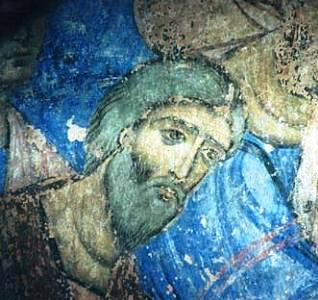
On the plain: sermon

This passage is the introduction to a new major section of the book of Luke (6:17-9:50). While previous passages have dealt with the early ministries of John the Baptizer and Jesus, and have only referred to the teachings of Jesus, here for the first time the actual content of his teaching to the crowds is presented. Also, for the first time, teachings are addressed directly to Jesus’ disciples. There has been a steady progression within Luke from a focus on God’s work in the world in Jesus (the infancy narratives, chs. 1-2), to the preparation for Jesus’ ministry by John the Baptizer (3:1-20), to Jesus himself and his own preparation for ministry (3:21-4:13). Then Luke begins to highlight how Jesus and his teachings were received, beginning with the hometown folks in Nazareth (4:14-30) and concluding with the choosing of the twelve, who were among those who responded by leaving everything to follow him (6:12-16). In this section, Luke begins expanding that dimension of response by focusing on Jesus’ teaching related to the “ethics of the Kingdom,” the responsibilities and consequences of being disciples. Luke continues this focus on discipleship until the journey toward Jerusalem begins (9:51), where it takes on a slightly different tone. Continue reading

On the plain: blessing and woes

At this point in his narrative, Luke incorporates part of the same material that Matthew had included in the Sermon on the Mount (Matt 5–7). But instead of staying on the mountain to deliver his discourse, Jesus comes down from the mountain like Moses descending to deliver the law to the people (Exod 34:15). As before, people crowd around him to hear the word of God and to be healed (5:1, 15).

And raising his eyes toward his disciples he said: “Blessed are you who are poor, for the kingdom of God is yours. Blessed are you who are now hungry, for you will be satisfied. Blessed are you who are now weeping, for you will laugh. Blessed are you when people hate you, and when they exclude and insult you, and denounce your name as evil on account of the Son of Man. Rejoice and leap for joy on that day! Behold, your reward will be great in heaven. For their ancestors treated the prophets in the same way. But woe to you who are rich, for you have received your consolation. But woe to you who are filled now, for you will be hungry. Woe to you who laugh now, for you will grieve and weep. Woe to you when all speak well of you, for their ancestors treated the false prophets in this way. Continue reading

On the plain: more context

And he came down with them and stood on a stretch of level ground. A great crowd of his disciples and a large number of the people from all Judea and Jerusalem and the coastal region of Tyre and Sidon  came to hear him and to be healed of their diseases; and even those who were tormented by unclean spirits were cured.

As you have already considered, this Lucan passage is very similar to Matthew’s “Sermon on the Mount” – the beginning part referred to as the Beatitudes. Both versions are (and will, no doubt, continue to be) the source of much scholarly inquiry and debate. Some ask whether this is a single-setting sermon or if this is a compilation of Jesus’ sayings arranged in a “sermon.” As we have been doing throughout our study of Luke, it is helpful to compare Luke with the parallel passages in Matthew to help understand Luke’s concerns here (there are no parallels in Mark or John, although some of the same sayings are found scattered throughout the books). While questions about origin, sources, and redaction of the text are certainly valid and interesting, it will probably be sufficient here simply to acknowledge the fact that Luke and Matthew differ in how they have constructed these sermons. Continue reading

On the plain: context

And he came down with them and stood on a stretch of level ground. A great crowd of his disciples and a large number of the people from all Judea and Jerusalem and the coastal region of Tyre and Sidon came to hear him and to be healed of their diseases; and even those who were tormented by unclean spirits were cured.  Everyone in the crowd sought to touch him because power came forth from him and healed them all. And raising his eyes toward his disciples he said: “Blessed are you who are poor, for the kingdom of God is yours. Blessed are you who are now hungry, for you will be satisfied. Blessed are you who are now weeping, for you will laugh.  Blessed are you when people hate you, and when they exclude and insult you, and denounce your name as evil on account of the Son of Man.  Rejoice and leap for joy on that day! Behold, your reward will be great in heaven. For their ancestors treated the prophets in the same way.  But woe to you who are rich, for you have received your consolation.  But woe to you who are filled now, for you will be hungry. Woe to you who laugh now, for you will grieve and weep.  Woe to you when all speak well of you, for their ancestors treated the false prophets in this way. Continue reading

Fishing: reaction

Fishers-of-men-iconThe Reaction. 8 When Simon Peter saw this, he fell at the knees of Jesus and said, “Depart from me, Lord, for I am a sinful man.” 9 For astonishment at the catch of fish they had made seized him and all those with him, 10 and likewise James and John, the sons of Zebedee, who were partners of Simon.

The focus of these verses is on Simon, now called Simon Peter for the first time in Luke’s gospel – even James, John, and the unmentioned Andrew, are referred as partners of Simon. It is here that Luke calls Simon as Peter for the first time, “the Rock,” the name he will later have as the leader of the church. His eyes are opened through his act of faith, and he falls before Jesus. Peter is the first person in the public ministry to call Jesus “Lord” (no longer only “Master”: v. 5). Suddenly we realize that the story has been more than the initial calling of the fishermen disciples. From earliest times the church has seen herself as the “bark of Peter” in which faith in Jesus is tested (Mark 4:35–41; Matt 8:23–27). Jesus chooses Simon’s boat, sending him into deep water and calling for a decision based solely on personal faith. The faith of Simon’s response is what makes him the rock on which the church is built (Matt 16:18). Continue reading

Fishing: the Word

Fishers-of-men-iconThe account begins with a wide-angle view: the press of the crowd leading to Jesus’ teaching in a natural amphitheater from a boat on the lake. Quickly, however, events on the boat move to the forefront and the crowd disappears completely from view. The important interaction here is between Jesus and Peter, who represent the ones who respond positively to Jesus. Continue reading

Fishing: crowds

Fishers-of-men-iconWriting with Intent. Christian tradition and popular biblical opinion is the St. Luke was a physician. I occupy the minority camp on that matter. There have been lots of studies comparing his writing and language to know physicians of his age. There is nothing about this Gospel (or Acts of the Apostles) that points to a physician. But as many have pointed out, there are lots that points to another occupation: rhetorical historian (and yes, he could have been both…). As the rhetorical historian, he writes with a purpose and intent. Green [230] writes: “Within his overall narrative strategy, the initial purpose of this episode is to secure for Luke’s audience the nature of appropriate response to the ministry of Jesus. Simon’s obedience and declaration of his sinfulness, and especially the final note that Simon, James, and John “left everything and followed” contrast both with the earlier “amazement” of the crowds and with the questions and opposition characteristic of the Pharisees and teachers of the law in the later episodes of this chapter. His further statement, “Go away from me, Lord,” contrasts even more sharply with attempts by people at Nazareth and Capernaum, as it were, to keep Jesus to themselves.” Continue reading

Fishing: context

Fishers-of-men-icon1 While the crowd was pressing in on Jesus and listening to the word of God, he was standing by the Lake of Gennesaret. 2 He saw two boats there alongside the lake; the fishermen had disembarked and were washing their nets. 3 Getting into one of the boats, the one belonging to Simon, he asked him to put out a short distance from the shore. Then he sat down and taught the crowds from the boat. 4 After he had finished speaking, he said to Simon, “Put out into deep water and lower your nets for a catch.” 5 Simon said in reply, “Master, we have worked hard all night and have caught nothing, but at your command I will lower the nets.” 6 When they had done this, they caught a great number of fish and their nets were tearing. 7 They signaled to their partners in the other boat to come to help them. They came and filled both boats so that they were in danger of sinking. 8 When Simon Peter saw this, he fell at the knees of Jesus and said, “Depart from me, Lord, for I am a sinful man.” 9 For astonishment at the catch of fish they had made seized him and all those with him, 10 and likewise James and John, the sons of Zebedee, who were partners of Simon. Jesus said to Simon, “Do not be afraid; from now on you will be catching men.” 11 When they brought their boats to the shore, they left everything and followed him. Continue reading

Nazareth: final thought

JesusIconNazarethA Final Thought – from Alan Culpepper, “The Gospel of Luke”

“This scene is more significant than its brevity might suggest. Its position at the beginning of Jesus’ ministry, its emphasis on the Spirit and Scripture, and its depiction of themes that will dominate the rest of the Gospel all point to its paradigmatic character. Readers of the Gospel now understand that all Jesus does in the coming chapters occurs by the power of the Spirit. Jesus teaches, preaches, heals, and casts out demons. He moves among the poor, the outcast, the sick, and the blind. His actions fulfill the Scriptures, especially the Prophets, but even those who awaited the fulfillment of the Scriptures took offense at Jesus and eventually put him to death. This scene suggests that the basis for their hostility toward Jesus was a difference in the way they read the Scriptures. The people of Jesus’ hometown read the Scriptures as promises of God’s exclusive covenant with them, a covenant that involved promises of deliverance from their oppressors. Jesus came announcing deliverance, but it was not a national deliverance but God’s promise of liberation for all the poor and oppressed regardless of nationality, gender, or race. When the radical inclusiveness of Jesus’ announcement became clear to those gathered in the synagogue in Nazareth, their commitment to their own community boundaries took precedence over their joy that God had sent a prophet among them. In the end, because they were not open to the prospect of others’ sharing in the bounty of God’s deliverance, they themselves were unable to receive it.”

“Not only is this scene paradigmatic of Jesus’ life and ministry, but it is also a reminder that God’s grace is never subject to the limitations and boundaries of any nation, church, group, or race. Those who would exclude others thereby exclude themselves. Human beings may be instruments of God’s grace for others, but we are never free to set limits on who may receive that grace. Throughout history, the gospel has always been more radically inclusive than any group, denomination, or church, so we continually struggle for a breadth of love and acceptance that more nearly approximates the breadth of God’s love. The paradox of the gospel, therefore, is that the unlimited grace that it offers so scandalizes us that we are unable to receive it. Jesus could not do more for his hometown because they were not open to him. How much more might God be able to do with us if we were ready to transcend the boundaries of community and limits of love that we ourselves have erected?” [Culpepper, 108-9]

Sources:

Commentaries

  • Culpepper, R. Alan. “The Gospel of Luke.” New Interpreter’s Bible. Ed. Leander E. Keck. Vol. 9. Nashville: Abingdon Press, 1994–2004) 102–109
  • Geldenhuys, Norval. Commentary on the Gospel of Luke: The English Text with Introduction, Exposition and Notes. Grand Rapids, MI: Wm. B. Eerdmans Publishing Co., 1952. 164-170
  • Green, Joel B. The Gospel of Luke. Grand Rapids, MI: Wm. B. Eerdmans Publishing Co., 1997. Print. The New International Commentary on the New Testament. 204-219
  • Luke Timothy Johnson, The Gospel of Luke, vol. 3 of the Sacra Pagina series, ed. Daniel J. Harrington (Collegville, MN: 1991)
  • Jerome Kodell, “Luke” in The Collegeville Bible Commentary, eds. Dianne Bergant and Robert J. Karris, (Collegeville, Minn.: Liturgical Press, 1989). 936 – 980.
  • Brian Stoffregen, “Brian P. Stoffregen Exegetical Notes” at crossmarks.com

Dictionaries

  • Gerhard Kittel, Gerhard Friedrich and Geoffrey William Bromiley, Theological Dictionary of the New Testament (Grand Rapids, Mich.: W.B. Eerdmans, 1995)

Scripture Scripture quotes from New American Bible by Confraternity of Christian Doctrine, Inc., Washington, DC. © 1991, 1986, 1970