On this day is history the cruiser USS Indianapolis (CA-35) was sunk by a Japanese submarine. Indianapolis had departed Hunters Point Naval Shipyard (San Francisco) on July 16 with the destination of the Naval Base on Tinian Island in the Marianas.
Indianapolis received orders to undertake a top-secret mission: transporting major parts of the atomic bomb that was later dropped in Hiroshima, Japan. The parts included the complete non-nuclear assemblies, several hundred pounds of scientific instruments and tools, and 85 lbs of enriched uranium. The materials were delivered and off-loaded at Tinian on July 26th, Indianapolis left the same day and sailed to Guam where a number of the crew who had completed their tours of duty were relieved by other sailors. Leaving Guam on 28 July, she began sailing unescorted toward Leyte in the Philippines. On July 30th she was attacked by Japanese submarine I-58 who launched two “Long Lance” torpedoes each carrying 1,000 lb high explosive warhead. The Indianapolis sank in 12 minutes.
On this day in 1952, the United States won a gold medal in Olympic 8-man crowing. The crew was comprised of midshipmen from the US Naval Academy, a crew known as the “Great Eight.” If you are interested in more information and a link to a Gregory Peck narrated video, see more here.
I enjoy reading. While I read scriptural and spiritual books, I also read for my own entertainment, enlightenment, or just because that looks interesting. I just finished a book by Benjamin H. Milligan entitled, “By Water Beneath the Walls: The Rise of the Navy Seals.” It is not a collection of SEAL war stories, although such accounts are present in the book to the extent they serve a larger question. The author is addressing a question of history, policy and “the way things turn out.” Here’s the question:
How did the US Navy – the branch of the US military tasked with patrolling the oceans – ever manage to produce a unit of raiders trained to operate on land? And how, against all odds, did that unit become one the world’s most elite commando forces, routinely striking thousands of miles from the water on the battlefields of Iraq, Afghanistan, Syria, and even Central Africa. Behind the SEAL’s improbable rise lies the most remarkable underdog story in American military history.
Mr. Milligan served with the SEALs for 8 years and it was a question that was in his mind as he operated. “So, how did this happen? How did the US Navy create a unit whose operational center of gravity is not only directed at a mission performed on 29% of the earth’s surface that its ships cannot touch, but on so fraught with difficulties that most units of the Army and Marine Corp – the US military’s tradition tenants of its land operations – are not able to perform it with any where near the same proficiency?”
You might be thinking “didn’t the Underwater Demolition Teams (UTD) just become the SEALs?” Hardly. The history is fascinating, convoluted, and even involves the CIA. It was a fascinating account, well researched and written. It is not a story that unfolds in a straight line, but runs through Little Creek VA, Ft. Pierce FL, Coronado CA, North Africa, Saipan, Korea, Vietnam, mainland China, and an itinerary that covers the globe.
And as it happens, 50 years ago Naval Special Warfare Group ONE was formed with its headquarters on Coronado Island, California. NSWG consists of Navy Sea, Air, and Land (SEAL) and Special Warfare Combatant-craft Crewmen (SWCC). NSWG-1’s legacy builds on a rich history of naval special operations dating back to 1942, when the Amphibious Scouts and Raiders and the Naval Demolition Unit were formed to conduct critical missions during Operation Torch, the Allied invasion of North Africa. These units laid the foundation for the modern SEAL teams.
If you enjoy military history, it is well worth the read.
Some days in history are just filled with interesting events, but then there have many years and centuries – so something interesting is bound to happen on any given date. This day in history marked some significant events in naval history
In 1905 the Japanese fleet destroys the Russian East Sea fleet in the Battle of Tsushima, the only decisive clash between modern steel battleships in history. It was the first major victory of an Asian power over a European one in modern times. As a result it fueled Japanese nationalism and reinforced the belief that military strength was essential for Japan’s security and prestige. It also elevated the Imperial Japanese Navy as a symbol of national power, encouraging further investment in military expansion.
The victory boosted the influence of military leaders in government, setting a precedent for the army and navy to play a greater role in politics. Over time, military success became intertwined with Japan’s identity, laying the groundwork for the later dominance of militarists in the 1930s.
In changed Japanese view of the Western powers, justifying further expansion into Korea (1910 annexation) and into Manchuria. This was the beginning that set the stage for Japan’s imperial ambitions in East Asia and the Pacific. 35 years after Tsushima, the Japanese attacked Pearl Harbor.
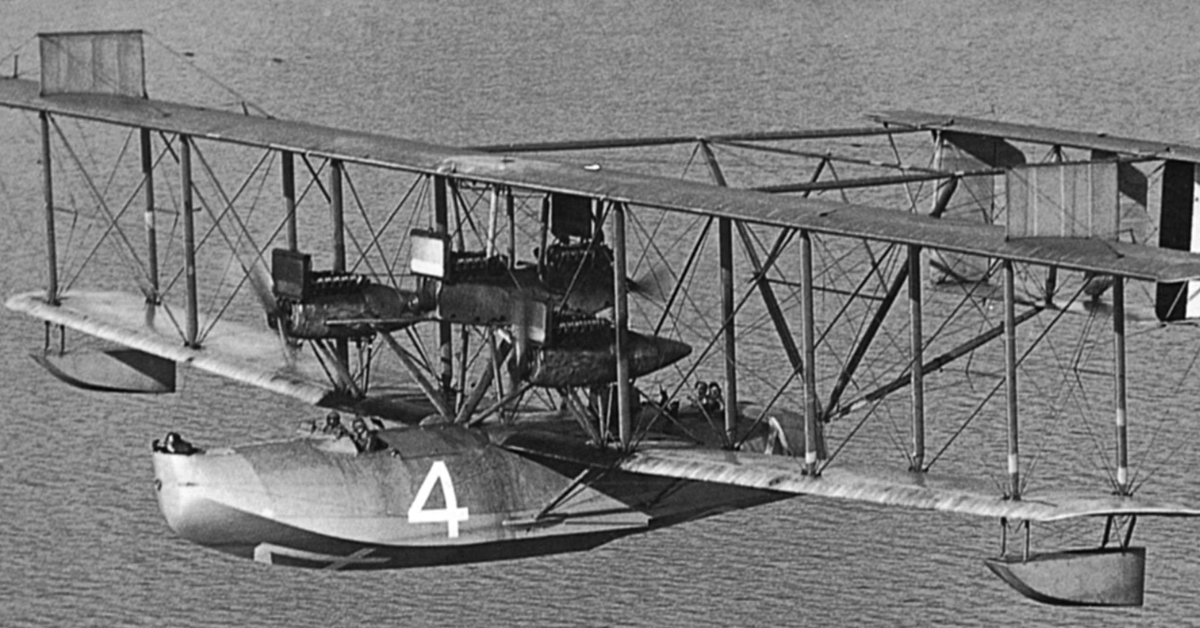
This day in history (1919) the US Navy’s NC-4 flying boat completed the first Trans-Atlantic Flight, albeit not non-stop. A crew of United States Navy and US Coast Guard aviators flew the NC-4 from New York State to Lisbon, Portugal, over the course of 19 days. This included time for stops for numerous repairs and crewmen’s rest, with stops along the way in Massachusetts, Nova Scotia, Newfoundland, and twice in the Azores Islands. Then its flight from the Azores to Lisbon completed the first transatlantic flight between North America and Europe, and two more flights from Lisbon to northwestern Spain to Plymouth, England, completed the first flight between North America and Great Britain. This accomplishment was somewhat eclipsed in the minds of the public by the first nonstop transatlantic flight, made by the Royal Air Force pilots John Alcock and Arthur Whitten Brown two weeks later.
The Navy/Coast Guard aviators became a footnote in history. Alock and Brown were were knighted by King George V and awarded 10,000 English pounds – that’s about $825,000 US (2025).
Image creator: Olaf Rahardt | Credit: ullstein bild
Also on this day in history (1941) the German battleship Bismarck sunk by British naval force sea and air forces. The Bismarck was the pride of the Kriegsmarine (German Navy)—one of the most powerful and modern battleships in the world at the time. Its loss marked a crippling setback to Germany’s surface fleet and ended its realistic hopes of challenging British naval dominance in the Atlantic. Its sinking ensured greater security for Atlantic convoys, which were vital for Britain’s survival and war effort – and was a boost in English morale in the midst of the “Battle of Britain.”
Bismarck was ultimately disabled by torpedo bombers from the aircraft carrier HMS Ark Royal, showing the growing dominance of air power in naval warfare. It marked a shift from traditional battleship-on-battleship engagements to more integrated naval operations.
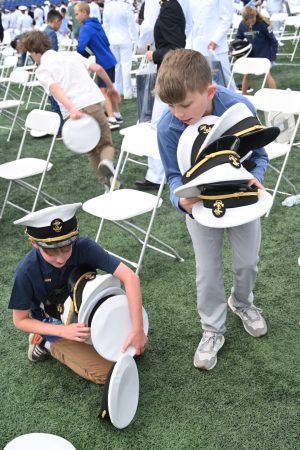
1,049 Midshipmen became Ensigns and Second Lieutenants yesterday at Navy/Marine Corps Stadium as part of the Graduation and Commissioning Ceremony for the Class of 2025. 751 men and 298 women were in the graduating class. 776 received commissions in the Navy. 258 were commissioned into the Marine Corps. Congrats and welcome to the ranks of alumni.
Ever wonder what happens to all those covers (hats)?
I’m not sure what they do with them, but possibly there are enterprising entrepreneurs and have found a secondary marketplace!
Today, May 22nd, is National Maritime Day! n 1933, Congress declared National Maritime Day to honor the US maritime industry and commemorate the American steamship Savannah’s voyage from the United States to England, marking the first successful crossing of the Atlantic Ocean with steam propulsion. During World War II more than 250,000 members of the American Merchant Marine served their country, with more than 6,700 giving their lives, hundreds being detained as prisoners of war and more than 800 U.S. merchant ships being sunk or damaged.
Maritime Day is a time-honored tradition that recognizes one of our country’s most important industries – the Merchant Mariners and the commercial ships that keep the global market running.
If you’d like to keep up with “thing” in the world wide shipping industry, I can recommend the YouTube Channel: “What’s Going On with Shipping”. The host, Sal Mercogliano is an associate professor of history at Campbell University in North Carolina and adjunct professor at the U.S. Merchant Marine Academy. He holds a bachelor of science in marine transportation from the State University of New York Maritime College, along with a merchant marine deck officer license (unlimited tonnage 2nd mate), a master’s in maritime history and nautical archaeology from East Carolina University, and a Ph.D. in military and naval history from the University of Alabama. …. he knows his stuff and he is entertaining as heck and informative too.
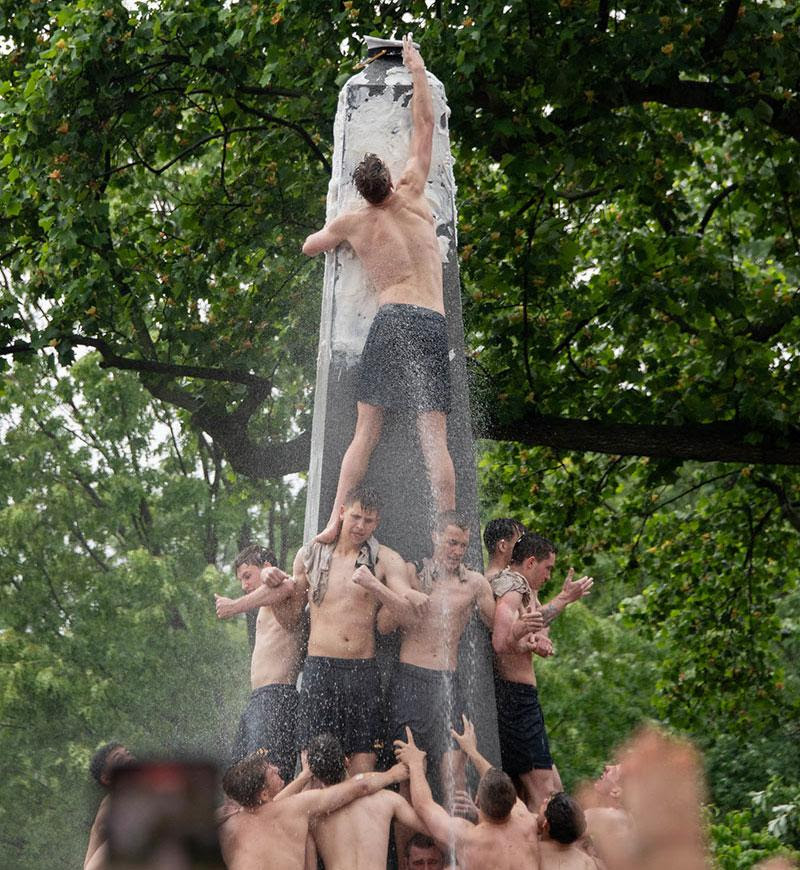
Two days ago I posted about the US Naval Academy tradition marking the end of Plebe Year. To follow up on the story, the Class of 2028 are “plebes no more” after successfully replacing the “Dixie Cup” hat with the standard issue midshipman’s hat.
Most of the regular readers of FriarMusings either know or have deduced that I am a graduate of the US Naval Academy – Class of 1974 to be exact. As a loyal alumni I follow the Academy via various channels and outlets. Recently the school made national news when it was reported that, at the direction of Defense Secretary Pete Hegseth, some 381 books were removed from the school library. Removing these books was part of the current administration’s effort to eliminate DEI content from federal agencies and in this case from government military schools. Which books were removed? Hard to say as no list has been published – and, in any case, this post is not a comment about the action. The US Naval Academy is not a private university. It is a military installation with a base commander and all the midshipmen (students) are on active duty in the US Navy. In other words, they were given valid orders.
The Academy, as part of an ongoing lecture series, invited Ryan Holiday to speak to the midshipmen on April 14th. Mr. Holiday had spoken at the Academy several times before.
It began as a childhood dream and took flight before he had even been to the Naval Academy. Through combat missions, test pilot school and into space— MajGen Charles Bolden ’68, USMC (Ret.) shares his remarkable story of how a single letter launched a journey he never could’ve imagined, nor will he forget. In this Legacy of Valor: Vietnam War video, Bolden, a 2018 Distinguished Graduate, shares how leadership and courage are built far beyond the battlefield—because sometimes, the hardest moments are what prepare us for liftoff.
Charles Frank Bolden Jr. is a former Administrator of NASA, a retired United States Marine Corps Major General, a former astronaut who flew on four Space Shuttle missions, and a graduate of the United States Naval Academy with the class of 1968.
Bolden was a Marine aviator flying the A-6 Intruder in combat in Vietnam, later becoming a test pilot, and later became an astronaut, flying four Space Shuttle missions. After his service as an astronaut, he became Deputy Commandant of Midshipmen at the Naval Academy.
On May 23, 2009, President Barack Obama announced the nomination of Bolden as Administrator of NASA.



 friarmusings