
The Battle of Manila

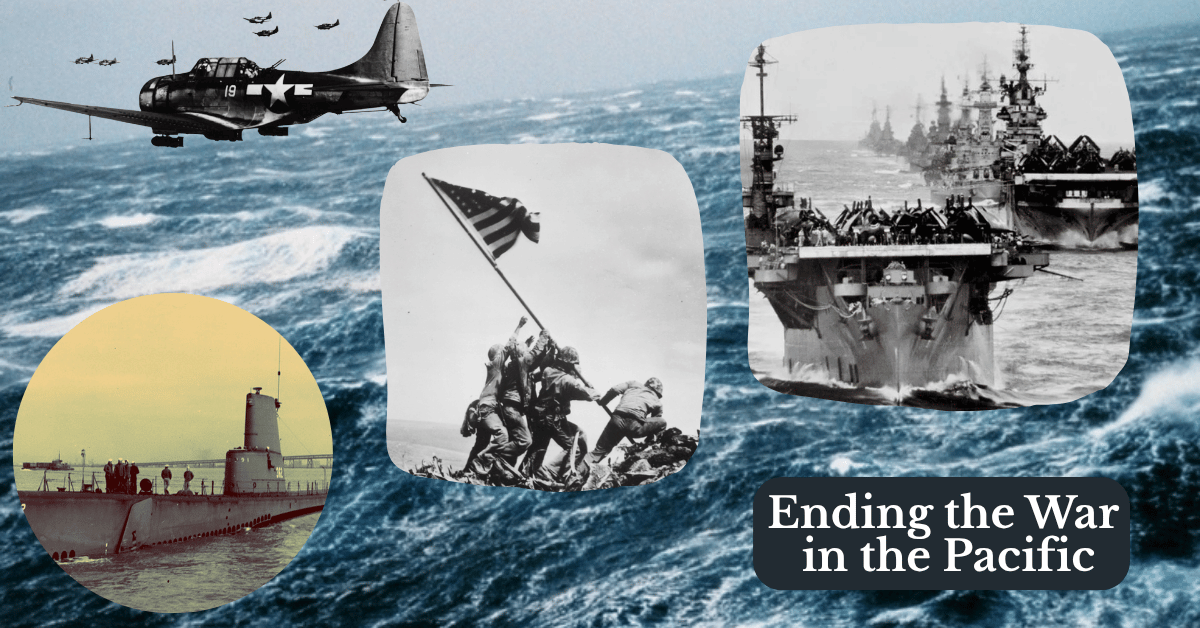
In yesterday’s long post I attempted to bring together naval fleet, air and Marine Corps-Army amphibious efforts up to the end of 1944 and into early 1945. In earlier posts, we considered key engagements and their impact on the shape and prosecution of the war: Saipan (strategic importance and civil deaths) and a post, Battles that Changed War Strategy (Biak, Peliliu, and the air battles at Philippine Sea and Formosa) which pointed to the changing tactics and objectives of Japan as the war approached the home islands. The implications of all this was hinted at in the post Ketsu-Go outlining the strategic and tactical defense of the home islands. By the autumn of 1944 all roads led to the Philippines – from both MacArthur’s Southwest Pacific command and Nimitz’s Central Pacific command.

The Philippine Islands have their own unique history with the United States as friend and foe, but by 1941 it was home to a large number of Americans, American Corporations, and Gen. Douglas MacArthur who served as commander of U.S. Army Forces in the Far East. Manila had been his home since 1924.

Manila was known as the “Pearl of the Orient.” It was an international city that was the nexus of Filipino, Spanish, American and Asian cultures. In addition, the city’s population included Chinese, Japanese, Germans, British, Indians, and small groups from most European countries. The city was a center for universities and colleges, convents, monasteries and churches, and their accompanying treasures – including art, literature, and especially architecture – dated to the founding of the city. 

Continue reading
The Big Blue Fleet

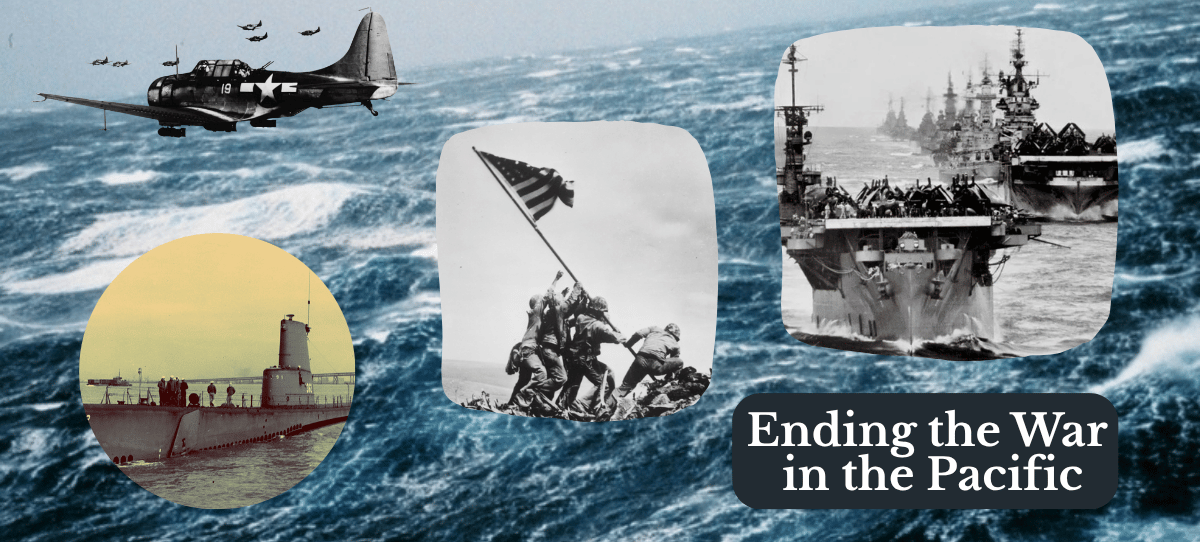
A reader mentioned that they were surprised that as a former naval officer I had not offered more coverage on the operations of the US Navy during the War in the Pacific. While it was perhaps inevitable given my goals for this series, nonetheless let me recount some of the major fleet actions and operations from Pearl Harbor until late 1944. Fair warning: it is a longer than average post.

It is important to remember that the first 12 months of the war in the Pacific was focused on stopping the advancing Japanese forces in the Southwest Pacific – especially stopping them from cutting off Australia and New Zealand from communications and supply lines to the US Pacific Forces. This led to a series of major naval battles in 1942 and 1943 miles away from Tokyo and from Pearl Harbor. Battles that were extremely critical to the war effort, yet unless you are interested in naval history, they are battles that are likely unknown to you. They were either surface-v-surface action and on several occasions aircraft carrier-v-carrier battles. Some of the key engagements are listed below.

Battle of the Coral Sea (May 4-8, 1942): The first naval battle fought almost entirely by aircraft carriers, the Battle of the Coral Sea checked a major Japanese offensive towards Australia/New Zealand, specifically an invasion of Port Morsby. The naval battle was fought in an area south east of New Guinea and south of the Solomon Islands. Because of the battle, the invasion convoy turned back, and the operation was cancelled. This was the first major Japanese offensive in the Pacific to be stopped. But it came at the cost of the fleet carrier USS Lexington and a fleet oil tanker – two assets we could ill afford to lose at that point in the war. The Japanese lost one aircraft carrier with a second one heavily damaged. Both of these carriers were expected to be part of the Battle of Midway. Their presence may well have changed the result of that engagement.

Continue reading

The War that Waits

In the previous posts we paused to look back to the historical currents that shaped Japan in the 19th and 20th centuries. The posts were an attempt to provide a sense of the influences, perspectives, aspirations, and national identity that formed Japan to see its destiny as the leader of an Asia-Pacific region – and the rise of nationalism and militarism that were the means to accomplish its vision. The posts also pointed to the body-politics that was Japan: a divine Emperor, a civil government that resembled Britain, a constitution that assured a premier place for the military, and yet a great deal of uncertainty on how it all was governed. Historians agree about many things, but not the role of the Emperor, especially his degree of responsibility and decision authority for the war that engulfed the Asia-Pacific region in 1941.

Returning to the timeline of the unfolding war, in general, we have not gone into detail about naval and land battles. We have spoken about key engagements and their impact on the shape and prosecution of the war: Saipan (strategic importance and civil deaths) and a post, Battles that Changed War Strategy (Biak, Peliliu, and the air battles at Philippine Sea and Formosa) which pointed to the changing tactics and objectives of Japan as the war approached the home islands. The implications of all this was hinted at in the post Ketsu-Go outlining the strategic and tactical defense of the home islands.

Continue reading

Before the War

In the previous posts we considered the early years of Hirohito’s time on the throne and tried to give a sense of what his role was and wasn’t as Emperor, his sense of the limits of his authority and role, and the events which – at least from the outside – seemed to show a “self-induced neutrality” in governance. The previous post also showed that loyalty to the throne had practical limits as seen in the frequent assassination attempts and attempted coup-d’etat. This “civil unrest” would be ever in the back of Hirohito’s mind. In addition, the Imperial Japanese Army (IJA) had a track record of doing what it wanted (e.g. Manchuria and establishing the puppet nation of Manchukuo). 

The 1930s saw Japan withdraw from the League of Nations, naval treaties, and expand its empire into other parts of China, Korea, Taiwan, and French Indochina. Also, Japan signed the Tripartite Pact with Germany and Italy (1940) which was at war with the rest of Europe and parts of the Middle East.

Continue reading

Testing the Emperor

The posts this week have been attempting to take a walk through Japan’s history from the end of the Shogunate period, into the Meiji Restoration of the 19th century, and following the flow of people, events and ideology that brought us into pre-War 1930s Japan. It is a decade during which the “manifest destiny” of Japan is evident in its Greater East Asia Co-Prosperity Sphere policy. As I wrote in the previous post: 

“Asian countries should come together under Japan’s leadership to be free from Western colonial powers (like Britain, France, and the U.S.). On paper, it sounded like a partnership — ‘Asians helping Asians.’ Japan said it would bring prosperity, unity, and independence to Asia. In reality, though, it mostly meant that Japan would dominate the region, control its economies, and use its resources for Japan’s benefit. So instead of being true cooperation, it was more like Japan building an empire with kinder and gentler language and imagery.”

Within Japan, the slogan “Hakko ichiu” (“the eight corners of the world under one roof”) — drawn from Shinto mythology — became the fundamental idea, asserting that Japan had a divine mission to unify the world under the emperor’s benevolence. It is a big vision and it has to start somewhere. That “somewhere” was Manchuria.

Continue reading

The Eight Corners of the World

Although overly simplified, for our purposes, State Shinto and the person of Emperor Hirohito form an imperial ideology that became a central pillar of Japanese foreign policy in the days leading up to the War in the Pacific – or as several historians rightly assert, the Asia Pacific War.

After Korea’s annexation and incorporation into Japan’s sphere (1910–1920s), there was an intentional program to consolidate the idea of “Sacred Rule.” In Korea, Taiwan, and other territories, Japan built Shinto shrines and required participation in rituals, symbolically binding colonial subjects to the emperor. School curricula emphasized emperor worship and loyalty, teaching that Japan’s overseas expansion was the natural extension of the divine nation’s growth. The slogan “Hakko ichiu” (“the eight corners of the world under one roof”) — drawn from Shinto mythology — began to circulate, suggesting Japan had a divine mission to unify the world under the emperor’s benevolence.

Continue reading

The Development of Sacred Duty

In the previous post we considered, in broad terms, that the Meiji Reforms of 19th Century Japan was the seedbed for an elevated position of the military in government and in the minds of the people. This rise occurred in the context of an essential idea that Japan needed to take its place among the powerful nations of the world, not only as an economic necessity but as a moral imperative rooted in its self-understanding through the eyes of Shinto religion. It is perhaps best understood in the Western parlance as Japan’s “Manifest Destiny.”

Continue reading

The Meiji Reform and the Rise of Militarism

In the previous post we considered the Regent Hirohito and the time in which he lived before ascending the throne. It was a time where the founders and elder statesmen of the Meiji Reform were dying or being assassinated. There were centers of power/influence all seeking more power and influence: the military, civil government, the Diet (Parliament), the Imperial Court, and leaders in civil society. In a way this story is as old as time, but in Japan the democratic institutions were new and offered levers of power and influence that were not necessarily part of the fabric of Japanese history and life.

To understand how we arrive at the ultra-nationalist and militaristic Japan of the 1930s, we need to look at the Meiji Reforms and the role the Western powers played in the transformation of Japan.

Continue reading

In the Beginning

As the War in the Pacific moves into 1945 it is clear that the Asia Pacific War will not end in victory for Japan. How will it end? For the Allies, the 1943 Casablanca Conference has already stated that the war in the Pacific will end in unconditional surrender as it soon will for Germany. But the nature of that war is different. Germany is virtually landlocked and is being pressed on its eastern, western and southern fronts. Japan is an island fortress. Japan sees the path leading to a decisive battle where either Japan wins or extracts such allied losses that the war ends at the negotiating table. It is like a high stakes hand of poker. The Allies have a strong hand but are they willing to go “all in” and invade the home islands as necessary. Japan is already committed to “all in” – or so it seems. But who is the hand holding the cards for Japan? Is it the Emperor, the Supreme War Council, the Military General Staff, or the Imperial Japanese Army across the far-flung empire? 

We are at a point in this series when it is time for us to pause and return to the beginning to make sure we know the “hand holding the cards.” A good question is “how did it start.”  And the answer is far more complicated than “when they attacked Pearl Harbor.”

Continue reading

Governance and Ketsu Go

A previous post offered a brief discussion of a complicated issue – the governance of wartime Japan. Such governance was a complicated, ritual process involving Emperor Hirohito and the Supreme War Council (“Big 6”). In the shadows of the ritual were the Lord of the Privy Seal (Kido) and other confidants of the royal family. Rather than detail the process, it is perhaps best explained by decisions around Ketsu Go.

On January 20, 1945 there was an Imperial audience in which senior Army and Navy leaders briefed the Emperor on the strategic concept for Ketsu Go. This was not a formal Gozen Kaigi (Imperial Conference), but an Imperial audience in which senior Army and Navy leaders briefed Hirohito. The principals in attendance were War Minister Anami and Army Chief Umezu – both hardliners – and Navy Chief Toyoda who at his point was supportive of the Army’s position.

It was not a detailed plan, but a strategic overview of Ketsu-Go in the context of the war: Leyte Island in the Philippines had fallen, there was no doubt that Iwo Jima and Okinawa would soon be invaded, and routine bombing of the home islands by B-29s had begun. All indications were that the southern island of Kyushu would be invaded in the late-summer to early-autumn of 1944. Most likely after the end of typhoon season which traditionally “ended” November 1st.

Continue reading