
 Continuing our look into the gospel for the 18th Sunday of Ordinary Time….
24 When the crowd saw that neither Jesus nor his disciples were there, they themselves got into boats and came to Capernaum looking for Jesus. 25 And when they found him across the sea they said to him, “Rabbi, when did you get here?” 26 Jesus answered them and said, “Amen, amen, I say to you, you are looking for me not because you saw signs but because you ate the loaves and were filled.
The implication of the narrative is the crowd who finally caught up with Jesus in Capernaum could not have known about the miraculous events (vv.16-21) of the evening nor would they have had an opportunity to react to the ego emini statement – to even ponder, “Who is this that calms the sea.” Their last encounter with Jesus was at the miraculous feeding of the 5,000 and their desire then was to take Jesus by force and make him kind. It is at this point Jesus withdrew from them as the people wanted to remake the Messiah in their own conception. Jesus would not allow that; perhaps Jesus does not want to be found by the crowd “looking for Jesus.” Continue reading
 24 When the crowd saw that neither Jesus nor his disciples were there, they themselves got into boats and came to Capernaum looking for Jesus. 25 And when they found him across the sea they said to him, “Rabbi, when did you get here?” 26 Jesus answered them and said, “Amen, amen, I say to you, you are looking for me not because you saw signs but because you ate the loaves and were filled. 27 Do not work for food that perishes but for the food that endures for eternal life, which the Son of Man will give you. For on him the Father, God, has set his seal.” 28 So they said to him, “What can we do to accomplish the works of God?” 29 Jesus answered and said to them, “This is the work of God, that you believe in the one he sent.” 30 So they said to him, “What sign can you do, that we may see and believe in you? What can you do? 31 Our ancestors ate manna in the desert, as it is written: ‘He gave them bread from heaven to eat.’” 32 So Jesus said to them, “Amen, amen, I say to you, it was not Moses who gave the bread from heaven; my Father gives you the true bread from heaven. 33 For the bread of God is that which comes down from heaven and gives life to the world.” 34 So they said to him, “Sir, give us this bread always.” 35 Jesus said to them, “I am the bread of life; whoever comes to me will never hunger, and whoever believes in me will never thirst. (John 6:24-35)
  This coming Sunday is the
 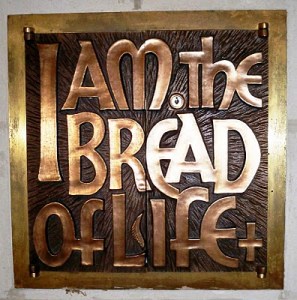 The good news is that during this summer we are graced to hear the Gospel of John, chapter 6 – the “Bread of Life Discourse.” It is a wonderfully-told narrative, it is theologically rich, it is incredibly human, and above all it is profoundly Eucharistic. The bad news is that is divided over five weeks of Gospels, breaking up the narrative and challenging our understanding in continuity as we hear what was always meant to be one cohesive gospel. This is week three of five… hmmm? So, let me do this – I will give you a brief summary of my homilies from the last two weeks (or you can read them here: (“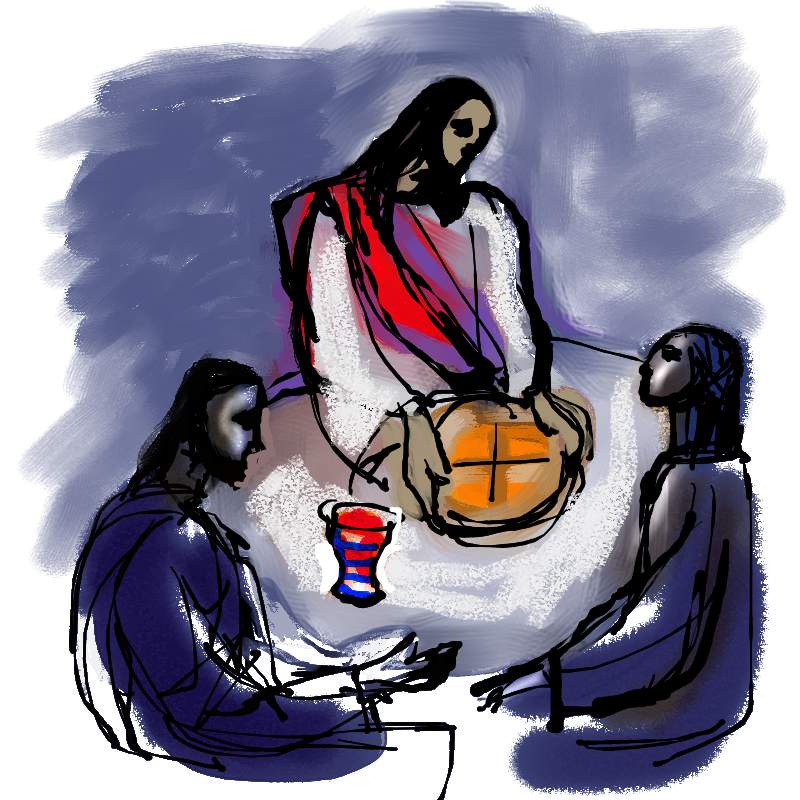
 friarmusings