
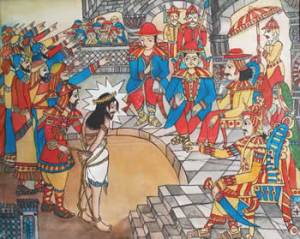
 Alan Culpepper commented that reading the arrest and trials of Jesus is, for him, like watching film footage of John Kennedy’s motorcade winding through Dallas in 1963 or the 1986 launch of the Challenger space shuttle. We know what is coming, we know we have no power to undo them, but are compelled to watch because we honor the loss of great people doing what was theirs to do.
At a more intimate level we know that the encounter of Jesus and Pilate is a scene wherein both face the test of their convictions. Pilate knows and announces the verdict – innocence, but in the face of an unruly crowd does not have the conviction to persevere. Neither Herod nor Barabbas provide an avenue to resolved the crisis when the leaders of Jewish Jerusalem are ever at work to animate the crowd to bend Pilate’s to their will. Continue reading
 Of course we all know that after the meal with his disciples that Jesus went to the Garden of Gethsemane. Actually, no gospel says that. Matthew and Mark wrote that he went to a garden. John says he went to Gethsemane. Fuse them all together and you get the “Garden of Gethsemane.” What does Luke say? Luke only calls it “the place.” There is no garden specifically mentioned nor is Gethsemane. Is it important? Well, it is a reminder to be attentive to the text before you and not meld the familiar stories and scenes from other sacred writers. Each sacred writer has something distinctive that can be missed if one fuses all the details from other accounts.
 friarmusings