
The expression is attributed to Aristotle who articulated a belief that nature contains no vacuums because at the mere existence of a vacuum, the denser surrounding material continuum would immediately fill the void. He also argued against the void in a more abstract sense that by definition a void, itself, is nothing, and following Plato, nothing cannot rightly be said to exist. The idea was restated as “Natura abhorret vacuum” by François Rabelais (d. 1553), a French humanist and physician mainly remembered for his bawdy songs and poetry. The strictest criterion to define a vacuum is a region of space and time where all the components of the stress–energy tensor are zero. This means that this region is devoid of energy and momentum, and by consequence, it must be empty of particles and other physical fields (such as electromagnetism) that contain energy and momentum. But what does that have to do with today’s readings? Continue reading
Nature Abhors a Vacuum
Reply
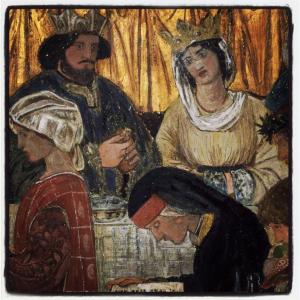 In Jesus’ parable, the King has prepared the feast – all is ready, the invitations sent … and resent, and yet amazingly, people don’t come. In our reading it says that people ignored the invitation. The underlying word in Greek means to ignore in a way that is careless – or perhaps, not being sufficiently careful with treasures with which we have been charged.
 friarmusings