Lingering Questions and Thoughts

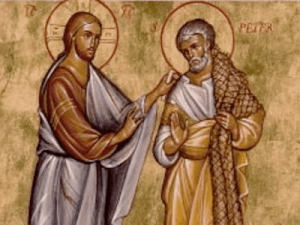
This coming Sunday, the 24th Sunday of Ordinary Time, is taken from Mark 8:27-35. Clearly this passage points to suffering and death as being at the heart of God’s plan of redemption and salvation. The passage does not explain why this is the plan, it just insists that this is the way it will be. It sets up a dissonance to our way of thinking. Clearly the accounts of Jesus to this point in the Gospel reveal his cosmic powers over nature, death, illness, demons and more. How can he then permit the enemies who wish to destroy him ultimately succeed? St. Paul’s insistence that the gospel of the cross makes a mockery of our human concepts of success. Continue reading

Discipleship and Suffering

This coming Sunday, the 24th Sunday of Ordinary Time, is taken from Mark 8:27-35. As Jesus often does, the private conversation gives way to summoning the crowd and the offer of a larger, summary teaching.

34 He summoned the crowd with his disciples and said to them, “Whoever wishes to come after me must deny himself, take up his cross, and follow me. 35 For whoever wishes to save his life will lose it, but whoever loses his life for my sake and that of the gospel will save it.

Continue reading

Verses that Trouble

This coming Sunday, the 24th Sunday of Ordinary Time, is taken from Mark 8:27-35. In yesterday’s post after Peter had proclaimed Jesus as “the Messiah,” ever the teacher, Jesus continues in that role to describe what it is that the Messiah must do. Verse 31 marks a new beginning. Prior to this the emphasis has been on Jesus’ authority and power as he cast out demons, healed diseases, commanded the waves, and more. Now the stress will be on his own suffering and death – and the disciples’ responsibility to follow. The lesson is brief and to the point: He began to teach them that the Son of Man must suffer greatly and be rejected by the elders, the chief priests, and the scribes, and be killed, and rise after three days. In its own way, this one verse plays out the remainder of Mark’s gospel. There are four things needed for Jesus to be obedient to his Father’s desire that humanity be redeemed: Jesus must: Continue reading

Who do you say that I am?

This coming Sunday, the 24th Sunday of Ordinary Time, is taken from Mark 8:27-35. As the storyline reaches Caesarea Philippi, we arrive at the first major climax of Mark’s Gospel – the second being the Passion and Crucifixion. Until now, Mark has been revealing who Jesus is in the mighty deeds he has done. Along with this revelation, Mark has also reported Jesus’ reluctance to have people believe in him only because of those wondrous deeds. This Caesarea Philippi passage comes to the heart of the matter. Jesus now says explicitly that his way is a way of suffering. The way of the Messiah is the way of the cross: “Whoever wishes to come after me must deny himself, take up his cross, and follow me.” (8:34) – that is perhaps getting ahead of ourselves. Continue reading

Geography and Meaning

This coming Sunday, the 24th Sunday of Ordinary Time, is taken from Mark 8:27-35. In yesterday’s post we provided a summary of the events/encounters in Mark chapter 6 and 7. All this leads to Caesarea Philippi and one of the pivotal moments in the gospel of Mark. The description of the coming periscope is oddly stated in the Greek, “into the villages of Caesarea Philippi.” Previously Mark had described it as a region (5:1, 17; 7:24, 31; 8:10). In any case, the region was twenty-five miles north of the Sea of Galilee. The area was built up by Herod Philip to serve as the capital of his tetrarchy. It is perhaps noteworthy that the region is two days’ journey north. Its northern location likely served to separate Jesus and his disciples from the crowds that attended his every move earlier in the ministry. Continue reading

Between the Sundays

This coming Sunday, the 24th Sunday of Ordinary Time, is taken from Mark 8:27-35. The account fits into a series of narratives that make one thing clear: Jesus’ running debate with the Pharisees and the scribes from Jerusalem continues unabated – even continuing from before last Sunday’s gospel. Here is an outline of some recent Markan pericopes (stories). Continue reading

A question for a lifetime

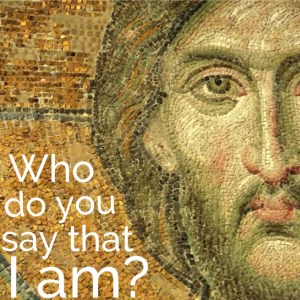
Who do you say that I am?” It seems like one of those “fish-or-cut-bait” moments, doesn’t it? Peter and the disciples have been with Jesus several years now.  They have heard the sermons, listened to Jesus open up the deeper meaning of the Commandments, witnessed the miracles large and small, seen all the people healed, restored, and heard the amazing words of forgiveness and love. Wouldn’t it seem as though they have had enough time to know Jesus in a deep, intimate, and personal way? Continue reading
What choices will we make?

Next Sunday is the celebration of the 21st Sunday in Ordinary Time. You can read a complete commentary on the Gospel here.

13 When Jesus went into the region of Caesarea Philippi he asked his disciples, “Who do people say that the Son of Man is?”14 They replied, “Some say John the Baptist, others Elijah, still others Jeremiah or one of the prophets.”15 He said to them, “But who do you say that I am?”16 Simon Peter said in reply, “You are the Messiah, the Son of the living God.”17 Jesus said to him in reply, “Blessed are you, Simon son of Jonah. For flesh and blood has not revealed this to you, but my heavenly Father.18 And so I say to you, you are Peter, and upon this rock I will build my church, and the gates of the netherworld shall not prevail against it.19 I will give you the keys to the kingdom of heaven.  Whatever you bind on earth shall be bound in heaven; and whatever you loose on earth shall be loosed in heaven.”20 Then he strictly ordered his disciples to tell no one that he was the Messiah. (Matthew 16:13-20)
Continue reading

Live into the answer

There are lots of things about our Faith that I heard/inherited/was taught. The classic from the Baltimore Catechism was (Q.) Why did God make you? (A.) God made me to know Him, to love Him, and to serve Him in this world, and to be happy with Him forever in heaven.  I have known the answer to that question for more than 60 years. It is a great question and Sr. Mary Lawrence assured me it was the perfect answer. Continue reading

Take up the cross: discipleship

Discipleship. 34 He summoned the crowd with his disciples and said to them, “Whoever wishes to come after me must deny himself, take up his cross, and follow me. 35 For whoever wishes to save his life will lose it, but whoever loses his life for my sake and that of the gospel will save it.

As Jesus often does, the private conversation gives way to summoning the crowd and the offer of a larger, summary teaching. Earlier (v.33) when Jesus accuses Peter of “thinking” (phreneo) there is an indication of not simply cognitive thought, but something arising from an inner disposition or attitude – something pointing to the role of the human will. This become more clear in the phrase (v.34), “Whoever wishes” – pointing to the idea of human will and freedom of carrying out that will. What is the role of the will in the practical implications of discipleship: deny oneself, take up your own cross, and follow Jesus. Continue reading