
Widow’s Mite: poverty

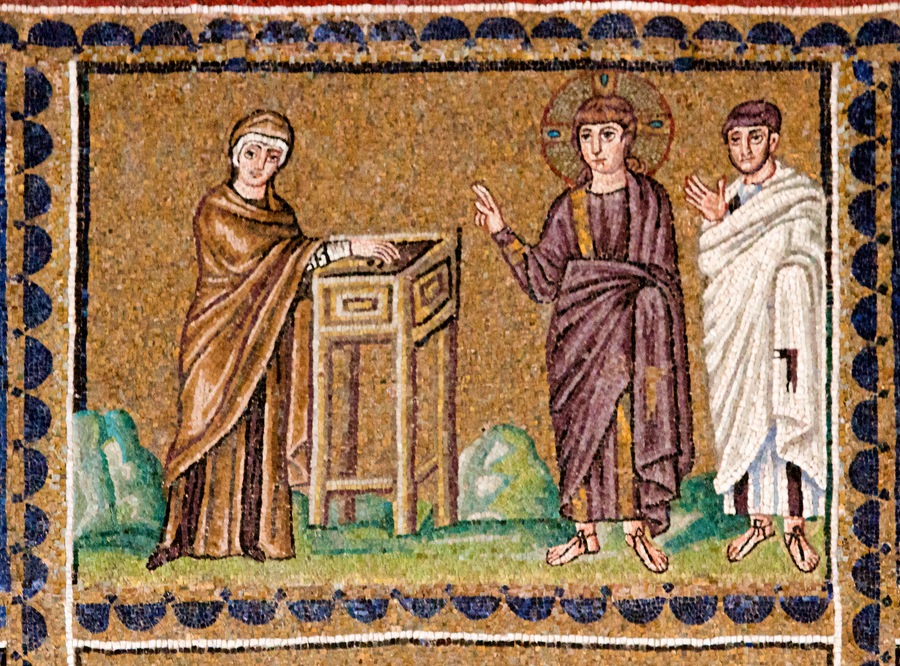
Sant'Apollinare Nuovo, Ravenna42 A poor widow also came and put in two small coins worth a few cents.

Widows. Lurking in the background of our reading is the first-century Jewish system of levirate marriages (Gen 38 and Deut 25:5-10). In short if a man dies without leaving a son, his widow is forbidden to marry outside his family. One of her deceased husband’s brothers must assume the duty of the levir, taking her as his wife. The first male of this second union is considered the son of the deceased brother. Continue reading

Widow’s Mite: context

Sant'Apollinare Nuovo, Ravenna38 In the course of his teaching he said, ‘Beware of the scribes, who like to go around in long robes and accept greetings in the marketplaces, 39 seats of honor in synagogues, and places of honor at banquets. 40 They devour the houses of widows and, as a pretext, recite lengthy prayers. They will receive a very severe condemnation.’ 41 He sat down opposite the treasury and observed how the crowd put money into the treasury. Many rich people put in large sums. 42 A poor widow also came and put in two small coins worth a few cents. 43 Calling his disciples to himself, he said to them, ‘Amen, I say to you, this poor widow put in more than all the other contributors to the treasury. 44 For they have all contributed from their surplus wealth, but she, from her poverty, has contributed all she had, her whole livelihood.’ (Mark 12:38–44) Continue reading