The gate: shepherds, robbers and sheep

I AM the Good Shepherd2Commentary Moloney [301] outlines this narrative by the following schema:

  • 9:39-41: Introduction. Jesus is questioned by the Pharisees (among whom there is a division) and he condemns them for their blind ignorance
  • 10:1-6: Jesus tells a parable about entering the sheepfold and the Pharisees cannot understand. This section is marked with the unique, “Amen, Amen…
  • 10:7-13: Jesus contrasts himself, the door and the Good Shepherd, with others who are thieves, robbers and hirelings. This section is also introduced with “Amen, Amen…
  • 10:14-18: Jesus the Good Shepherd, out of union with the Father, lays down his life for the sheep
  • 10:19-21: Conclusion: A division among “the Jews.”

Continue reading

The gate: context

good-shepherd- iconJohn 10:1–10 1 “Amen, amen, I say to you, whoever does not enter a sheepfold through the gate but climbs over elsewhere is a thief and a robber.2 But whoever enters through the gate is the shepherd of the sheep.   3 The gatekeeper opens it for him, and the sheep hear his voice, as he calls his own sheep by name and leads them out. 4 When he has driven out all his own, he walks ahead of them, and the sheep follow him, because they recognize his voice. 5 But they will not follow a stranger; they will run away from him, because they do not recognize the voice of strangers.” 6 Although Jesus used this figure of speech, they did not realize what he was trying to tell them. 7 So Jesus said again, “Amen, amen, I say to you, I am the gate for the sheep. 8 All who came (before me) are thieves and robbers, but the sheep did not listen to them. 9 I am the gate. Whoever enters through me will be saved, and will come in and go out and find pasture. 10 A thief comes only to steal and slaughter and destroy; I came so that they might have life and have it more abundantly. Continue reading

It makes sense

he_qi_road_to_emmausI have been leading Bible studies for a long time now. I think the first one was in 1984. When I think back, it seems to me, that each time we study St. Luke’s account called the “Road to Emmaus” the same basic questions arise. “How could these two people, clearly disciples, people who may have followed Jesus for maybe three years – having seen the miracles, the mighty works, heard the preaching, seen Lazarus raised from the dead, and heard Jesus proclaim that he would be put to death and then rise – how could they then hear the reports of the empty tomb and then walk away in a slow descent into despair? Don’t they get it? How could they not get it? Where is their faith? It doesn’t make sense.” Continue reading

Recognizing the journey

he_qi_road_to_emmausOur gospel on this 3rd Sunday of Easter is St. Luke’s telling of the two disciples on the road to Emmaus. It is a story about a journey of faith even as it is a journey to faith. The thing about journeys is that you often do not realize that you are on one, or if you do, may not recognize that the nature of the journey has changed. The two disciples had journeyed to Jerusalem with one set of hopes and expectations. They were following Jesus, were in Jerusalem for the events of Holy Week, and saw one journey seemingly end at Golgotha.

But on the third day, when the reports began to filter into the community of believers, what journey did they begin? Or did they recognize that the original journey was simply becoming clearer? It is the same day that the women discovered the empty tomb, were told Jesus had risen by two dazzling angels, and ran to tell the other disciples. How is it that, instead of a journey of joy, the walk to Emmaus scene is more like a trudge of disappointment? Had the journey of faith been derailed? Had the road zigged when they zagged? Continue reading

Emmaus: at table

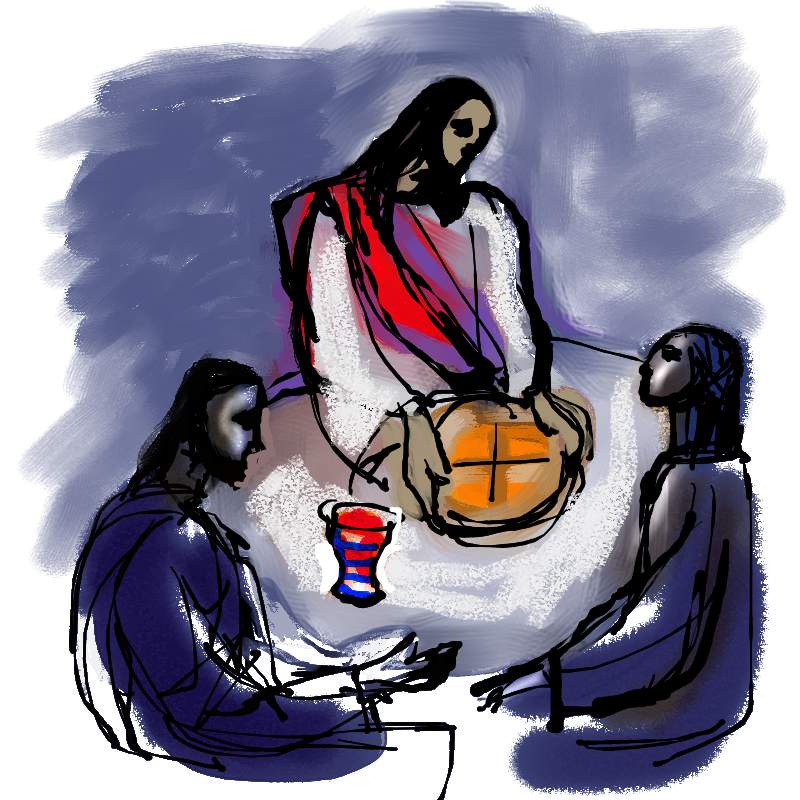
emaus02At The Table With Jesus The disciples are struck by what Jesus has said and ask him to stay with them even has he appears to be traveling on. Alan Culpepper (479) offers an interesting insight into the simple passage (v.28):

Jesus’ first action is probably significant both thematically and theologically. He “walked ahead as if he were going on.” On the surface it is a gesture of social deference and polish. It implies that Jesus was not really going further but that he would not impose on the disciples to offer him hospitality. In Near Eastern customs, the guest was obligated to turn down such an invita­tion until it was vigorously repeated (see Gen 19:2-3). Theologically, Jesus’ action demonstrates that he never forces himself upon others. Faith must always be a spontaneous, voluntary response to God’s grace. Thematically, the action is sugges­tive, because all the way through the Gospel Jesus has been going further. When the people at Naz­areth rejected him, Jesus “passed through the midst of them and went on his way” (4:30). When the crowds wanted to prevent Jesus from leaving them, he responded, “I must proclaim the good news of the kingdom of God to the other cities also” (4:43). He preached in synagogues and with­drew to desert places to pray (4:44; 5:16). In Galilee he was constantly on the move, and from Luke 9:51 until 19:44 he is on the way to Jerusalem. The Lukan Jesus, therefore, was always going further, and in the book of Acts the gospel of Jesus will spread “to the ends of the earth.” Continue reading