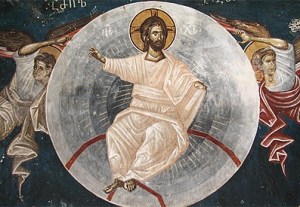
 1 In the first book, Theophilus, I dealt with all that Jesus did and taught 2 until the day he was taken up, after giving instructions through the holy Spirit to the apostles whom he had chosen. 3 He presented himself alive to them by many proofs after he had suffered, appearing to them during forty days and speaking about the kingdom of God. 4 While meeting with them, he enjoined them not to depart from Jerusalem, but to wait for “the promise of the Father about which you have heard me speak; 5 for John baptized with water, but in a few days you will be baptized with the holy Spirit.” 6 When they had gathered together they asked him, “Lord, are you at this time going to restore the kingdom to Israel?” 7 He answered them, “It is not for you to know the times or seasons that the Father has established by his own authority. 8 But you will receive power when the holy Spirit comes upon you, and you will be my witnesses in Jerusalem, throughout Judea and Samaria, and to the ends of the earth.” 9 When he had said this, as they were looking on, he was lifted up, and a cloud took him from their sight. 10 While they were looking intently at the sky as he was going, suddenly two men dressed in white garments stood beside them. 11 They said, “Men of Galilee, why are you standing there looking at the sky? This Jesus who has been taken up from you into heaven will return in the same way as you have seen him going into heaven.” Continue reading →


 Memory is an interesting thing. There are many physiological and psychological theories around the topic, but lots of folks seem to agree we have memory for facts and memory for context. Sometimes the memories are general and sometimes explicit. We tie memory to specific events, personal experiences, semantic categories and more. Then whatever the memory, we have to “register” the memory, store it and then recall it.
  friarmusings