
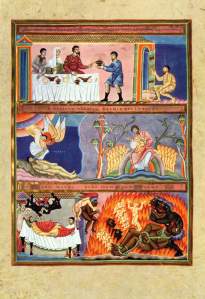
 19 “There was a rich man who dressed in purple garments and fine linen and dined sumptuously each day. 20 And lying at his door was a poor man named Lazarus, covered with sores, 21 who would gladly have eaten his fill of the scraps that fell from the rich man’s table. Dogs even used to come and lick his sores.
Culpepper well describes this parable as a drama in three acts (Luke, 316):
- Act 1 – a tableau during which the characters are introduced and their way of life is described, but nothing happens
- Act 2 – the rich become poor and the poor become rich as each character has died and received their eternal reward
- Act 3 – narration give way to dialogue, but between the rich man and Abraham, in three exchanges:
- about the finality of judgment
- about the witness of Moses and the prophets
- about the blindness that prevents even the Resurrection from leading to conversion
 Last weekend, as part of the “Be-Cool Campaign,” I incorporated a set of sunglasses into my appeal. I have to admit that I haven’t bought sunglasses in all my years here at Sacred Heart. Given that sunglasses are a de facto part of life here in Florida, this means that I am either very careful about taking care of my sunglasses or that I am a pastor of a Florida church. The parish Lost and Found box always has a pair or two in residence. After some months laying fallow in the darkness of a drawer, the sunglasses were found….by me.
  13 No servant can serve two masters. He will either hate one and love the other, or be devoted to one and despise the other. You cannot serve God and mammon.”
 I have always like words and the origin of words – just fascinating stuff. Today’s “Word of the Day” from
 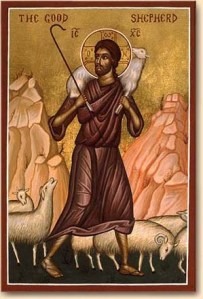 The parable of the Lost Sheep is the gospel message on the 15th anniversary of 9-11, a terrible day of death and destruction. A day on which no one thinks about winners and losers. A day in which we mourn and honor our dead. A day we Franciscans remember our brother Fr. Mychal Judge, OFM – a NYC fire chaplain who lost his life in the line of duty when the first tower fell. Mychal went out searching for the lost, to bring them home to the safety of the flock. Fr. Mychal Judge, truly a good shepherd. Truly a hero – not because he died on 9-11, but because his arms were always open, his eyes ever seeking to be Christ for others. Obedient unto death.
 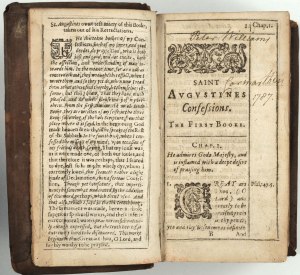 St. Augustine of Hippo begins his great work The Confessions with a question: “How shall I call upon my God and my Lord, when by the very act of calling upon him I would be calling himself into myself? Is there any place within me into which my God might come? How can God who made the heaven and earth come into me? Is there any room in me for you, Lord, my God?” (I:2)
 friarmusings