Pope Leo’s Dad

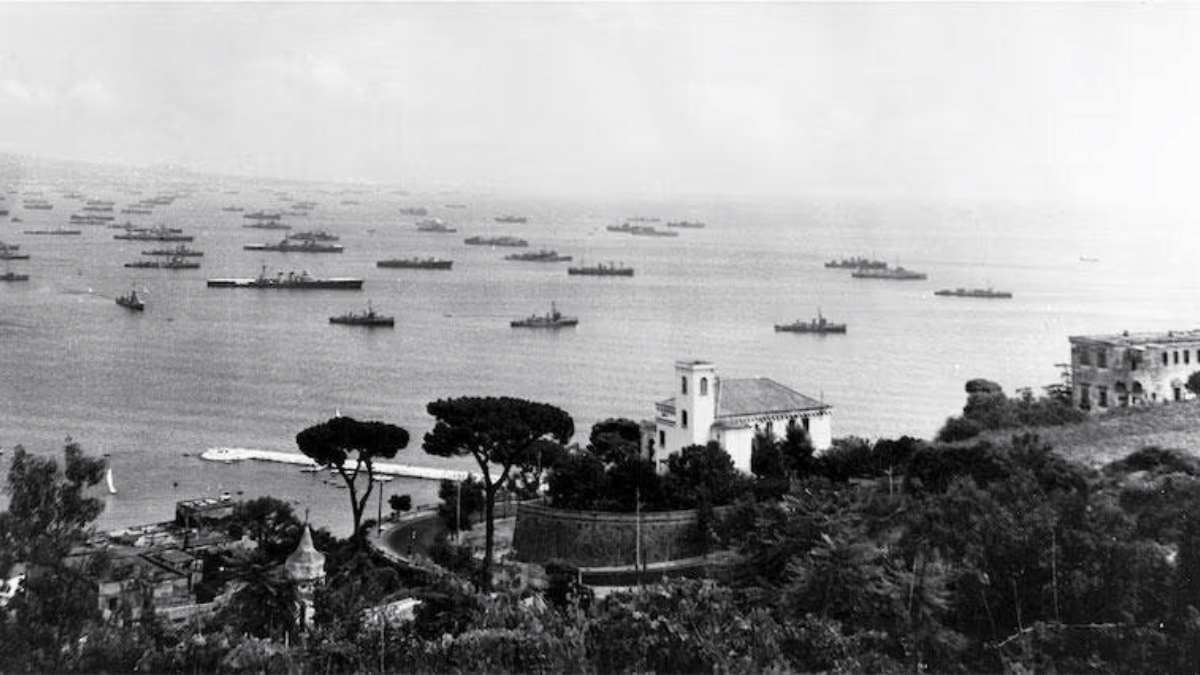
Pope Leo comes from a Navy family! Pope Leo XIV’s father, Louis Marius Prevost, served in the Navy during World War II. After graduating from college, he was commissioned in November 1943 and became the executive officer of a tank landing ship. He participated in the D-Day landings in Normandy, France, June 6, 1944, as part of Operation Overlord. He also commanded an infantry landing craft, which the Allies used to land infantry soldiers and Marines onto beaches during the war.

The Normandy coastline did not have the port capacity for the enormous number of materials needed to keep the Allied momentum going. The Navy subsequently sent Prevost and other landing ships to southern France, as part of Operation Dragoon beginning Aug. 15, 1944.

Prevost spent 15 months overseas and attained the rank of lieutenant junior grade before the war in Europe finally ended, May 8, 1945.


Credit: By David Vergun, DOD News

Remain in His Love

“As the Father loves me, so I also love you. Remain in my love.  If you keep my commandments, you will remain in my love, just as I have kept my Father’s commandments and remain in his love.” (John 15:9-10)

But have you noticed the nature of “love” that is the focus? What is absent in these verses are any words about the disciples loving Jesus or God. Although such images and words are found elsewhere in the Gospel of John. Clearly one of the great commandments is to love God.  But here in the Farewell Discourse, on the eve of Jesus’ departure from their lives in the manner in which they are accustomed, the emphasis in our text is on God’s love for them (us) and their (our) love for one another.

I like this story by Philip Yancy (What’s So Amazing about Grace? 68-69) reflecting on these verses:

Not long ago I received in the mail a postcard from a friend that had on it only six words, “I am the one Jesus loves.” I smiled when I saw the return address, for my strange friend excels at these pious slogans. When I called him, though, he told me the slogan came from the author and speaker Brennan Manning. At a seminar, Manning referred to Jesus’ closest friend on earth, the disciple named John, identified in the Gospels as “the one Jesus loved.” Manning said, “If John were to be asked, ‘What is your primary identity in life?’ he would not reply, ‘I am a disciple, an apostle, an evangelist, an author of one of the four Gospels,’ but rather, ‘I am the one Jesus loves.’“

What would it mean, I ask myself, if I too came to the place where I saw my primary identity in life as “the one Jesus loves”? How differently would I view myself at the end of a day?

Sociologists have a theory of the looking-glass self: you become what the most important person in your life (wife, father, boss, etc.) thinks you are. How would my life change if I truly believed the Bible’s astounding words about God’s love for me, if I looked in the mirror and saw what God sees?

Gail O’Day [John in the New Interpreter’s Bible, 759] remarks: “Jesus reminds the disciples (including the readers) that their place with him is the result of his initiative, not theirs; relationship with Jesus is ultimately a result of God’s grace (cf. 6:37-39, 44).” 

These verses are a reminder that in the reality of the post-Resurrection world, when secular concerns and challenges bring us to the edge of strength and perseverance, we are loved.


Image credit: Duccio di Buoninsegna (1255–1319), “Jesus taking leave of his Apostles,” ca. 1310 | Panel 4 of the Maestro, Museo dell’Opera del Duomo, Siena | Public Domain


Scuttlebutt

Scuttlebutt – a word meaning rumor, gossip. emerging information, or whatever news is being passed around the office coffee pot or water fountain. Not sure how much it is used in every day life, but I do know it was common in naval circles – and there is a reason why! From our good friends at Merriam-Webster’s Word of the Day:

When office workers catch up on the latest scuttlebutt around the water cooler, they are continuing a long-standing tradition that probably also occurred on sailing ships of yore. Back in the early 1800s, scuttlebutt (an alteration of scuttled butt) referred to a cask containing a ship’s daily supply of fresh water (scuttle means “to cut a hole through the bottom,” and butt means “cask”); that name was later applied to a drinking fountain on a ship or at a naval installation. In time, the term for the water source was also applied to the gossip and rumors disseminated around it, and the latest chatter has been called “scuttlebutt” ever since.

Clutter

I think we all go through episodes of “spring cleaning.” Parishes are often asked: “could the parish use…” and what follows is a litany of things old and beloved, unusual and familiar, new and used, useful and whimsical, and the occasional, “I don’t know what it is, but it seems like it is holy.” The conversation is hardly ever (perhaps never?) with a person from the millennial or Gen Z demographic. At this point in their lives, they live unburdened by too much stuff and do not yet have the same emotional connection to things as did the generations before. They are a mobile group and thus don’t want a lot of stuff when moving house or moving to a new city. IKEA will do just fine until things settle.

Continue reading

St. Matthias

According to the Acts of the Apostles, chosen by God through the apostles to replace Judas Iscariot following the latter’s betrayal of Jesus and his subsequent death. His calling as an apostle is unique, in that his appointment was not made personally by Jesus (who had already ascended into heaven), and it came before the descent of the Holy Spirit upon the early Church.

There is no mention of a Matthias among the lists of disciples or followers of Jesus in the three synoptic gospels, but according to Acts, he had been with Jesus from his baptism by John the Baptist until Jesus’ Ascension. In the days following, Peter proposed that the assembled disciples, who numbered about 120, nominate two men to replace Judas. 

So they proposed two, Joseph called Barsabbas, who was also known as Justus, and Matthias. Then they prayed, “You, Lord, who know the hearts of all, show which one of these two you have chosen to take the place in this apostolic ministry from which Judas turned away to go to his own place.” Then they gave lots to them, and the lot fell upon Matthias, and he was counted with the eleven apostles.”(Acts 1:24-25)

No further information about Matthias is to be found in the canonical New Testament.

All information concerning the ministry and death of Matthias is vague and contradictory. The tradition of the Greeks says that St. Matthias spread Christianity around Cappadocia and on the coasts of the Caspian Sea.  According to the historian Nicephorus, Matthias first preached the Gospel in Judaea, then what is modern-day Georgia. There he was crucified. A book known as the Coptic Acts of Andrew and Matthias, places his activity similarly in the modern Georgian region of Adjara where Matthias is buried.

Another tradition maintains that Matthias was stoned at Jerusalem by the local populace, and then was beheaded. According to Hippolytus of Rome, Matthias died of old age in Jerusalem.

The Glorification of God and Jesus

This coming Sunday is the 5th Sunday of Easter in Liturgical Year C. The gospel is taken from John 13:31-35. Previously we explored the meaning of “glory” and “glorification” as a prelude to considering our gospel text. Let’s begin:

31 When [Judas] had left, Jesus said, “Now is the Son of Man glorified, and God is glorified in him. 32 (If God is glorified in him,) God will also glorify him in himself, and he will glorify him at once.

The immediate reference to Judas’ departure, like the coming of the Greeks (12:20-23), signals to Jesus that a new stage of the glorification has been reached. The betrayal has begun, and so “Now is the Son of Man glorified, and God is glorified in him. These verses are difficult to translate and understand. The verb “to glorify” (doxazo) occurs five times in these two verses. And of those five occurrences the verb appears three times in a form (aorist) that is used for a one-time event in the past – except one one aorist occurrence is connected with “now” (v.31). The next two occurrences are future. There are also the active and passive voices mixed in there along with “him” five times.

Continue reading