Unrestricted Submarine Warfare in the Pacific

While the U.S. submarine force in the Pacific is credited with sinking one Japanese super aircraft carrier, two fleet carriers, two escort carriers, four heavy cruisers and other combatants. Their role as a naval combatant against Japanese fleet units was always going to be limited: aircraft carriers had a speed of 28-40 knots; a submerged WWII submarine could make only 3-4 running her engines on battery power. The real contribution of the submarine force was against merchant shipping.  By the end of the war, U.S. submarines had sunk approximately 50% of all Japanese merchant shipping.

Continue reading

Decision

All of the challenging words and images in the Sunday gospel (Luke 12:48-53) are with a purpose in mind: Jesus’ ministry necessarily demanded a definitive decision on the part of his would-be followers. Their yes had to be yes; their no had to be no. Christianity precludes indecision as well as compromise. Surrendering to compromise and infidelity was the error made by so many of the Old Testament communities – even when confronted by their prophets. When the prophet dared to confront them, they turned on the prophet, denounced him and often tried to kill him. Surrendering to lukewarmness in their discipleship was also the mistake made by the church in Laodicea; a community that some described as a perfect model of inoffensive Christianity. Therefore, they were told that God would spew them out as one would spew out bitter, tepid water. 

Continue reading

A Barrier to Evil

We should certainly hear an echo of the Lord’s Prayer in today’s gospel: ““Lord, if my brother sins against me, how often must I forgive him? As many as seven times?” Jesus answered, “I say to you, not seven times but seventy-seven times.” The mention of “forgiveness” should echo Jesus’ teaching about prayer. In the Lord’s prayer we are told to forgive others as we are forgiven: “If you forgive others their transgressions, your heavenly Father will forgive you. But if you do not forgive others, neither will your Father forgive your transgressions.” (Mt 6:14-15)

OK, the principle is clear, but the practical outworking still needs to be clarified, since its open-ended demand may easily be exploited by a manipulative person; surely there must be a limit? If Mishna B. Yoma represents rabbinic teaching, three times was regarded as sufficient. So, Peter’s proposal of up to seven times is probably intended to express a new limit of generosity. Or maybe it is a reference and contrast to sevenfold vengeance in the case of Cain (as in Cain and Abel). When Cain, doomed to wander homeless, worries that “Anyone may kill me at sight” (Gen 4:14), the Lord promises “Not so! the LORD said to him. If anyone kills Cain, Cain shall be avenged seven times.” (Gen 4:15) 

And so Jesus’ reply in our reading is all the more startling: “I say to you, not seven times but seventy-seven times.” (Mt 18:22)

Continue reading

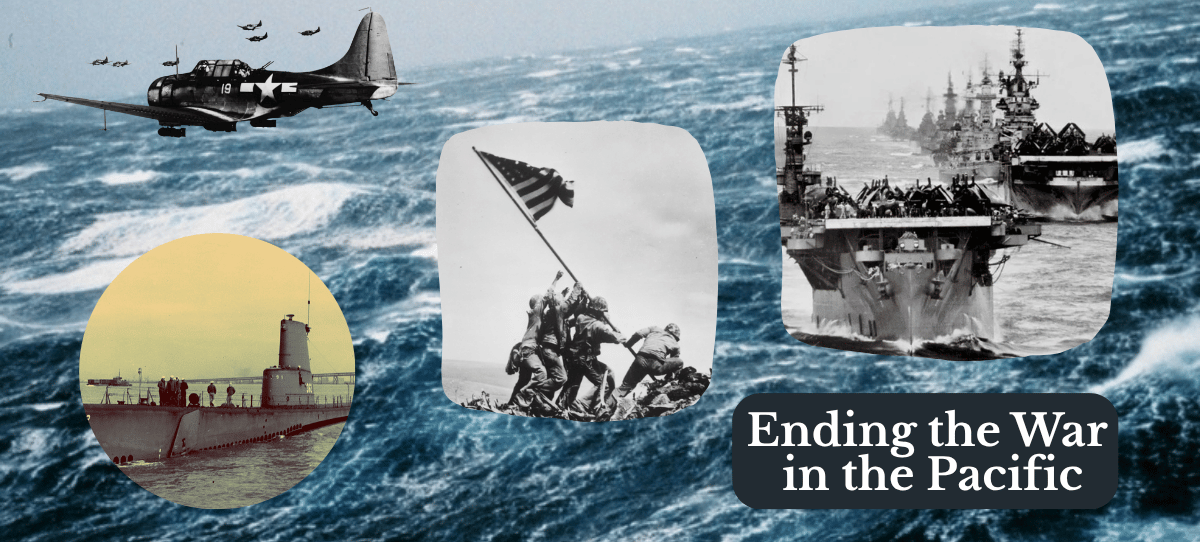
War in the Pacific – the early months

While perhaps familiar to many of the readers, it might be useful to offer a brief summary of the early months of the War in the Pacific. In a modification of Japan’s war plan, Kantai Kessen, on December 7, 1941, Japan launched a surprise and devastating attack on the U.S. Fleet at Pearl Harbor, Hawaii. The goal was the decisive battle that would neutralize the U.S. Pacific Fleet and secure freedom of action for the planned offensive in Southeast Asia. The results of the attack are well known, but the battle was not decisive for three major reasons: the U.S. aircraft carriers were not in port, the fuel depot was not attacked, nor was the Pearl Harbor Naval Shipyard.  Had the depot and shipyard been destroyed the fleet would have withdrawn to the west coast affording incalculable time for Japan to advance and more firmly secure its war gains.

Japan rapidly expanded across the Pacific and Southeast Asia in a coordinated offensive:

  • Philippines: Attacked within hours of Pearl Harbor; U.S. and Filipino forces withdrew to Bataan and Corregidor, ultimately surrendering.
  • Guam and Wake Island: Guam captured quickly; Wake resisted before falling on December 23.
  • Hong Kong: fell to Japan on December 25, 1941.
  • Rabaul (New Britain): captured in January 1942, becoming a major forward base.
  • Burma: Japan advanced to cut off the Burma Road to China – it was the main overland supply route by which the United States and British Empire provided military aid to Nationalist China in its war against the Japanese – a war initiated in 1937.
  • Malaya and Singapore: Japanese forces advanced swiftly down the Malay Peninsula, capturing Singapore on February 15, 1942
  • Battle of the Java Sea (Feb 27, 1942): the Allied ABDA Command (American, British, Dutch, Australian) lost the majority of its sea power leaving Java and the Dutch East Indies open to Japanese invasion
  • Dutch East Indies (Indonesia): Seized for its oil resources; Java fell by March 1942.
  • Doolittle Raid (April 18, 1942): U.S. bombers struck Tokyo and other cities, a psychological blow to Japan and a factor in their decision to strike Midway.
  • Battle of the Coral Sea (May 4–8, 1942): a strategic Allied victory in that it stopped the invasion of Port Moresby, New Guinea – a gateway to northern Australia.

Japan planned Operation MI, an operation to lure the U.S. Navy into a decisive battle by attacking and occupying Midway Atoll, a key American base northwest of Hawaii. Their hope was for a decisive Kantai Kessen-style battle that would destroy the last Pacific assets: U.S. aircraft carriers. Victory would cement Japanese strategic dominance in the Pacific.

Station Hapo, Hawaii – using signal intelligence vs. pure code breaking – learned of the attack on Midway and in an “all-in” gamble, Admiral Chester Nimitz committed the U.S. carries to the action that stopped the tide of Japanese advance in the Pacific. At the Battle of Midway (June 4–7, 1942) Japan suffered a catastrophic defeat, losing four fleet carriers and shifting the balance of naval power in the Pacific.

War Plan Orange – greatly revised, but with key elements intact – was now free to work its way westward to prosecute the War in the Pacific on new terms and conditions.

I do not plan to work step-by-step through the war in the Pacific. I will leave the heroic battles of places such as Guadalcanal and Tarawa for you to research. As well, I do not discuss the 1942 naval engagements such as Savo Island, Eastern Solomons, Cape Esperance, Santa Cruz, sea battle of Guadalcanal and Tassafaronga – all in the defense of the Marine Division on the island of Guadalcanal. I would note that the US Navy suffered more killed-in-action than the US Marines during the Guadalcanal campaign.

Moving ahead, I will highlight key several military actions that reveal fundamental shifts in Japanese military tactics and strategy. These shifts will shape planning for an invasion of the Japanese home islands in 1945-1946, an endeavor whose potential for the loss of life – military and civilian – defied estimation.

By the end of 1942 the advance of the Japanese has been stopped. The advent of 1943 would see the allied forces move from the defense to offense. The might of American industrial power in shipping building (combatants and merchants), aircraft, ammunition, and every aspect of logistics support would “come fully on line” as the work of the US submarines interdicted needed critical war supplies from Southwest Asia to Japan.

As noted in the first post, this series is not aimed at concluding with “the atomic bomb was the lesser of all the evils about to be faced.” It is intended to hopefully provide a correct historical understanding available to the 1945 leadership who faced the impossible task of ending a war with an intractable enemy and not repeating the armistice of 1919 that became the next war. 


Image credit: various photographs from Naval Aviation Museum, National World War II Museum, and US Navy Archives.

Division

The Sunday gospel (Luke 12:48-53) continues its emphatic message and leaves little to the imagination of a soft and easy landing. To the question whether Jesus came to bring peace most of us would unhesitatingly reply ‘Yes’. But Jesus’ “No, I tell you” is emphatic (ouchi). Why would Jesus proclaim He has come to create division?  “Divisiveness erodes the social, political, emotional and psychological bonds that bind us, one to another. Divisiveness is spawned by antagonism, distrust, hostility and often erupts into war. Divisiveness eats away at the viable network of human society, leaving lonely, disconnected isolates in its wake. Why then would Jesus choose to characterize his purpose and mission in terms of fire and division? Was he frustrated by his disciples’ obtuseness? Had he become impatient with Jewish rejection and resentful of Roman oppression? Had he decided that his message of gentle caring and merciful forgiveness needed “teeth”? Or, was he simply being frank, honest, and realistic as regards the very serious crisis confronting humankind by virtue of his person and mission?” [Patricia Sanchez]

Divisive is often the effect of prophetic speech.  In this Jesus fulfills the prophecy of Simeon (Luke 2:35). But one must note that the division is really caused – not by the prophetic speech – but by the decisions one makes because of that speech. This has already been seen when people are called to decide if Jesus is of God or of Satan (Luke 11:14-20). Those who see Jesus must decide rightly lest “the light in you not become darkness” (11:35).

The cross challenges people. Jesus calls on his followers to take up their own cross as they follow him (9:23ff.; 14:27). When people do not rise to this challenge it is not unusual for them to become critical of those who do. Jesus’ words are quite literal and were the experience of the early church (and in differing ways, the experience of the church is all ages). Verses 52-53 strongly echo the words of the OT: “For the son dishonors his father, the daughter rises up against her mother, the daughter-in-law against her mother-in-law, and a man’s enemies are those of his household. But as for me, I will look to the LORD, I will put my trust in God my savior; my God will hear me!” (Micah 7:6-7). 

War Plan Orange

All militaries conduct war games as a means of preparedness, readiness, strategic deterrence, intergovernmental planning, and to provide concrete options to civilian leaders in support of their policy and national security objective. Peacetime planning allows the military to anticipate potential threats and develop responses, systems, and forces before a crisis emerges. 

War Plan Orange was one of several plans outlining the United States military’s detailed strategy for a future war. The plans were developed as early as 1919. War Plan Orange was the plan for a potential war in the Pacific. Some have argued that War Plan Orange is evidence that the United States always intended to begin a war with Japan; the logic being why else would you plan a war? The United States had found itself completely unprepared for the First World War and so even as it stood down its wartime military, planning for future wars began. Japan was the natural candidate given its evolving militarism and colonial expansion undertaken by Japan that began in the late 1860s with the Meiji Restoration. This evolution inexorably continued up to and into the start of World War II.

The Plan was part of the Navy War College curriculum. Virtually every senior naval leader in the Pacific had studied Plan Orange and contributed to it as new circumstances, technology, and situations arose. As one historian noted: “it was part of their DNA.”

Continue reading

Baptism and Plunge

The Sunday gospel (Luke 12:48-53) comes out “blazing” with talk of fire and judgment. Before one can catch their breath, Jesus pushes on: “There is a baptism with which I must be baptized, and how great is my anguish until it is accomplished!” (v.50)  The word baptizō used here is the same as that used for water baptism elsewhere in the NT.  However, clearly Jesus is not referring to a water baptism (Luke 3:21-22) as that has already occurred. The verbal form of the word means to “plunge” offering several possible meanings: 

  • Jesus’ plunge into humanity (the Incarnation) is completed with Jesus’ experience of human death
  • At the end of the journey, Jesus will plunge into the fullness of the Father’s will as he willingly accepts “death, even death on a cross” (Phil 2:8)
Continue reading

…their angel in heaven

Today’s gospel is from Matthew and has an interesting verse: “See that you do not despise one of these little ones, for I say to you that their angels in heaven always look upon the face of my heavenly Father.” How should we understand these words? A good place to start is the immediate context.

On the whole, Matthew 18 is a discourse about humility, care for the “little ones,” and reconciliation within the community of believers. In verses 1–5, Jesus identifies “the greatest” in the kingdom as one who humbles themselves like a child. Verses 6–9 warn against causing these “little ones” to stumble.   

This raises an intermediate question: how are we to take the meaning of “little ones”? The options are likely either literal children, who exemplify trust and dependence or spiritually humble disciples, who, like children, rely on God. Most scripture scholars offer that Matthew intends both senses—beginning with literal children, then broadening to include all vulnerable believers. Verse 10, then, is a direct call not to despise (Greek: kataphronēsēte, meaning “look down upon, treat with contempt”) the humble or vulnerable believers symbolized by children.

The most discussed part of the verse is “their angels in heaven.

Continue reading

Achieving Colonial Ambitions

The effect of the military development efforts associated with the Meiji Restoration were realized in the first Sino-Japanese War (1894–1895). Victory over China ceded Japan the island of Taiwan and established Japan as a regional power. That status was solidified during the Russo-Japanese War (1904–1905) fought over rival imperial ambitions in Manchuria and the Korean Empire. Japan’s victory shocked the West and solidified its status as a major military power – and especially as a naval power with the utter defeat of the Russian fleet at the Battle of Tsushima – a battle that would shape Japan’s own war planning. 

In 1910 Japan formally annexed Korea. A few years later, Japan was technically a member of the World War I allied alliance against Germany. Japan’s military, taking advantage of the great distances and Imperial Germany’s preoccupation with the war in Europe, seized German possessions in the Pacific (Micronesian islands) and German holdings in China, but there was no large-scale mobilization of the economy needed to support their ambitions. Politically, the Japanese Empire seized the opportunity to expand its sphere of influence in China, and to gain recognition as a great power in postwar geopolitics.

Continue reading