
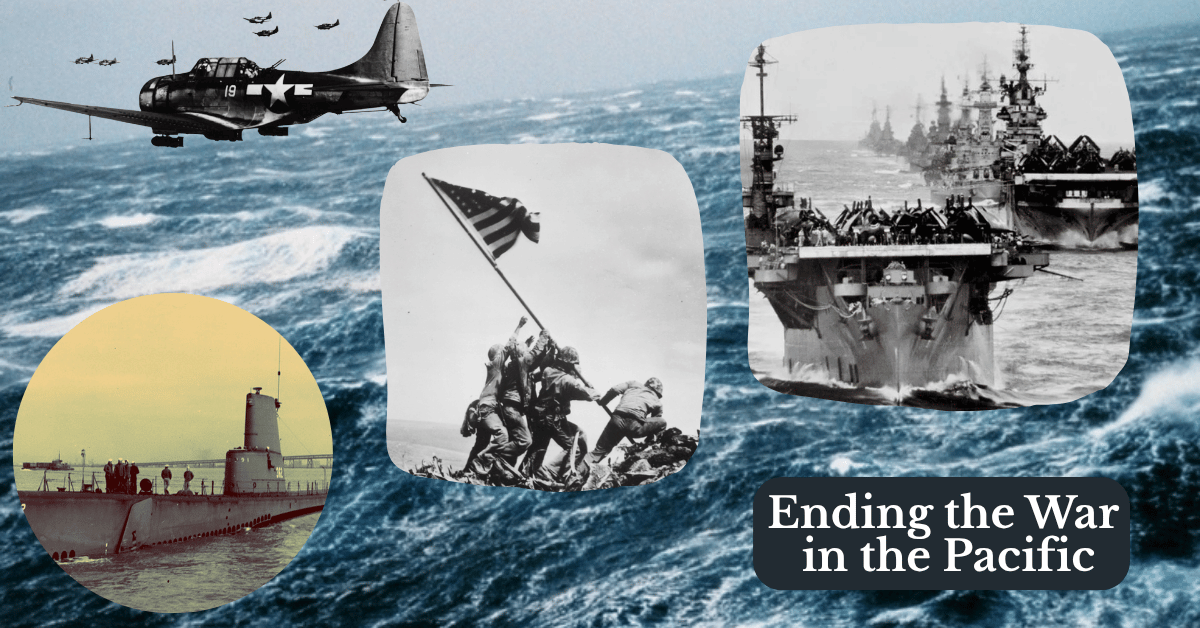
As the War in the Pacific moves into 1945 it is clear that the Asia Pacific War will not end in victory for Japan. How will it end? For the Allies, the 1943 Casablanca Conference has already stated that the war in the Pacific will end in unconditional surrender as it soon will for Germany. But the nature of that war is different. Germany is virtually landlocked and is being pressed on its eastern, western and southern fronts. Japan is an island fortress. Japan sees the path leading to a decisive battle where either Japan wins or extracts such allied losses that the war ends at the negotiating table. It is like a high stakes hand of poker. The Allies have a strong hand but are they willing to go “all in” and invade the home islands as necessary. Japan is already committed to “all in” – or so it seems. But who is the hand holding the cards for Japan? Is it the Emperor, the Supreme War Council, the Military General Staff, or the Imperial Japanese Army across the far-flung empire?
We are at a point in this series when it is time for us to pause and return to the beginning to make sure we know the “hand holding the cards.” A good question is “how did it start.” And the answer is far more complicated than “when they attacked Pearl Harbor.”
Continue reading friarmusings