
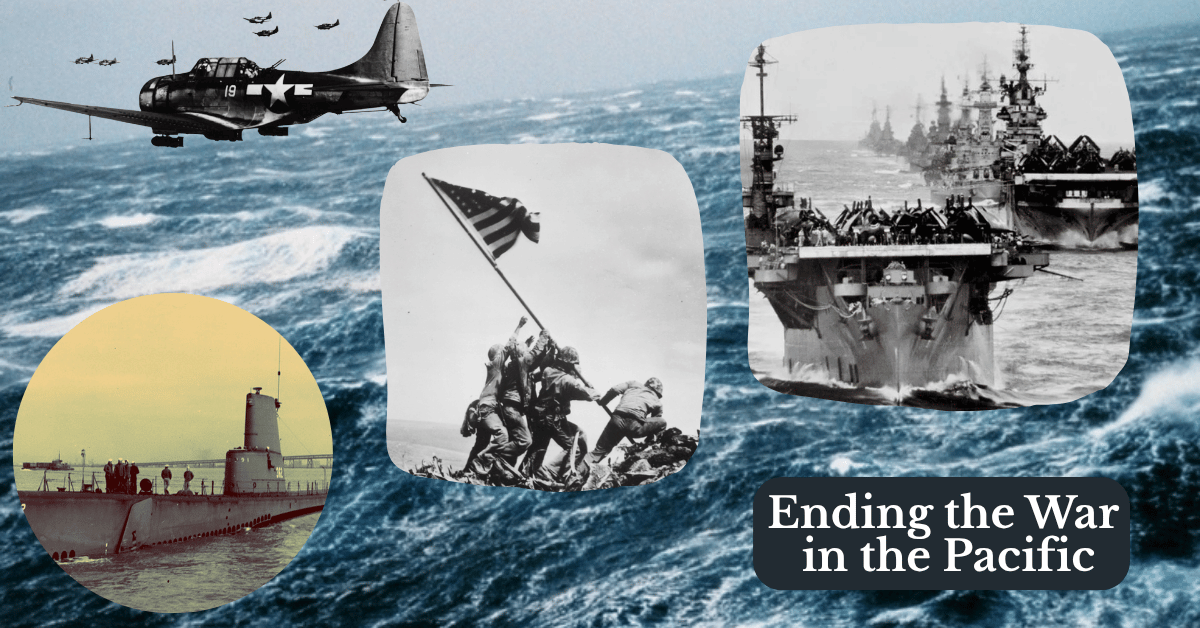
In yesterday’s long post I attempted to bring together naval fleet, air and Marine Corps-Army amphibious efforts up to the end of 1944 and into early 1945. In earlier posts, we considered key engagements and their impact on the shape and prosecution of the war: Saipan (strategic importance and civil deaths) and a post, Battles that Changed War Strategy (Biak, Peliliu, and the air battles at Philippine Sea and Formosa) which pointed to the changing tactics and objectives of Japan as the war approached the home islands. The implications of all this was hinted at in the post Ketsu-Go outlining the strategic and tactical defense of the home islands. By the autumn of 1944 all roads led to the Philippines – from both MacArthur’s Southwest Pacific command and Nimitz’s Central Pacific command.
The Philippine Islands have their own unique history with the United States as friend and foe, but by 1941 it was home to a large number of Americans, American Corporations, and Gen. Douglas MacArthur who served as commander of U.S. Army Forces in the Far East. Manila had been his home since 1924.
Manila was known as the “Pearl of the Orient.” It was an international city that was the nexus of Filipino, Spanish, American and Asian cultures. In addition, the city’s population included Chinese, Japanese, Germans, British, Indians, and small groups from most European countries. The city was a center for universities and colleges, convents, monasteries and churches, and their accompanying treasures – including art, literature, and especially architecture – dated to the founding of the city.
Continue reading friarmusings