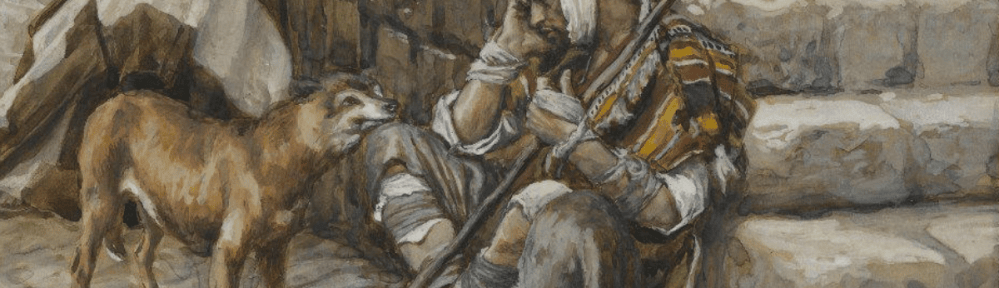
This coming Sunday we continue in the Gospel of Luke with Jesus’ parable of the Rich Man and Poor Lazarus. We are describing the parable as a drama told in three acts. We are in midst of Act 3.
The Second Exchange. 27 He said, ‘Then I beg you, father, send him to my father’s house, 28 for I have five brothers, so that he may warn them, lest they too come to this place of torment.’ 29 But Abraham replied, ‘They have Moses and the prophets. Let them listen to them.’”
Here the rich man asks that Lazarus (again as servant) be sent back to warn the rich man’s surviving brothers. Seemingly accepting his fate, he at least gives evidence of thinking of another person. “But Abraham replied, ‘They have Moses and the prophets. Let them listen to them’” (v.29). Indeed, let us listen to them:
“If one of your kinsmen in any community is in need in the land which the LORD, your God, is giving you, you shall not harden your heart nor close your hand to him in his need. Instead, you shall open your hand to him and freely lend him enough to meet his need” (Dt 15:7-8)
“This, rather, is the fasting that I wish: releasing those bound unjustly, untying the thongs of the yoke; Setting free the oppressed, breaking every yoke; Sharing your bread with the hungry, sheltering the oppressed and the homeless; Clothing the naked when you see them, and not turning your back on your own” (Isaiah 58:6-7)
The Third Exchange. 30 He said, ‘Oh no, father Abraham, but if someone from the dead goes to them, they will repent.’ 31 Then Abraham said, ‘If they will not listen to Moses and the prophets, neither will they be persuaded if someone should rise from the dead.’”
Apparently the rich man realizes that his brothers have little hope of repenting and turning from the very life that led to the rich man’s fate. The call to repentance has been consistent within Luke’s gospel. John the Baptist preached repentance (3:3, 8). Jesus calls people to repentance (5:32), even declaring woes upon Chorazin and Bethsaida for their failure to repent (10:13) when even Nineveh repented (11:32) Jesus warned the crowds that unless they repented they would perish like the Galileans at Pilate’s hand or people in Jerusalem upon whom a tower fell (13:3,5). Even close at hand, the parable of the Prodigal Son is a call to repentance as is the parable of the Dishonest Steward.
The Pharisees who heard this parable (16:14-18) are the ones to whom this third exchange is directed, but the message extends to all who love money (mammon) more than God. The ones who will not hear the Word of God (via Moses and the prophets) or the Word of God enfleshed, they even rising from the dead will be convincing.
The question that lingers for Luke’s church and our own – how could it be that one would rise from the dead and still some refuse to believe, repent and reform their lives?
The Poor Lazarus at the Rich Man’s Door | James Tissot, 1886–1894 | Brooklyn Museum | PD-US
Discover more from friarmusings
Subscribe to get the latest posts sent to your email.
 friarmusings