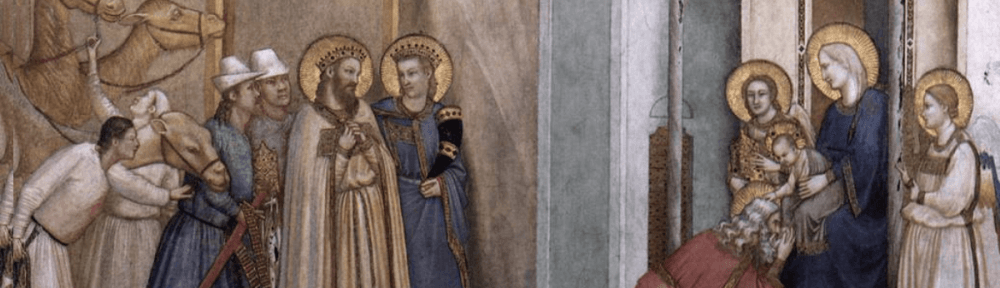
This coming Sunday is the celebration of The Epiphany of the Lord. In the previous post we outlined the basic story and discussed issues of dating the event and a took a first look at the magi. Today we take a second look at these travelers of whom St. Matthew only says, “Wise men came from the East.” East is East, but perhaps not the one traditionally thought about.
The magi are not unknown to history. Herodotus, the Greek historian, describes a priestly caste of magi among the 6th century BC Medes reported to have had special powers to interpret dreams. The magi survived/adapted to the transition of power from the Medes to the Persians and the shift to the state religion of Zoroastrianism. Over time the term magi came to be loosely applied to men adept in various forms of secret lore and magic. The book of Daniel describes magoi as flourishing in every corner of Babylon. Matthew’s description seems to favor viewing them as proto-astronomers/astrologers. That they are gentiles is an assumption taken from their origin “in the East.” It should be noted that by the first century AD there were large Jewish communities living “in the East” as a result of the many diasporas. This leads some scholars to speculate the magi of Matthew’s story are Babylonian Jews, but most consider them as Gentiles.
St. Matthew only says, “Wise men came from the East.” He does not say a long distance, nor does he mention camels. Where is the East? There is considerable scholarship that places more emphasis on Matthew’s use of the term “the East,” and argue that Babylon, Persia, etc., was not the referent. For first century Jews the East was the traditional land of Edom, Gilead, and Moab, but in Matthew’s time, those lands were part of the Nabatean Empire. The Nabateans are not some “lost tribe” but were historically known as one of the great commercial and trading empires that controlled the trade and trade routes between the Mediterranean nations and the Arabian peninsula nations.
If you have ever been to Petra in Jordan, you were at the heart of the Nabatean Empire. Today Petra is a historical site of international importance, but here in the United States we are more likely to know Petra because of its use in the pivotal final scene of the movie Indiana Jones and the Last Crusade.
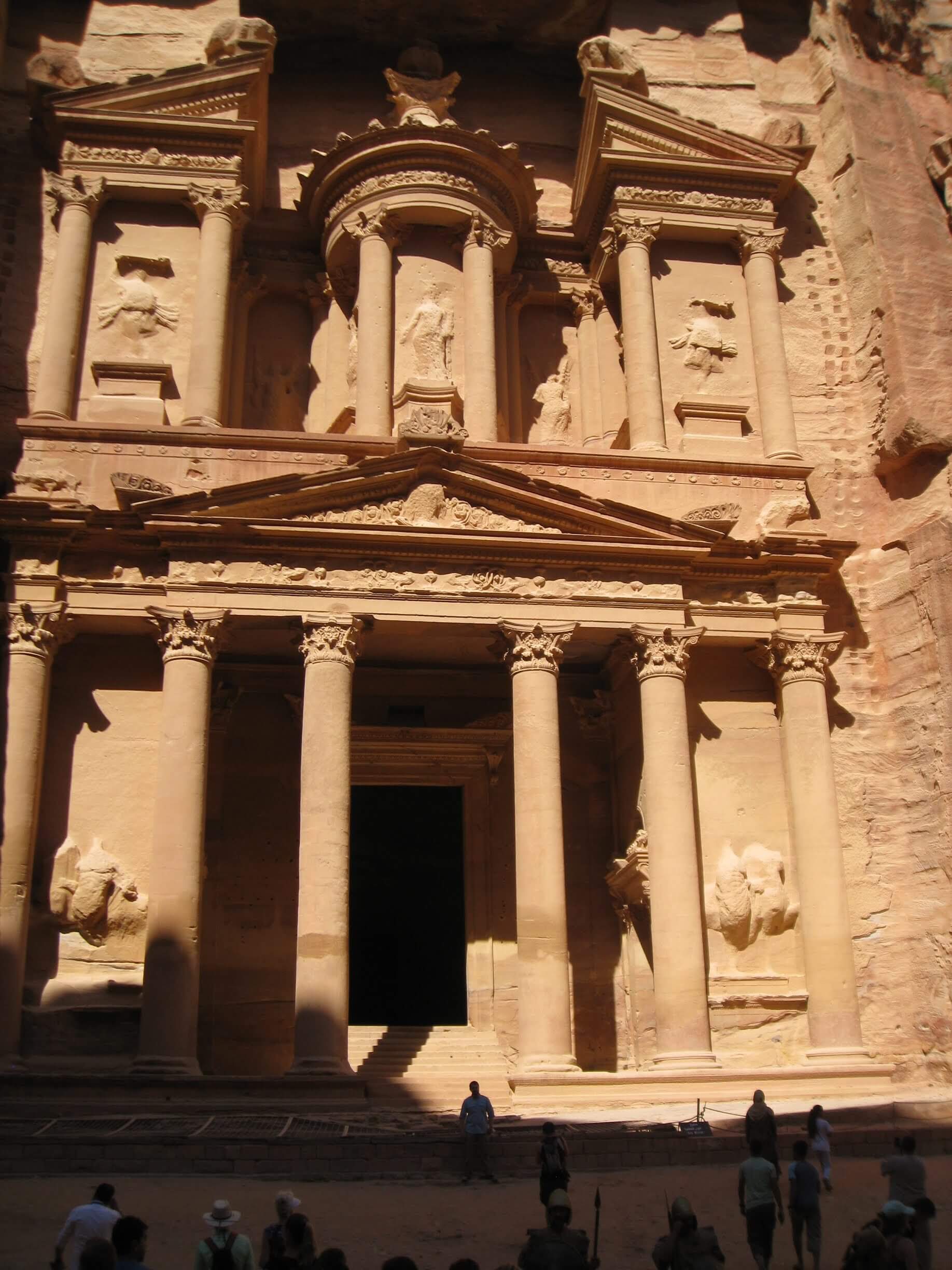
Petra was built by the Nabatean people who emerged in the sixth century BC from nomadic people of the Arabian Peninsula, but assimilated many peoples from other nations who sought refuge in their lands – or opportunities in their economy. The Nabateans became experts in trading and they were perfectly situated to dominate the commercial enterprises of their day. Enclosed by towering rocks and with its own water sources, Petra not only possessed the advantages of a fortress, but controlled the main commercial routes that passed through it to the port of Gaza in the west, to Bosra and Damascus in the north, to Aqaba on the Red Sea, and across the desert to the Persian Gulf. By the second-century BC the Nabateans were a trading empire.
While there is scholarly debate about the origins of the Nabatean people, it is strongly indicated that they share a common origin with the Jewish people – not through Jacob, but through Abraham’s son, Ishmael, and via Jacob’s brother, Esau. But history also brought them together again with their Hebrew kin.
In the aftermath of the Babylonian invasion of Israel and the destruction of Jerusalem, while many Jews were taken to Babylon, the Jewish historian Josephus records that many more became refugees, scattering into Arabia where they would have been received in the Jewish trading colonies stretching as far south as Medina and Yemen. Key among those cities was Tayma, a center of Nabatean trans-Arabia trading.
At the same time, after Israel’s destruction by Babylon, the Edomites moved west into traditional Judean lands — and the Nabateans expanded their lands to include Edom, Moab and Gilead. In time, many northern Nabatean converted to Judaism, all part of the great melting pot that was the Nabatean kingdom. Family, commercial and political interests were well intertwined between the Nabateans and Judah, so much so that they were allies in the second-century BC Maccabean revolt against the Seleucid overlords of Judah. In short, the Nabateans had a political and economic interest in what happened in Judah and who was in charge — and especially so near the time of Jesus’ birth since King Herod the Great was definitely not a friend to the Nabateans.
Add to this melting pot, the magi of the Babylonian and Persian royal court. Some adapted, others became refugees. Historical records show that many of them fled to Tayma where they settled and were assimilated into Nabatean life. They brought their skills in mathematics, court administration, teaching, and astrology. By the time of Christ, the Nabatean magi would had deep exposure to the Abrahamic religion, were neighbors to Judah, and were influential advisors in the court of the Nabatean King. Meanwhile, the magi of Persia had faded and were no longer influential. They would not have had any reasons to care about a newborn king in Judah.
The Nabatean magi would have had religious, cultural, political, and economic reasons to care – and would be watching the stars for signs in order to advise the Nabatean King. And when the signs appeared, they would have brought gifts for the newborn king. Gold, frankincense, and myrrh? These people are the trading center of Arabia at the height of their economic power – and Jerusalem was on their regular trade route. They knew the way.
St. Matthew only says, “Wise men came from the East.” He does not say a long distance, nor does he mention camels. Where is the East? For Judah, it is not Persia, Africa, or beyond. For Judah, the East always has been Arabia. Did magi from Petra visit the newborn King in Bethlehem? I think so. And if true, it makes the historicity of their visit easily viable.
Image credit: The Adoration of the Magi | Giotto, 1310 | Basilica inferiore di San Francesco d’Assisi | Assisi, Italy | PD-US;
Photo Credit: Fr. George Corrigan OFM | CC-0
Discover more from friarmusings
Subscribe to get the latest posts sent to your email.
 friarmusings