
Faith and Fear

In its history the Church has known fear. The empire wide persecutions during the first 300 years. There have been persecutions in Japan, Mexico, France, China and more. In our history, the faithful have had reasons to fear. These are the obvious and loud dangers. But there are also quiet dangers in the life of faith: fear that keeps us from acting.

In the first reading, Israel’s army has been paralyzed for forty days. They are armed, trained, numerous, and yet they do nothing. Goliath’s size and strength dominate their imagination. Fear has convinced them that the situation is impossible.

David sees the same giant, but he sees him differently. David remembers something the others have forgotten: what God has already done for Israel throughout history and what God has done for David. He recalls how the Lord saved him from the lion and the bear. His confidence does not come from denying danger, but from trusting God’s faithfulness in the past and trusting that same faithfulness in the days to come.

David refuses Saul’s armor. Some suggest that it would restrict the throwing notion needed for use of the sling. But David knows that the armor represents a false security; protection without trust. David steps forward with only what he knows, a sling and five stones, and with a conviction: “The Lord who saved me… will save me again.” There is still risk. Goliath is a formidable opponent. Faith does not eliminate risk; it chooses trust over paralysis.

In the Gospel, we encounter a different kind of fear. The Pharisees watch Jesus closely. Israel and Jerusalem have a history of rallying behind one “messiah” after another. In the end the Roman armies quell the commotion, people die, and it is up to the religious leadership to calm things down and assure the Romans they have it under control. They also know the dangers of laxity and corruption of the worship demanded of Israel. They know the privileges and take comfort in control, authority and certainty.

The Pharisees are afraid of what might happen if Jesus acts. So instead of rejoicing in the possibility of healing, they remain silent.

Jesus brings the contrast into sharp focus with a simple question: “Is it lawful to do good on the sabbath or to do evil, to save life or to destroy it?” Their silence reveals how fear can disguise itself as caution, even as fidelity. Jesus chooses to act and heals the man with the withered hand, knowing it will provoke hostility. Faith, for Jesus, means trusting the Father enough to do good even when the consequences are costly.

Both readings confront us with the same choice.

Fear tells us to wait, to protect ourselves, to avoid risk. Faith tells us to remember who God is and to act accordingly. Fear focuses on what might go wrong; faith trusts that God will be present no matter the outcome.

In our own lives, fear often sounds reasonable. It urges delay, silence, and caution. But faith asks a different question: What does love require right now?

Trust in God does not mean being reckless. It means refusing to let fear have the final word. It means stepping forward sometimes with nothing more than what we already have and believing that God will do the rest.

Today’s readings invite us to examine where fear has frozen us and where God may be calling us to act. Not because we are strong, but because God is faithful.

Like David, we are asked to trust not in armor, but in the Lord. Like Jesus, we are asked to choose life, even when we are being watched.

Because faith that acts, even imperfectly, is far more powerful than fear that never moves.


Image credit: Pexels, CC-0
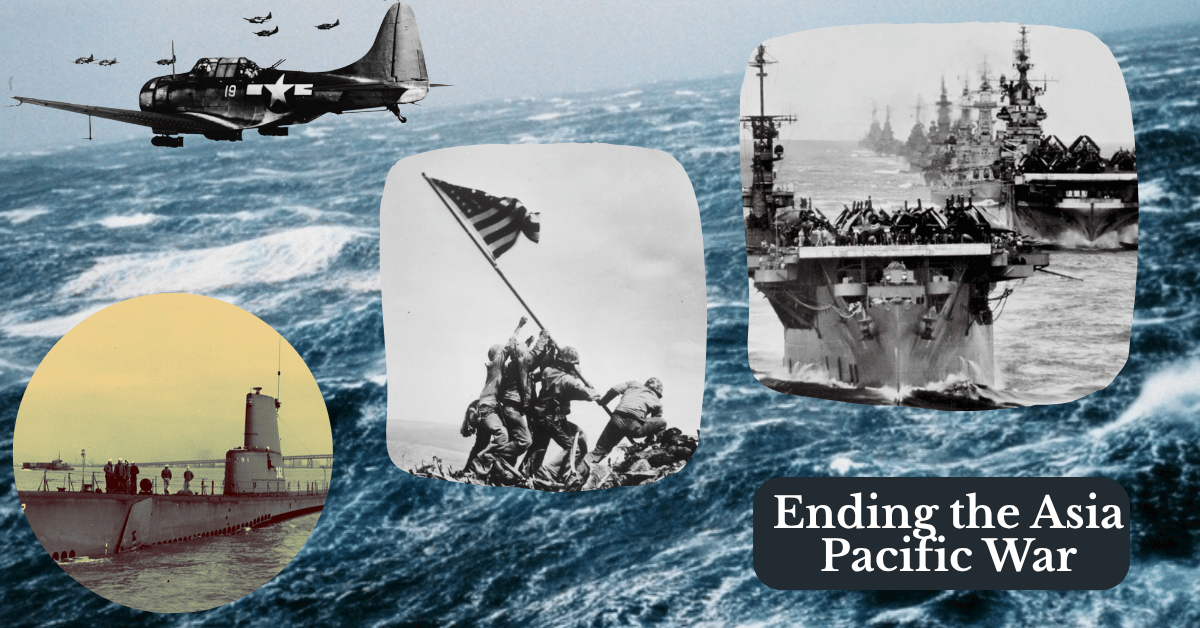
Bushidō and the Japanese Military

It would not be accurate to describe the evolution of the Japanese military in the latter half of the 19th century. It was a radical revolution. After the Meiji Restoration (1868), Japan’s leaders concluded that national survival required a modern, Western-style military. They dismantled the Tokugawa samurai-based system and built a centralized national force modeled on European powers. This was made possible by Universal male conscription (1873) replacing hereditary samurai service, creating a national military loyal to the emperor rather than to domains or lords.

In order to accomplish this radical change, Japan looked to the nations it considered threats to Japan’s independence. This was accomplished by adopting foreign military models under the tutelage of foreign advisors. The army was modeled on Prussian doctrine that emphasized discipline, general staff organization, and state-controlled command. The navy was modeled on the British Royal Navy, adopting British ship designs, training methods, and naval strategy. At the same time, Japan imported modern rifles, artillery, and warships, then rapidly developed domestic arms industries, arsenals, and shipyards to ensure self-sufficiency.

Essential to the development of a modern military was formation and education. To this end, western-style military academies, staff colleges, and technical schools were established, professionalizing the officer corps and emphasizing science, engineering, and modern tactics. Western techniques were combined with emperor-centered loyalty, making the military both modern in form and uniquely Japanese in spirit. In addition, the spirit and lessons of the samurai were not lost. Japan did not simply preserve samurai tradition; it selectively reconstructed it.

Bushidō and the Meiji Military

Under Tokugawa Shogunate rule, “samurai spirit” referred to class-based ideals: loyalty to one’s lord, honor, discipline, and readiness to die. After 1868, the Meiji state detached these values from the samurai class and recast them as virtues for all citizens, especially soldiers. This recasting of the “samurai spirit” became known as Bushidō, and was a national moral code, not a code restricted to the military. But it did serve as a bridge between Japan’s past and its modern conscript army. No longer was there feudal loyalty to a daimyō; loyalty was now absolute and directed to the emperor. The Meiji Constitution made the emperor the “command-in-chief” of the army and navy. Bushidō preserved the form of samurai loyalty while transforming its object.

Formation and indoctrination of Bushidō was incorporated into every level of military training. While Japan adopted western drill, weapons, and organization, it paired them with ethical and spiritual instruction drawn from samurai ideals. Soldiers were taught: endurance, self-control, obedience, and acceptance of death as honorable if done in imperial service. These ideals were reinforced from the oath of service and in every course of education and training. Bushidō was simplified from is historical samurai basis and then standarized for modern instruction.

Bushidō was also incorporated in symbolic practices and rituals. Ceremonial language was ripe with honor and shame, casting failure as disloyalty to comrades and especially to the Emperor. Rituals reinforcing collective identity, willingness to endure hardship, and death as preferable to dishonor. The officer corp carried swords as symbols of moral authority and leadership. Clearly in modern warfare, the use of the sword was limited, but at the end of World War II photographs of kamikaze pilots before their final mission showed the officers with their swords which were carried in the cockpit on the one-way flight. All of this was an effort to link the modern military psychologically to the samurai past. 

Key writers and thinkers such as Nitobe Inazō positioned bushidō as Japan’s equivalent to Western chivalry, and proof Japan possessed a moral civilization worthy of great-power status. This intellectualization helped justify both military discipline at home and imperial mission abroad.

The fusion of western military structure, samurai-derived moral absolutism, and emperor-centered ideology produced a military culture that valued spirit (seishin) over material limits, encouraged endurance and sacrifice, and discouraged surrender and compromise. These traits became especially pronounced in the early 20th century. It is noteworthy that during World War II, less than 3% of imperial Japanese soldiers surrendered – and most of these were extremely sick, starving or critically wounded. In many instances, there were no Japanese survivors.

The effects of bushidō formation was strikingly evident in 20th century combat behavior.

  • preference for death over surrender
  • emphasis on spirit over material reality – commanders often stressed seishin (spiritual strength) to compensate for shortages in equipment or supplies, encouraging frontal assaults and last-stand defenses even when strategically unsound.
  • fanatical defensive tactics where soldiers fought to the last man in Biak, Pelilui, Tarawa, Iwo Jima, and Okinawa reflecting the belief that total sacrifice was the highest form of loyalty.
  • Banzai charges and later kamikaze missions were framed as noble offerings to the emperor, transforming death into a sanctioned military tactic.
  • harsh treatment of prisoners and civilians since their surrender was and thus the prisoners were viewed with contempt, brutalized and executed in violation of the Law of War to which Japan was a signatory.

It also led to actions and campaigns that were strategically and tactically questionable supported by the guise that the bushidō spirit would compensate for all the evident shortcomings.

At the advent of the 20th century

By the late 19th century, Japan possessed a modern, disciplined, and industrialized military, capable of defeating China (1894–95) and Russia (1904–05), demonstrating that Japan had successfully adapted Western military systems to its own political and ideological framework.

When Japan adopted a Social Darwinist lens, East Asia ceased to be a shared moral world and became a competitive ecological system. Bushidō was the ideological element needed to form the military and the citizenry to not simply remain competitive but to become the apex nation in the Asia-Pacific sphere.


Image credit: various photographs from Naval Aviation Museum, National World War II Museum, and US Navy Archives.

Calling the Disciples

This coming Sunday is the 3rd Sunday in Ordinary Time.  In yesterday’s post we explored the meaning behind the Biblical land travelog that opens our gospel passage. Today we look to the people called to accompany Jesus on his mission.

17 From that time on, Jesus began to preach and say, “Repent, for the kingdom of heaven is at hand.” 18 As he was walking by the Sea of Galilee, he saw two brothers, Simon who is called Peter, and his brother Andrew, casting a net into the sea; they were fishermen. 19 He said to them, “Come after me, and I will make you fishers of men.” 20 At once they left their nets and followed him. 21 He walked along from there and saw two other brothers, James, the son of Zebedee, and his brother John. They were in a boat, with their father Zebedee, mending their nets. He called them, 22 and immediately they left their boat and their father and followed him. 23 He went around all of Galilee, teaching in their synagogues, proclaiming the gospel of the kingdom, and curing every disease and illness among the people. 

Matthew includes the first of two important markers for the ministry of Jesus by telling us that “From that time on Jesus began to preach …” (4:17). The focus of the Gospel is no longer the identification of Jesus based upon the witness of others, but rather Jesus’ self-revelation in his words, deeds and signs. It is in these things he is revealed as the messenger of the Covenant, the King who declared that the kingdom of heaven was breaking into the experience of men and women.

The beginning of this record of Jesus’ ministry is marked by a note about those who followed him. Two sets of brothers are called by Jesus and become the first disciples. They are Simon Peter and Andrew, followed by James and John. The first call to discipleship is to fishermen, whose work is now to be ‘fishers of men’ – pointing to the later commissioning and mission to Israel and then to the ends of the earth.  In addition to the special call of the disciples, the ministry of Jesus calls out to a wider audience. As he teaches throughout Galilee and heals the sick, “great crowds followed him” (4:25).  But he does more than heal, Jesus is setting the stage to bridge to the “Sermon on the Mount.”

From that time on, Jesus began to preach and say, “Repent, for the kingdom of heaven is at hand.” The very wording of the passage indicates a fresh start, a new phase of Jesus’ activity. At the heart of this new ministry is the proclamation of a message identical with that of John the Baptist (3:2), and later to be echoed by Jesus’ disciples (10:7). Jesus calls for a decisive response to a new situation, the arrival in his ministry of the kingdom of heaven.

The first to make that decisive response are the first disciples. The story of the call of Simon Peter and Andrew is very similar to the following story about the call of James and John. Both stories echo the story of Elijah’s call of Elisha (1 Kgs 19:19–21; and the prophets generally, cf Amos 7:15) – people divinely called, uprooted from ordinary existence. The calls similarly possess a four part structure: (1) the appearance of Jesus; (2) the comment on the work of the prospective disciples; (3) the call to discipleship; and (4) obedience to the call.

The first disciples encountered Jesus coming to them in their everyday occupation of fishing in the Sea of Galilee — then as now, an important and profitable business in Israel’s economy. It is easy to assume that Jesus has made an ad hoc metaphor. However, the image of a deity calling people to a new life – in both Judaism and local pagan cults – as “fishing” was common. The common theme of this metaphor was that the person was being called to participate in the divine work.  Here God’s saving and judging mission to the world is represented by Jesus who calls disciples to participate in the divine mission to humanity.  This scene anticipates the formal mission sending (9:36 ff) and the wider mission imperative to the whole world (28:19-20)

Without any preparation and with little or no deliberation, they leave behind their business and their families in order to follow Jesus. Discipleship is first and foremost being with Jesus, and the quick response of the first disciples (“at once” according to verses 20, 22) suggests how appealing the invitation to be with Jesus must have been. But discipleship also involves sharing in the mission of Jesus (“fishers of men” according to v.19), and that dimension too is stressed from the very beginning.

Boring (The Gospel of Matthew, 169) notes that “Despite its small size, this pericope represents a major subsection of Matthew’s structure…The call of the first disciples is the beginning of the messianic community: the church. Jesus’ baptism and temptation were not merely individualistic religious experiences of a ‘great man,’ but the recapitulation of the birth of Israel in the Red Sea and the wilderness testing; they lead to the formation of a new community, the Messiah’s people (1:21).” 

It is here that we gain some insight into Matthew’s understanding of discipleship. A modern reader is tempted to refashion this biblical picture of discipleship into more manageable categories: accept Jesus’ principles for living, accept Jesus as a personal savior.  Jesus “barges” into our midst and does not call us to admire him or accept his principles, but issues the divine imperative to follow him. The reasonable reply, “Where are you going?” is suborned to discovery along the way.  Even without the language, the call of the disciples is a story of “belief,” “faith” and “trust.” Dietrich Bonhoeffer, in The Cost of Discipleship, notes that Jesus comes to men already leading useful lives. 


Image credit: Detail  of Domenico Ghirlandaio: Calling of the First Apostles | 1481–82 | Sistine Chapel, Vatican | PD-US