St. James speaks today about temptation in a way that is both honest and disarming. He does not begin with dramatic sins or shocking failures. Instead, he speaks about desire; how temptation works from the inside out. “Each person is tempted when he is lured and enticed by his own desire.”
That is important, because many of the temptations that most affect us today are not loud or obvious. They are subtle. They do not look like rebellion. They often look like reasonableness, busyness, or even self-care.
James reminds us first of something consoling: temptation itself is not sin. To be tempted is part of being human. Even Jesus was tempted. The danger comes when we stop paying attention to where our desires are slowly pulling us.
One of the most common modern temptations is distraction. Not deliberate rejection of God, but constant noise. We fill every quiet moment—news, screens, tasks, obligations. Prayer is postponed not because we do not believe, but because there never seems to be time. Faith becomes something we admire rather than something we practice.
Another subtle temptation is comfort. The Gospel asks for sacrifice, forgiveness, patience, and generosity. Comfort whispers that we have already done enough. It encourages a faith that avoids inconvenience—one that stays safely within what feels manageable.
There is also the temptation of self-sufficiency. We trust our competence, our planning, our experience. God becomes someone we consult rather than rely upon. Prayer becomes optional because we believe we already understand how things work.
James warns us not to misunderstand God in the midst of these temptations. “God does not tempt anyone.” God is not the voice pulling us away from faithfulness. God is the one who gives “every good and perfect gift.” The quiet drift away from God never begins with God—it begins when desire is slowly redirected elsewhere.
What makes these temptations dangerous is that they rarely feel like temptation. They feel normal. Sensible. Justified. Over time, though, they shrink our spiritual lives. Faith becomes thinner, less expectant, less demanding—and less joyful.
James offers us hope by reminding us of our identity. God has chosen to give us birth by the word of truth. We are not meant to live half-awake to God. We are meant to be fully alive, fully engaged, fully rooted in the life God offers.
The question for us today is not, “What sins should I avoid?” It is, “Where is my desire being quietly shaped?” Because desire always leads somewhere.
Blessed, James says, is the one who perseveres in temptation—not the one who never struggles, but the one who remains attentive, honest, and open to grace.
In a world full of subtle distractions and gentle compromises, perseverance may look simple: returning to prayer, choosing silence, staying connected to the sacraments, resisting the slow erosion of faith.
And when we do, James assures us, we discover not a demanding God waiting to trap us, but a generous Father who delights in giving life.
Image credit: Photo by Matheus Cenali on Unsplash | CC-0 | Feb 15, 2026
Between July 1940 and the Summer of 1941, the war in China continued. The military situation in China was characterized by a transition into a brutal war of attrition against Japanese occupation, alongside a significant internal breakdown in the alliance between Chinese Communist and Nationalist forces. Among major actions was the “Hundred Regiments Offensive” (Aug 1940 to Jan 1941). It was the largest Communist-led offensive of the war, involving roughly 400,000 troops. It targeted Japanese-held infrastructure, specifically railroads and mines, in northern China to disrupt supply lines. In retaliation, the Japanese initiated the “Three Alls” policy: kill all, burn all, loot all. It was a scorched-earth policy, leading to widespread massacres and the destruction of thousands of villages.
Meanwhile to the south, the Nationalist Army enjoyed some victories and endured some losses. It was a clear implementation of the “war of attrition” policy against the Japanese.
During this period the U.S. continued to provide supplies via the Burma Road and began formalizing military aid through the Lend-Lease program, which included the procurement of P-40 aircraft for the American Volunteer Group, known as the “Flying Tigers.”
The Turning Point
In July 1941 Japan moved into Southern Indochina. This was the “bridge too far.” By mid-1941, Japan’s strategic position had become increasingly precarious. The war in China showed no sign of resolution, Japan’s economy was under strain, and dependence on foreign, especially American, oil had become acute. The occupation of southern Indochina in July 1941 represented a decisive escalation driven by both necessity and ambition, as Japanese leaders concluded that time was working against them.
The immediate rationale lay in Japan’s southern expansion strategy (Nanshin-ron), which had become the strategic plan after the defeat at Nomonhan at the hands of the Soviet Union. Southern Indochina offered strategic airfields and naval bases particularly around Saigon and Cam Ranh Bay. This placed Japan within striking distance of British Malaya, Singapore, and the Dutch East Indies, the latter being Japan’s most coveted objective due to its vast oil reserves. Control of southern Indochina would serve as a springboard for future operations, not merely a continuation of the China war.
Japan also viewed the move as defensive and deterrent. Japanese planners feared that continued U.S. and British pressure would eventually choke off vital imports. Occupying southern Indochina was intended to secure strategic depth, signal resolve to Western powers, and strengthen Japan’s negotiating position. Coercion had proved successful before and so Japan stayed with what worked.
Japanese leaders still hoped to avoid war with the United States but the nationalist and military believed that a show of strength would compel Washington to accept Japan’s dominance in East Asia or at least negotiate a settlement recognizing Japan’s “special position.” As with earlier expansions, Tokyo framed the occupation as temporary and stabilizing, carried out with Vichy French acquiescence rather than outright conquest.
Unlike the occupation of northern Indochina in 1940, which could be justified as cutting Chinese supply lines, the move south had no plausible defensive rationale. It directly threatened Western colonial holdings and, crucially, placed Japanese forces astride the sea lanes connecting the United States, Britain, and Southeast Asia. For American policymakers, southern Indochina marked the point at which Japanese intentions could no longer be interpreted as limited or negotiable. Their goal of regional domination, far beyond trade, was unmistakable. All signs were that Japan was preparing for an offensivewar – which was exactly the Nanshin-ron strategy.
The U.S. Internal Debate
The Japanese move triggered an intense but brief debate within the Roosevelt administration. The debate was brief because all the arguments had already been raised during earlier crises. Within the State Department, Cordell Hull concluded that Japan had crossed a qualitative threshold. While Hull had previously opposed measures such as an oil embargo on the basis that it might force Japan into a corner, he now accepted that failure to respond decisively would invite further expansion. Southern Indochina confirmed Hornbeck’s and others’ arguments that incremental pressure and diplomacy were never going to constrain Japan.
At the same time, Treasury Secretary Morgenthau and others argued that the United States had been subsidizing Japanese aggression through continued trade, especially petroleum exports. Morgenthau pressed for immediate financial measures that would cut off Japan’s access to dollars and strategic materials. President Roosevelt, who had long sought to balance deterrence with delay, now sided with the more forceful camp. It was not because he sought war, but because he believed that credibility and long-term security required drawing a firm line. Southern Indochina convinced Roosevelt that ambiguity no longer served U.S. interests.
U.S. Actions and Their Consequences
In response, the United States took a series of actions that fundamentally altered the strategic environment. Two coordinated actions were put in place. In July 1941 the U.S. froze all Japanese financial assets in the United States. The funds were available when connected to a valid and approved export license. The 1940 Exports Control Act already required an export license for oil and oil products, but now companies and purchasing agents had to navigate the dual administrative processes. At no point did the U.S. formally announce an oil embargo, but a de facto embargo was enacted by these two administrative processes that could “slow roll” any license applications. These two actions effectively prevented Japan from purchasing American goods, including oil, as approvals became trapped in the bureaucracy of the two separate processes. That being said, Japan’s petroleum supply from the U.S. was effectively cut off. Given Japan’s heavy dependence on American oil, they viewed this as an existential threat.
Britain and the Netherlands soon imposed similar freezes, closing off alternative sources in Southeast Asia. Japan now faced the prospect of economic strangulation within a year if no resolution was reached.
These measures were intended to force Japan back to the negotiating table. American leaders hoped that the severity of the response would compel Japan to halt further expansion and reconsider its position in China. Instead, the effect was the opposite: Japanese leaders increasingly concluded that only force could secure the resources Japan needed to survive and continue their military expansion.
The occupation of southern Indochina was Japan’s final major expansion before U.S. involvement in the Asia Pacific War. From their point of view it was driven by strategic desperation, resource insecurity, and overconfidence in coercive diplomacy. For the United States, it marked the moment when gradualism gave way to decisive economic action. The resulting asset freeze and effective oil cutoff were not intended as steps toward war, but they made war increasingly likely.
Japanese leaders were nationalistic and supported the military. Their analysis of history was that it was only with military power and control that Japan’s future against western powers could be secured. And so for them they saw that peaceful options had run out. The irony is that for the previous four years, Japan had never taken a peaceful option but had always exercised the military option – and always via surprise attack and mobilization: Mukden, Nomonhan, and soon enough, Pearl Harbor.
The Japanese move into Southern Indochina was the irreversible hinge between diplomacy and conflict. It was the moment when both sides believed they were acting defensively, yet set in motion the final march toward Pearl Harbor.
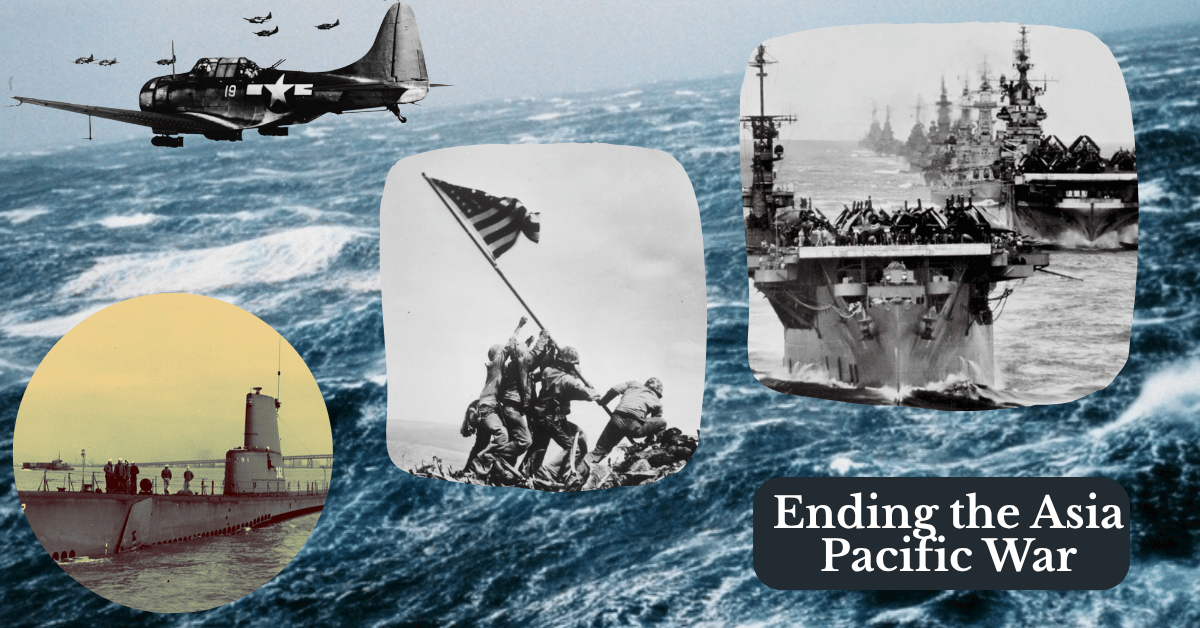
Image credit: various photographs from Naval Aviation Museum, National World War II Museum, and US Navy Archive
Ash Wednesday, the first day of the penitential season of Lent in the Catholic Church, is always 46 days before Easter Sunday. It is a “movable” feast that is assigned a date in the calendar only after the date of Easter Sunday is calculated. How is it calculated? I’m glad you asked.
According to the norms established by the Council of Nicaea (325 AD) and later adopted for Western Christianity at the Synod of Whitby, Easter Sunday falls each year on the first Sunday following the first full moon after the vernal equinox. This year the vernal equinox falls on March 20, 2023 and the first full moon after that occurs on Thursday, April 6th. Therefore, Easter Sunday is celebrated this year on April 9th. If you want to know the date of Ash Wednesday, just count backwards 46 days and you get February 22nd. Continue reading →
This coming Sunday is the First Sunday in Lent. In today’s post we consider the question posed in the title of the post: is this episode a test, a temptation or a trial – and does the answer make a difference when considered from the Biblical perspective?
All three synoptic gospels record an incident of Jesus confronting the devil in the wilderness immediately after his baptismal experience at the Jordan River. Where Matthew notes quite simply: “Then Jesus was led by the Spirit into the desert to be tempted by the devil” (Matthew 4:1). Matthew and Luke record a three-part dialogue between Jesus and the devil that is recorded traditionally as a “tempting.” Mark simply offers the entire episode in one verse: “At once the Spirit drove him out into the desert, and he remained in the desert for forty days, tempted by Satan. He was among wild beasts, and the angels ministered to him” (Mark 1:12-13).
It is difficult to know how to translate peirazo (4:1) and the more intensive ekpeirazo (4:7) – “to test” or “to tempt”. (You shall not put the Lord, your God, to the test.) The word is often used in the LXX of God testing people, e.g., God tested Abraham by asking him to sacrifice his son (Gn 22:1). When God rained bread from heaven, God asked that they gather only enough for that day. “Thus, I will test them, to see whether they follow my instructions or not.” (Ex 16:4).
Why does God test people? One reason is given in Dt 13:4: “for the LORD, your God, is testing you to learn whether you really love him with all your heart and with all your soul.” A slightly different reason is given in Dt 8:16: “that he might afflict [humble] you and test you, but also make you prosperous in the end.” God does not test his people so that He would know the answer, what is in our hearts – He already knows. God tests his people so that we would know what is in our hearts (cf. Dt 8:2).
“Remember the long way that the LORD your God has led you these forty years in the wilderness, in order to humble you, testing you to know what was in your heart, whether or not you would keep his commandments. He humbled you by letting you hunger, then by feeding you with manna, with which neither your ancestors were acquainted, in order to make you understand that one does not live by bread alone, but by every word that comes from the mouth of the LORD.” (NRSV)
That is the positive side of peirazo and ekpeirazo. Theycan also have negative connotations: “to tempt” or “to try and cause someone to make a mistake” or “to try and cause someone to sin.” At the same time that God is “testing” so that one self-discovers the depths of one’s faithfulness, the “Tempter” may be “tempting” someone to sin. God’s purpose is to strengthen faith. Satan’s purpose is to weaken trust in God.
One should also be aware that this pericope of conflict with Satan is part of a recurring theme within Matthew of conflict between the kingdom of Heaven and the kingdom of this world. In Matthew’s theology, the devil though defeated (12:28-29) continues to tempt Jesus during his ministry (16:23), at the crucifixion and into the time of the Church (13:19,39). This pericope also sets the stage for the post-Easter period when the disciples must still confront the devil-inspired resistance to the gospel message (5:37; 6:13; 13:19, 39)
Image credit:The Temptation in the Wilderness, Briton Rivière (1898) | Public Domain

 Ash Wednesday, the first day of the penitential season of Lent in the Catholic Church, is always 46 days before Easter Sunday. It is a “movable” feast that is assigned a date in the calendar only after the date of Easter Sunday is calculated. How is it calculated? I’m glad you asked.
 friarmusings