In today’s first reading we hear from theBook of Jonah and Jesus’ reference to “the sign of Jonah.” I think we have been conditioned to think: “Jonah, three days in the belly of the whale. Jesus, three days in the tomb. Ok, the “sign of Jonah” must be Jesus’ Resurrection.” Maybe.
In the flow of this series we have worked our way into 1941 as we covered several key events/periods on the way. There is a lot going on – probably best to “drop a pin” to locate us in this flow of history.
The period of the “moral embargo” (1938 to July 1940) in which U.S. companies were asked to voluntarily limit exports and sales to Japan because of their aggressive behavior in China.
The Export Control Act of July 1940 which stopped the sale of high grade aviation fuel (but not all aviation fuel), scrap iron, raw steel, and other materials. The argument was that these were needed for U.S. stocks – and they were – but it was also intended to stop the sale of these items to Japan. It did not stop bulk oil sales.
In September of 1940 Japan signed the Tripartite Pact, aligning itself with the fascist nations of Nazi Germany and Mussolini’s Italy. In June 1941, Germany invaded Russia.
In April 1941, Japan and the Soviet Union signed a neutrality pact. For the Soviets, free of worry about Japanese invasion in Mongolia or Siberia (as in the 1939 Nomohan Incident) they could move troops and equipment to their western front against Germany. For Japan, it removed concerns over their northern and northwestern flanks, freeing the movement south to resource and oil rich areas to the south.
In the summer of 1941 the Japanese moved into Southern Indochina. The U.S. response was the Financial Freeze implemented in August 1941. Between the freeze and “slow roll” to approve exports, the net effect was a total oil embargo.
Another recent post discussed the unintended consequences of the financial freeze action, not only in Japan’s response, but in the less-than-unified action/reaction with the U.S. Departments of State and Treasury as there were too many “cooks in the kitchen” – Hull, Morgenthau, Hornbeck, Acheson, Grew and the list goes on. We also introduced a lot more background information on Japan’s Prince Konoe who served as Prime Minister for a long swath of time from late 1937 until late 1941. The background is necessary to understand how he will be perceived when the concept of a one-on-one summit with President Roosevelt is floated.
It’s a lot of information to keep straight and if you find it vague, disordered and confusing, so did the real time participants and 1940 and 1941. Presumptions, assumptions, misunderstandings, and more simply left the two nations at cross purposes.
There is a basic concept in communications: instantiation. “Instantiated” and “uninstantiated” communication refers to the difference between a specific, active, and concrete interaction (instantiated) and an abstract, potential, or theoretical idea (uninstantiated). Instead of talking about “a car” in general (abstract), you are talking about “my red Honda Civic” (instantiated) comparable to talking about the general idea of “bravery” without pointing to a specific, real-world example. Which is all just a fancy way of describing U.S. and Japanese diplomatic communications and negotiations. A simple way to describe it is to borrow the iconic words of the Prison Captain speaking to Luke (Paul Newman) in Cool Hand Luke: “What we’ve got here is failure to communicate.” The U.S. would offer general fundamental concepts (Hull’s Four Points) without detailing specific required actions. But then in another round, the actions were very concrete (“withdraw from China”) and did not take into considerations either military ability, public reaction in Japan, and the political liability to a Japanese figure who might support the idea – even as the start of negotiations. The U.S. was well aware of the very recent history of assassinations and even the ill-fated 1936 coup attempt by a radical element of the military.
On the other hand, Japan would ignore the four principles and then offer a response but it was uninstantiated in that the response was always open ended, contingent on some future state of things, e.g., the French Indochina government asks us to leave after they have had free and fair elections (… as we continue to occupy their nation). The U.S. reaction was mostly, “they’re stalling and not to be trusted.” The Japanese reaction was leaving things open ended in order to explore what new concessions would be wrangled. An example was:
U.S. – respect recognized national boundaries and do not interfere in the internal dynamics of another nation. If that sounds like the Treaty of Westphalia in 1648 (for all you history buffs) you’d be correct. It was Hull’s basic approach. From those fundamental principles, Japan “had” to understand that meant withdrawing from China and not interfering.
The Japanese response: we will withdraw from China two years after they settle their own internal struggles between the Nationalists and Communist Chinese factions and if the new government asks us to leave… and since we have agreed to your terms, please send oil now…. and by the way, Manchuria is not part of China. It is the nation of Manchukuo (that no foreign government recognized) and a friend to Japan.
That wasn’t exactly the diplomatic conversation, but it was exactly the dynamic between the principal diplomats. The backroom chatter from within the various U.S. and Japanese factions, ministries and departments only added to the cacophony of misunderstanding.
The purpose of this post was to “drop a pin” so that we could locate ourselves in the series. We are moving from 1940 into 1941. The above style of diplomatic exchange is becoming de facto. Factions within each government are hardening their positions. And cast over all of this are the presumptions, assumptions, misunderstandings that left the two nations at cross purposes only exacerbating the communications.
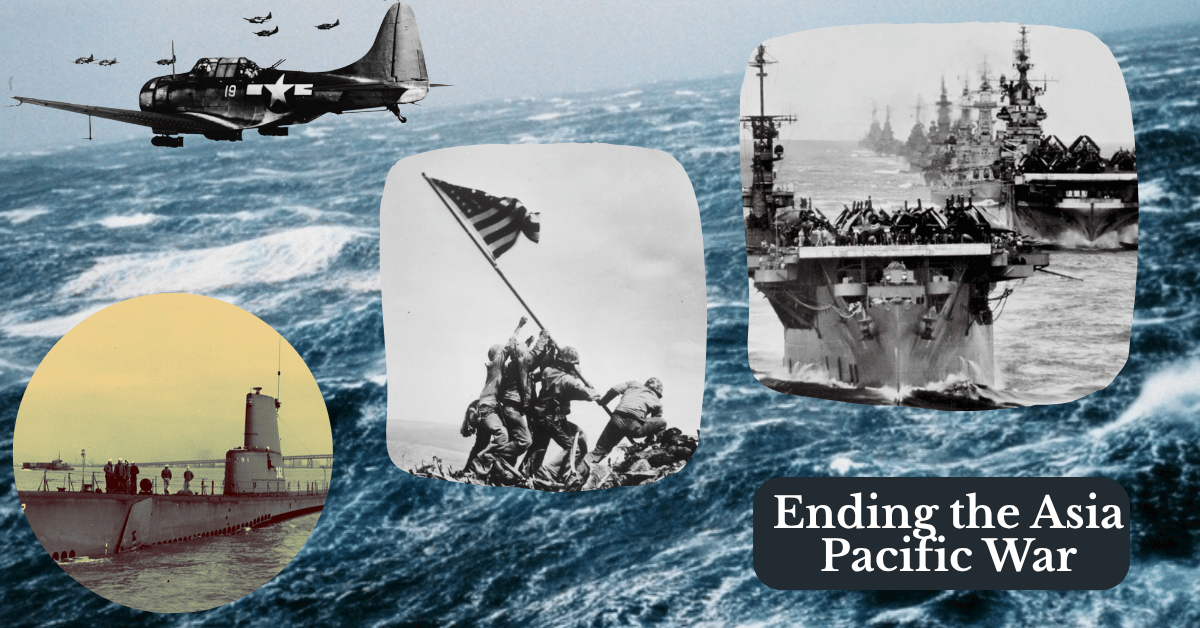
Image credit: various photographs from Naval Aviation Museum, National World War II Museum, and US Navy Archives.
This coming Sunday is the 2nd Sunday in Lent. In yesterday’s post we considered the event of the Transfiguration itself. In today’s post we look at the theological elements of what Matthew likely intends in recounting the event: And he was transfigured before them; his face shone like the sun and his clothes became white as light.
The Transfiguration is a familiar account appearing in all three synoptic gospels. Perhaps it is too familiar and thus we are tempted to accept it and not stop and consider the significance of it. A limited number of modern scholars describe the narrative as a misplaced story of Jesus’ resurrection, his second coming, his heavenly enthronement, and/or his ascension. In other words, Matthew inserted/retrojected a story here for his own narrative purposes. Under such a provision lies some misgivings about miraculous and extraordinary events. But should we really have been surprised by the events of the Transfiguration and their location in the Matthean narrative?
The transfiguration of Jesus is an amazing event but not totally unexpected for Matthew’s readers. After all, Jesus had a miraculous birth, and his ministry began with the divine endorsement of his heavenly Father at the River Jordan baptismal scene (3:17). Jesus had done extraordinary works of compassion, demonstrated power over nature, and had taught the Law with an authority that was above and beyond any earthly authority. He had demonstrated supernatural power by feeding thousands of people with a few loaves of bread. Thus, Jesus’ transfiguration seems consistent with all that has been revealed so far in the gospel. Among the many things Matthew has narrated, we know this: Jesus is the Son of God, the fulfillment of Old Testament patterns and predictions, and he has promised a future Kingdom – a Kingdom whose proclamation and promotion will face continued conflict in Jesus’ remaining time as well as during the ministry of the disciples.
The account of Transfiguration echoes what has come before it in Matthew’s gospel and points to what is still to come. Consider the following:
The transfiguration story recalls the baptism of Jesus and the voice from heaven designates him both the powerful Son of God and the weak suffering Servant (cf. 3:17). This commission is reconfirmed as Jesus begins to instruct his disciples on the meaning and cost of discipleship (16:24–28). Thus it is important that the scene follows the first passion prediction, confirming from heaven what had been questioned by Peter (16:23).
The transfiguration story recalls and confirms Peter’s confession (16:16). Although Peter was divinely inspired to confess, he still did not seem to grasp the full significance of that revelation. The transfiguration is its own witness to the fullness of the revelation.
The transfiguration story connects the confession of Jesus as Son of God and Jesus’ self-identification as Son of Man who suffers, is killed, and is vindicated by God, and will appear as judge at the parousia
The transfiguration is a momentary uncovering of the Son of God’s own intrinsic glory, which has been temporarily veiled and will be revealed again at the resurrection and ascension (John 17:4–5, 24; Phil 2:5–11; Col 1:16–19; Heb 1:1–4). The transfiguration story anticipates the events of the Resurrection.
The transfiguration is an integral part of Matthew’s high Christology and his eschatology. It authenticates both Jesus’ divine identity and God’s plan to occupy this world and rule it forever.
By the transfiguration, the disciples were given a glimpse of not only who Jesus is but also what he will one day bring to this world (see 2 Pet 1:16–18). Moses and Elijah are important figures, but they are not the main actors in the redemptive drama the disciples witness. As the scene ends, Moses and Elijah have exited, and only Jesus remains in the center of the stage. The “listen to him” of the transfiguration will become the “teaching them to observe all things I have commanded you” of the Great Commission (28:18-20)
And thus the transfiguration has significance for us. It gives us a glimpse into our destiny. Transformation begins already in this life. Seeing the glory of the Lord in the Spirit, the disciples are reminded that they were created in the image of him whose glory they see (2 Cor. 3:18). This is not mystical deification but a recovery/re-recognition of the divine likeness. It takes place in the ministry of the Spirit. It is not for an elite few but for all Christians. It is not just a hope for the future (cf. 1 Cor. 15:44ff.) but begins already with the Resurrection and the coming of the Spirit. It carries with it an imperative: “listen to him.” A significance of the transfiguration is that we obtain a glimpse of what we are and are becoming. As St Irenaeus famously said centuries ago: “The glory of God is the human person fully alive.”

 friarmusings