
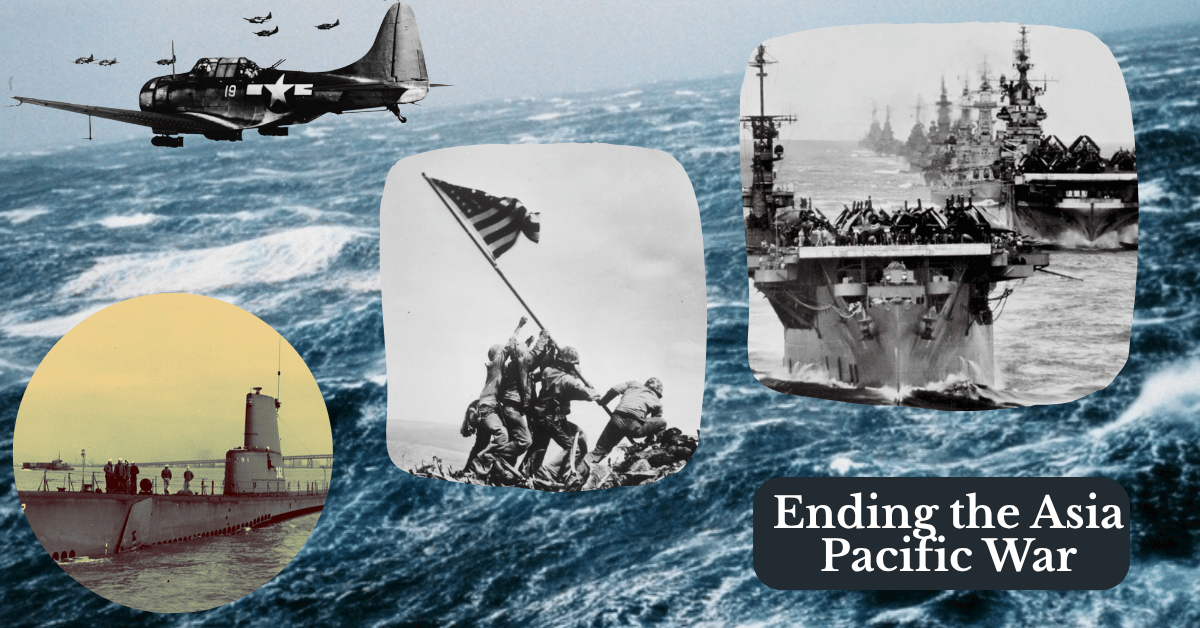
Momentum to War

In Washington August 1941, Ambassador Nomura continued discussions with Secretary of State Cordell Hull. Nomura emphasized Japan’s desire for peace and mutual understanding, but he lacked clear negotiating authority and often received delayed or contradictory instructions from Tokyo. Hull, meanwhile, insisted on his four principles: withdrawal from China, respect for sovereignty, non-aggression and interference in another country’s internal affairs, and equality of commercial opportunity in the Asia-Pacific region.  While the tone remained civil, the substance hardened. Hull increasingly doubted Japan’s sincerity, particularly as intelligence suggested that military timetables were advancing regardless of diplomacy.

The Imperial Conference

The Imperial Conference of September 6, 1941, marked the formal fusion of diplomacy and war planning. In the presence of Emperor Hirohito, Japan adopted a policy resolution stating that negotiations with the United States would continue through early October. If no agreement was reached, Japan would prepare for war against the United States, Britain, and the Netherlands. This decision was momentous. It established a deadline for diplomacy and subordinated negotiations to military necessity. It fundamentally shaped Japanese behavior for the remainder of 1941.

War planning, already in development, was accelerated now that a timeline was in place. The Army planned its move into the Philippines and Malay, while the Navy planned the attack on Pearl Harbor. Meanwhile, Konoe, increasingly isolated, still hoped for compromise. But the military interpreted the decision as authorization to proceed unless the U.S. accepted Japanese terms.

The Conference was not a simple presentation with Emperor Hirohito endorsing the decision. The questioning and conversation was extensive. Under questioning by the Emperor, Navy Chief of Staff Nagano acknowledged that Japan could not militarily defeat the U.S. He likened the decision for war to a doctor offering a dying patient a radical medical procedure with a 30% chance of success. Nagano advised the Emperor that the U.S. would pursue a protracted war, but that the current moment favored Japan if they attacked the U.S. by the end of 1941. He further commented that if Japan waited until the end of 1942, there was zero chance for success. His recommendation was to strike south for resources, not attack the U.S. and establish a defensive perimeter to deny U.S. access to the western Pacific. Part of his reasoning was that Germany would defeat the Soviets by the end of 1941 and that Britain would be invaded in the summer of 1942 putting pressure on the U.S. to support the European conflict.

Army Minister Sugiyama offered few details, but along with Ngano, under Imperial questioning, recognized that the Emperor placed a priority on diplomacy that led to peace in the region. When the Emperor asked if they agreed with that priority, both Sugiyama and Ngano agreed.

That all being said, nothing changed in the “Outline of National Priorities in View of the Changing Situation.” The Imperial Conference did not lock Japan into war with the U.S., but ramped up the momentum towards war, narrowed the room for diplomacy, as well as setting a deadline for diplomacy’s success.  

Konoe, increasingly isolated, still hoped for compromise. But the military interpreted the Imperial decision as authorization to fully prepare and proceed to a war footing unless the U.S. accepted Japanese terms. Throughout September 1941 Prime Minister Konoe pressed for a meeting with President Roosevelt but was constrained to use the language of the “Outline.” Via back channels, Konoe tried to communicate to U.S. Ambassador Grew that in 1-on-1 talks, Konoe would abandon the hard points of the “Outline.”  Konoe was also clear that without the meeting, the Konoe Cabinet would fall leading to a virtual military dictatorship.

The Institute Report

In late August 1941 the Total War Research Institute concluded that Japan would lose any war with the United States – these were similar to the estimates from the War Ministry and IJA General Staff Intelligence reports. The Total War Research Institute (Sōryokusen Kenkyūjo) was established in 1940 under the Prime Minister’s office. It brought together elite civilian bureaucrats, military officers, economists, industrial planners, and academics. Its mission was not propaganda or operational planning, but cold strategic analysis: manpower, industry, resources, morale, finance, logistics, and the sustainability of total war sustainability against the United States, Britain, and their allies. 

The report was presented to leadership throughout September. Its conclusions were stark and were prescient in the way the war played out:

  • Japan could expect early tactical successes, especially at sea.
  • Long-term victory was impossible against the industrial and economic power of the United States.
  • Japan would face severe oil and raw material shortages
  • Japan was unable to match U.S. industrial replacement capacity
  • Likely blockage and limited merchant shipping would lead to gradual economic exhaustion

The report noted that even a favorable early war would likely end in defeat within several years unless the U.S. chose to negotiate early which the Institute judged unlikely. The Institute’s famous bottom line was that war against the U.S. would be strategically irrational unless Japan fundamentally altered its political objectives.


Image credit: various photographs from Naval Aviation Museum, National World War II Museum, and US Navy Archives.

The return of the disciples

This passage provides a bridge between Jesus’ conversations with the woman and with his disciples (vv.31-38). The disciples’ reaction to Jesus is similar to the woman’s initial response to him (v.9): shock that Jesus would violate social conventions. Unlike the woman, However, the disciples keep their questions to themselves.

The woman makes no response to Jesus’ bold self-revelation, perhaps because of the disciples’ return. She departs from the well, leaving her water jar behind. Like much narrative detail in the Fourth Gospel (e.g., 1:37-39), the detail about the jar works on two levels simultaneously. On the level of the plot line, the abandoned water jar provides a link between the two conversations at the well. The woman’s jar will stand before Jesus and his disciples as they speak. Yet the detail also has meaning on a more theological level. The abandoned jar suggests that the woman’s concern of v.15, the desire for miraculous water, has been superseded by the revelation of Jesus’ identity. 

In response to her conversation with Jesus, the woman goes into town and bears witness to what she has heard. Her witness is threefold. First, she invites her fellow townspeople to “come and see.” This invitation is crucial in the Fourth Gospel (cf. 1:37-39, 46). It is an invitation to participate in the life of faith, to experience Jesus for oneself. Second, the woman offers her own experience as the basis of her witness, which here may build on the Samaritan expectation of a teaching Messiah (cf. v.25). Third, she broaches the question of whether Jesus might be the Messiah. The translation accurately captures the tentativeness of the woman’s words. (The question begins with the negative particle (meti) in the Greek, a construction that anticipates a negative or contradicting response.) She cannot quite believe that Jesus is the Messiah, since he challenges her conventional messianic expectations (vv.23-25), but her lack of certitude does not stand in the way of her witness. The woman’s behavior stands in marked contrast to many characters in the Fourth Gospel who will insist on their own certitudes (e.g., Nicodemus, 3:9; the crowds, 6:25-34; the Pharisees, 9:24-34) and hence close themselves to what Jesus offers. The woman’s witness brings the townspeople to Jesus (v.30). Their movement toward him provides the backdrop for Jesus’ conversation with his disciples.

Conversation between Jesus and his disciples

Jesus’ conversation with his disciples follows a similar pattern to his conversation with the woman, albeit abbreviated. It opens with a dialogue that revolves around a misunderstanding about the meaning of “food” (brōsis, vv.31-33; cf. the misunderstanding about “living water” in vv.10-15). This dialogue is followed by a longer speech by Jesus (vv.34-38; cf. vv.21-24) in which he offers a new way of thinking to his conversation partners. Both of these final speeches by Jesus have an eschatological orientation.

The disciples ask Jesus to eat the food that they have brought from town (v.31; cf. v.8), but Jesus does not accede to their request (v.32). The disciples are confused by Jesus’ words and assume that he must be referring to food that someone else had brought him (v.33; cf. vv.11-12). In v.34, Jesus makes clear that the food that sustains him is his vocation: to do the will of the one who sent him and complete God’s work. God is frequently described in the Fourth Gospel as the one who sent Jesus (e.g., 5:23-24, 30) and Jesus’ mission is often characterized as doing the will and the work of God (5:30, 36; 6:38; 10:37-38). Jesus’ description of his food is deeply connected to Johannine christology; food is the metaphor for Jesus’ divine commission and the enactment of the relationship between Jesus and God. Verse 34 underscores that any discussion of Jesus’ identity is meaningless apart from a discussion of his vocation. The necessity of Jesus’ journey into Samaritan territory and his conversation with the woman can be understood as examples of Jesus’ “food,” of doing the will and work of God; true food which sustains him.

The focus of Jesus’ words now shifts slightly. Jesus has just spoken of his role in completing the work of the one who sent him; he then turns to a traditional biblical image of completion—the harvest (e.g., Isa 27:12; Joel 3:13). Harvest imagery is structured around two agricultural proverbs.

In v.35, Jesus draws his disciples’ attention to a common agricultural saying (“Do you not say, ‘In four months the harvest will be here’? I tell you, look up and see the fields ripe for the harvest “). This proverb has not been attested outside the Fourth Gospel, but it reflects agricultural life in ancient Palestine; there is a waiting period between seedtime and harvest. At the end of v.35, Jesus informs his disciples that the waiting is over. Jesus exhorts his disciples to look around them: “look up and see the fields.” Jesus asks his disciples to attend carefully to the situation in which they find themselves, to read the data of their own experience instead of trusting in conventional wisdom (this motif will appear again in 9:28-33, where the blind man’s trust in his own experience is superior to conventional teachings). In their immediate context, Jesus’ words draw the disciples’ attention to the Samaritans who are coming to him. The “crop” of Samaritan believers is proof that the harvest is ready.

Jesus’ words echo what he said earlier to the Samaritan woman: “The hour is coming, and is now here” (v.23). The conventional understanding is that one must wait for the Messiah/harvest (vv.25, 35a). In reality, both are here now – again echoing the earlier conversation with the woman.

Verse 36 continues the imagery of the immediacy of the harvest. The reaper is already at work, receiving wages, gathering fruit. Sower and reaper now share in the joy of the harvest echoing Psalm 126 and Isaiah 9:3). It is tempting to suggest God as the sower and Jesus the reaper – and perhaps rightly so. But rather than looking outside the Johannine text. John the Baptist told the parable of the bridegroom and his friend to illustrate joy (3:29); Jesus now tells the parable of the sower and the reaper to illustrate the arrival of the eschatological present and its attending joy.

The second agricultural proverb occurs in v.37: One sows and another reaps. The reality of the saying is playing out in real time: I sent you to reap what you have not worked for; others have done the work, and you are sharing the fruits of their work.  Point being that the woman has done the sowing and they will reap the harvest of her efforts. This seems to point to the disciples’ future, when they will be “sent” (apostellō) by Jesus to continue his work (e.g., 17:18; 20:21). The latter part of this account is a foreshadowing of the mission of the early church (Acts 8:4-24).


Christ and the Woman of Samaria | Pierre Mignard, 1681 | The North Carolina Museum of Art, Raleigh | PD