
In Washington August 1941, Ambassador Nomura continued discussions with Secretary of State Cordell Hull. Nomura emphasized Japan’s desire for peace and mutual understanding, but he lacked clear negotiating authority and often received delayed or contradictory instructions from Tokyo. Hull, meanwhile, insisted on his four principles: withdrawal from China, respect for sovereignty, non-aggression and interference in another country’s internal affairs, and equality of commercial opportunity in the Asia-Pacific region. While the tone remained civil, the substance hardened. Hull increasingly doubted Japan’s sincerity, particularly as intelligence suggested that military timetables were advancing regardless of diplomacy.
The Imperial Conference
The Imperial Conference of September 6, 1941, marked the formal fusion of diplomacy and war planning. In the presence of Emperor Hirohito, Japan adopted a policy resolution stating that negotiations with the United States would continue through early October. If no agreement was reached, Japan would prepare for war against the United States, Britain, and the Netherlands. This decision was momentous. It established a deadline for diplomacy and subordinated negotiations to military necessity. It fundamentally shaped Japanese behavior for the remainder of 1941.
War planning, already in development, was accelerated now that a timeline was in place. The Army planned its move into the Philippines and Malay, while the Navy planned the attack on Pearl Harbor. Meanwhile, Konoe, increasingly isolated, still hoped for compromise. But the military interpreted the decision as authorization to proceed unless the U.S. accepted Japanese terms.
The Conference was not a simple presentation with Emperor Hirohito endorsing the decision. The questioning and conversation was extensive. Under questioning by the Emperor, Navy Chief of Staff Nagano acknowledged that Japan could not militarily defeat the U.S. He likened the decision for war to a doctor offering a dying patient a radical medical procedure with a 30% chance of success. Nagano advised the Emperor that the U.S. would pursue a protracted war, but that the current moment favored Japan if they attacked the U.S. by the end of 1941. He further commented that if Japan waited until the end of 1942, there was zero chance for success. His recommendation was to strike south for resources, not attack the U.S. and establish a defensive perimeter to deny U.S. access to the western Pacific. Part of his reasoning was that Germany would defeat the Soviets by the end of 1941 and that Britain would be invaded in the summer of 1942 putting pressure on the U.S. to support the European conflict.
Army Minister Sugiyama offered few details, but along with Ngano, under Imperial questioning, recognized that the Emperor placed a priority on diplomacy that led to peace in the region. When the Emperor asked if they agreed with that priority, both Sugiyama and Ngano agreed.
That all being said, nothing changed in the “Outline of National Priorities in View of the Changing Situation.” The Imperial Conference did not lock Japan into war with the U.S., but ramped up the momentum towards war, narrowed the room for diplomacy, as well as setting a deadline for diplomacy’s success.
Konoe, increasingly isolated, still hoped for compromise. But the military interpreted the Imperial decision as authorization to fully prepare and proceed to a war footing unless the U.S. accepted Japanese terms. Throughout September 1941 Prime Minister Konoe pressed for a meeting with President Roosevelt but was constrained to use the language of the “Outline.” Via back channels, Konoe tried to communicate to U.S. Ambassador Grew that in 1-on-1 talks, Konoe would abandon the hard points of the “Outline.” Konoe was also clear that without the meeting, the Konoe Cabinet would fall leading to a virtual military dictatorship.
The Institute Report
In late August 1941 the Total War Research Institute concluded that Japan would lose any war with the United States – these were similar to the estimates from the War Ministry and IJA General Staff Intelligence reports. The Total War Research Institute (Sōryokusen Kenkyūjo) was established in 1940 under the Prime Minister’s office. It brought together elite civilian bureaucrats, military officers, economists, industrial planners, and academics. Its mission was not propaganda or operational planning, but cold strategic analysis: manpower, industry, resources, morale, finance, logistics, and the sustainability of total war sustainability against the United States, Britain, and their allies.
The report was presented to leadership throughout September. Its conclusions were stark and were prescient in the way the war played out:
- Japan could expect early tactical successes, especially at sea.
- Long-term victory was impossible against the industrial and economic power of the United States.
- Japan would face severe oil and raw material shortages
- Japan was unable to match U.S. industrial replacement capacity
- Likely blockage and limited merchant shipping would lead to gradual economic exhaustion
The report noted that even a favorable early war would likely end in defeat within several years unless the U.S. chose to negotiate early which the Institute judged unlikely. The Institute’s famous bottom line was that war against the U.S. would be strategically irrational unless Japan fundamentally altered its political objectives.
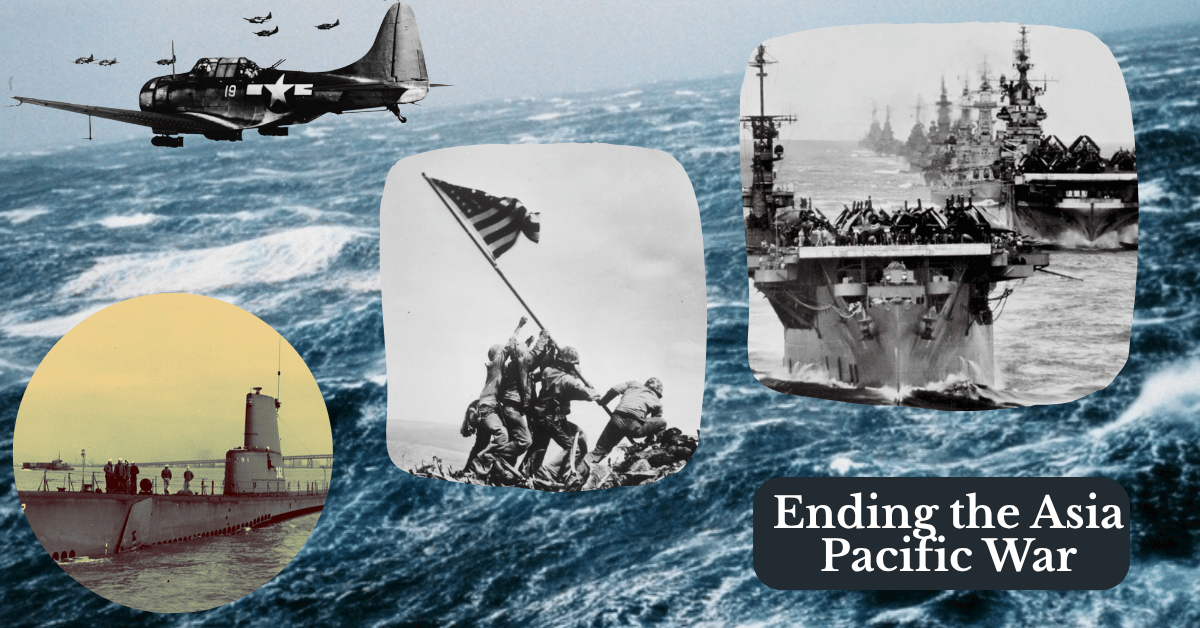
Image credit: various photographs from Naval Aviation Museum, National World War II Museum, and US Navy Archives.
Discover more from friarmusings
Subscribe to get the latest posts sent to your email.
 friarmusings