
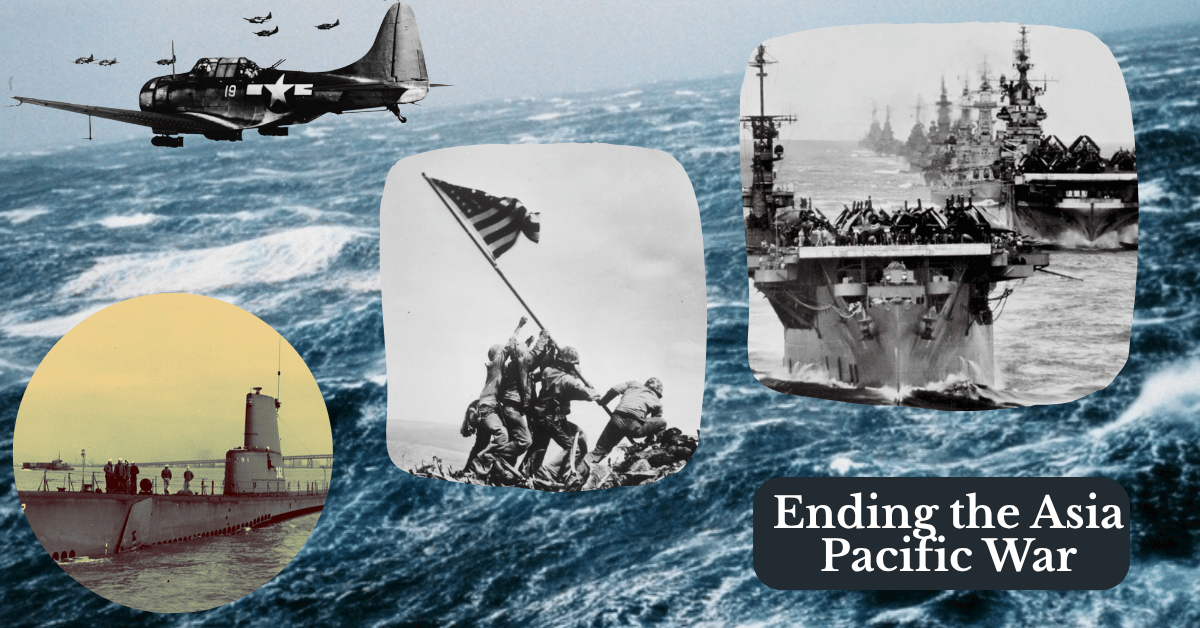
In the post China and Japan: A History, it was noted that as early as the late 16th century, Japan believed it had surpassed China as a nation. It was then that Toyotomi Hideyoshi, the most preeminent daimyo, had unified all of Japan, brought an era of internal peace – and set about to invade China. In effect he was planning to claim for Japan the role traditionally played by China as the center of the East Asian international order. His first step was to invade Korea, a vassal state of China, and establish a strategic buffer. The conflict ended in 1598 with the withdrawal of Japanese forces from the Korean Peninsula after a military stalemate in Korea’s southern provinces.
But what is of interest is that this memory seems to have set a model for national destiny and success: a unified government with a warrior-culture dominated society (samurai), a reasonable naval force available, and a vision of regional leadership as ordained by the gods. And in the background was the Imperial line, descendents of the sun goddess Amaterasu.
Japan moved into the Tokugawa shogunate era, ending this period of expansionism. By now China remained a cultural source but no longer considered politically superior. But neither did Japan see itself as categorically superior to Asia. Asia was still a Sinocentric cultural world. China was admired as a source of classical learning, moral philosophy, and bureaucratic norms of governance. Korea was viewed as culturally refined and civilized. Japan’s self-image was distinct, but not hierarchical in a racial or civilizational sense.
But at this juncture of history, the Tokugawa shogun initiated policies designed to limit the access of the world to Japan. This seems to be the point Japan’s history when the seed had been planted: seeing itself as apart and superior to its Asian neighbors
Historians generally agree that Japan’s sense of being apart from and ultimately superior to its Asian neighbors did not emerge all at once. It developed in stages, with a decisive shift occurring from the 1870s through the early 1900s, as Japan’s leaders reinterpreted identity, civilization, and power in a rapidly changing world. It was the beginning of the Meiji Era. The decisive rupture in Japan’s view of itself and its Asian neighbors came after contact with Western imperial power.
Key leaders in Meiji Japan realized that western powers ranked nations by a different measure of civilization, military strength, and institutional stability. At the same time Japan could see that other Asian states were being colonized or humiliated. Japan’s leaders concluded that Asia as a whole occupied a dangerous lower tier in the global order. It became clear to the leaders that Japan’s survival required reinvention, not merely reform. This produced a new logic: If Asia is treated as backward, Japan must prove it is not truly Asian in the Western sense.
Leaving Asia
The most explicit articulation of separation came from Fukuzawa Yukichi. In the mid-1880s, Fukuzawa argued that China and Korea were stagnant and resistant to reform. With his ideas of social darwinism, he concluded that the world order was like a universal ladder and it was evident that Japan was climbing it faster than its Asian neighbors. His conclusion was that Japan should “leave Asia” intellectually and institutionally. This was not a call for conquest, but it clearly ranked Asian societies hierarchically and framed Japan as exceptional within Asia. This moment marks the conceptual break: Japan begins seeing itself as no longer fully “of” Asia.
Military success transformed Fukuzawa’s theory into conviction. After defeating China in the 1890s Japan became the first Asian power in modern times to defeat another Asian state using Western-style warfare. Victory was interpreted not just as strategic success, but as proof of civilizational advancement and evidence of national superiority. Discourse within Japan’s political, educational, and other civil institutions – including the newspapers and periodicals – increasingly portrayed China as decadent and obsolete. Korea was seen as weak and incapable of self-rule. It is at this point that Japan began to assert a cultural claim of superiority, which was slowly shifting from cultural claim to demonstrated fact.
That sense of shifting hierarchy in the Asian sphere was amplified and accelerated with Japan’s defeat of Russia in the Russo-Japanese War of 1904-1905. For Japan it confirmed parity with Europe and elevated Japan from more than a regional leader to an equal of great power on the world stage. For Japanese elites, the implication was stark. Other Asian nations had been victims of western power. Japan was a victor. From this point on, Japanese superiority was framed as historical, moral, and increasingly racial.
By the early 20th century, Japan’s self-image had evolved and hardened into a view that held Japan as the preeminent leader and guide of all Asian nations who were viewed as pupils or dependents. This mindset underpinned colonial rule in Korea (annexed in 1910), expansion in China in the 1930s and claims of “liberating” Asia while dominating it as time moved into the 1940s. What began as defensive differentiation was assertive hierarchy. When their neighbors resisted, it was interpreted as backward, uncivilized and above all, a lack of gratitude.
In short, Japan first separated itself from Asia to survive incursion by the West. In time, ideologically driven by social darwinism, bolstered by military victories in China, then came to believe it had surpassed Asia altogether. Japan took on a great-power identity as the hierarchy of Asian nations hardened in Japan’s estimation with Japan having surpassed any other Asian nation and attained parity of honor and prestige among modern nations – or so they assumed.
Education and Propaganda
What is interesting is that the government-supplied elementary and upper school textbooks’ content parallel this evolution. Early Meiji textbooks were reformist rather than openly chauvinistic. They taught that civilization (bunmei) as a universal, linear process that allowed the observer to rank nations by technology, institutions and moral discipline of the people and the leaders. China and Korea were depicted as once-great civilizations grown stagnant and bound to outdated customs. Japan, by contrast, was presented as energetic, adaptive, and willing to learn from the West.
By the late 1800s the textbooks introduced moral education, but not in the traditional sense. It now linked national character to the nation’s destiny. Japan was portrayed as loyal, disciplined, and public-spirited – characteristics lacking in their Asian neighbors who were described as corrupt, disunited and passive. It was at this point in history the Emperor issued an Imperial Rescript on Education, which centered on loyalty to the Emperor; framed Japan as a moral community, not just a state; and cast other Asian nations as lacking a moral unity.
After the First Sino-Japanese War the supplied history texts rewrote East Asian history in the framework of decline vs. renewal. China was described as a nation that was a living fossil dependent on the achievement of their ancestors, refusing to renew. The world passes them by in terms of technology and power. In China’s refusal to renew, Japan was cast as the rightful heir to “true” Asian civilization, now modernized. It was at this same point in time that mass circulation media became accessible. Such media consistently portrayed Japanese soldiers as loyal, trained, possessed of samurai spirit and humane. Chinese soldiers were portrayed as chaotic, cruel, or cowardly. This war marked the first time military victory was presented as proof of civilizational hierarchy, not merely strategic success.
Victory in the Russo-Japanese War (1904-5) transformed the tone and content of school materials. Geography and civics texts ranked nations explicitly. Japan was placed alongside Europe while Asia was treated as problematic: weak, unstable, in need of order. The lessons were clear: Japan had a special destiny, strength equaled virtue, and power justified leadership. In popular media Japan was portrayed as the champion of Asia against the West, protector of the childlike other Asian nations. Japan was seen in the role of paternal superiority.
After the annexation of Korea (1910) when Japan entered its empire-building era, textbooks depicted colonies as historically incapable of self-rule and now the beneficiaries of Japanese administration. That was in Japan. In Korea and other regions, colonial textbooks taught Japanese history as the main narrative in that it was a history to emulate centered on loyalty to the Emperor as universal virtue. Popular children’s books and magazines showed colonial subjects smiling under Japanese tutelage.
By the 1930s the theme of textbooks and media had evolved from simple Japanese superiority to Japanese destiny. History became overtly teleological, showing Japan’s rise as natural and moral, with Japan positioned as destiny’s leader in the western Pacific. Japanese military “adventures” were seen as defensive measures that were historically inevitable. Resistance to this evolution and tide of history was irrational as the rest of Asia was clearly incapable of progress without Japanese leadership.
It was the era of a different colonialism masked under the language of “co-prosperity” that gave an acceptable face to Japan’s deeply entrenched sense of superiority.
Image credit: various photographs from Naval Aviation Museum, National World War II Museum, and US Navy Archive.
Discover more from friarmusings
Subscribe to get the latest posts sent to your email.
 friarmusings