
It is one thing to plan war and conduct war games. It is quite another to authorize the war.
In the previous posts we have considered what lay behind the scenes in terms of the cultural, political, diplomatic, economic, industrial, and military capabilities – not just in the two nations, but with the factions that created strategy and moved the levers of power – the limitations each faced. Japan needed Southwest Pacific oil to fuel its ambitions. The United States needed Japan to stay “contained” as the defeat of Nazi Germany was the priority. The summer of 1941 had the world in a precarious and unstable balance – and then Japan invaded Southern Indochina and Nazi Germany invaded the Soviet Union. The world was like an automobile with brakes that were marginal at best on level ground and now the world tilted markedly downhill. The automobile was speeding up and blowing through one stop sign after another. The war was expanding at an exponential rate.
Liaison and Imperial Conferences
Japan’s movement toward war in 1941 can be understood most clearly by tracing the sequence of Liaison Conferences held between the Japanese cabinet and the Army and Navy high commands. These meetings held frequently between September and December 1941were the working sessions where policy was debated, revised, and gradually hardened. By the time the issue reached an Imperial Conference before Emperor Hirohito, the essential decisions had already been reached.
In the days leading up to the September Imperial Conference, several Liaison Conferences refined the document titled “Outline for the Execution of the Empire’s National Policy.” The key points of discussion were the impact of the American oil embargo imposed after Japan moved into southern Indochina, the demands of the U.S. to withdraw from China versus military expansion into Southeast Asia, and readiness of the military to support such a decision. The leadership adopted a dual-track policy: continue negotiations with the United States and prepare for war by late October if diplomacy failed. This policy was formally ratified by the Emperor at the Imperial Conference of September 6, 1941.
Following the September decision, Liaison Conferences focused on practical preparations for possible war. Major topics included Army planning for invasions of Malaya, the Philippines, and the Dutch East Indies and Naval strategy for neutralizing the U.S. Pacific Fleet. It was during this period that Navy planners finalized the concept for the carrier strike on Pearl Harbor. The Navy leadership, particularly Admiral Isoroku Yamamoto, argued that if war with the United States became unavoidable, Japan must begin with a surprise blow that would cripple the American fleet. The Pearl Harbor operation was being prepared in detail.
In October 1941 a political crisis in Japanese leadership led to the fall of Prime Minister Konoe and the rise of General Tojo into that leadership position. At this point the military was firmly in control of the majority of key positions and were able effectively control Liaison Conference recommendations.
New Liaison Conferences convened shortly after the formation of the Tojo government in late October 1941. Prime Minister Tojo initially ordered a review of the September war decision. Military and civilian leaders examined whether negotiations with the United States might still succeed. Several weeks of discussion produced two possible diplomatic Proposal A and B. Details of these two proposals were covered in the post November 1941. These proposals were intended as Japan’s final diplomatic effort. The U.S. response was described in that same post.
A Liaison Conference on November 5, 1941 decided how Proposal A and B would be delivered to the U.S. Department of State. If negotiations failed by early December, Japan would initiate the wider Asia-Pacific war. At this stage the IJN was completing the operational plan for Pearl Harbor. IJA forces were already assembling for offensives across Southeast Asia. The Imperial Conference later that day formally approved this policy.
Between November 10 and November 20 leaders monitored the progress of negotiations in Washington but the daily reports were not promising as Japanese diplomats reported that American leaders were unwilling to compromise on the core issue: Japanese withdrawal from China. Meanwhile, military preparations intensified: the Southwest Pacific invasion fleets assembled, troops moved into staging areas in southern China and Indochina, and Naval forces prepared to sail to Pearl Harbor. Although negotiations technically continued, the military assumed that war was increasingly likely.
On November 26 the Liaison Conference received the Hull Note effectively ending diplomatic efforts. As the discussion continued, the Kido Butai, the Pearl Harbor attack force set sail from Japan. The last decisive Liaison Conference took place on December 1. Leaders concluded that negotiations had failed and Japan’s strategic situation would worsen if it delayed implementing the already developed plans.
It was recommended that military operations should begin as planned; a recommendation immediately presented to the Emperor at the Imperial Conference of December 1, 1941. There the decision was formally approved by Emperor Hirohito to begin war against the United States, Britain, and the Netherlands.
Planning Pearl Harbor
The earliest known proposal for a surprise attack on the American Pacific Fleet came in January 1941. Admiral Yamamoto believed that if Japan went to war with the United States, it would have only a limited window of opportunity before American industrial power overwhelmed Japan. He therefore argued that Japan must begin the war by crippling the U.S. Pacific Fleet in a surprise strike. The concept departed sharply from traditional Japanese naval doctrine, which envisioned drawing the U.S. fleet westward across the Pacific for a decisive battle near Japan. Many naval leaders initially considered Yamamoto’s proposal risky and unrealistic.
During the February and March of 1941, Yamamoto directed staff officers in the Combined Fleet to study the feasibility of an attack on Pearl Harbor. Key planning questions included: could aircraft carriers approach Hawaii undetected? Would torpedoes function in the shallow waters of Pearl Harbor? Could a carrier-based strike destroy enough ships to delay American operations? The staff undertook the planning of possibly launching a large-scale carrier attack from long distance. This meant transiting almost 3,000 miles of the Pacific undetected, achieving surprise as it launched coordinated aircraft strikes from six carriers (a feat no navy had ever attempted).
By September, as national policy debates intensified in Tokyo, the Navy began extensive fleet training exercises. Carrier aircrews practiced long-range navigation, coordinated multi-carrier launches, torpedo attacks against ships in shallow harbor waters, and training primarily in the remote northern Kagoshima Bay, whose geography resembled the harbor at Pearl Harbor – and was far away from prying eyes. Meanwhile, Japanese intelligence monitored American fleet movements in Hawaii. By October the Pearl Harbor operation had matured into a complete war plan. In early November the full attack force began assembling in northern Japan. Kido Butai, the Combined Fleet, includes six carriers with supporting forces consisting of battleships, cruisers, destroyers, submarines, and supply ships.
On November 26 the Japanese carrier force sailed from Hitokappu Bay in the Kuril Islands. The fleet moved under strict radio silence across the North Pacific along a remote northern route designed to avoid shipping lanes. The route was also outside the range of American reconnaissance and was further aided in that winter weather in the North Pacific discouraged patrol flights and submarine picket patrols.
At dawn on December 7 (December 8 in Japan) the IJN fleet was 300 miles north of Oahu. Aircraft from the carrier task force launched the attack on Pearl Harbor. There were two waves of aircraft struck that attacked Battleships and airfields (Navy, Army and Marine) across Oahu. The attack severely damaged the U.S. Pacific Fleet and brought the United States into the war.
What the United States did not want, what Japan concluded was inevitable and necessary, was now underway. 13 million had already died in the Asia-Pacific War. Another 17 million would perish before it was over.
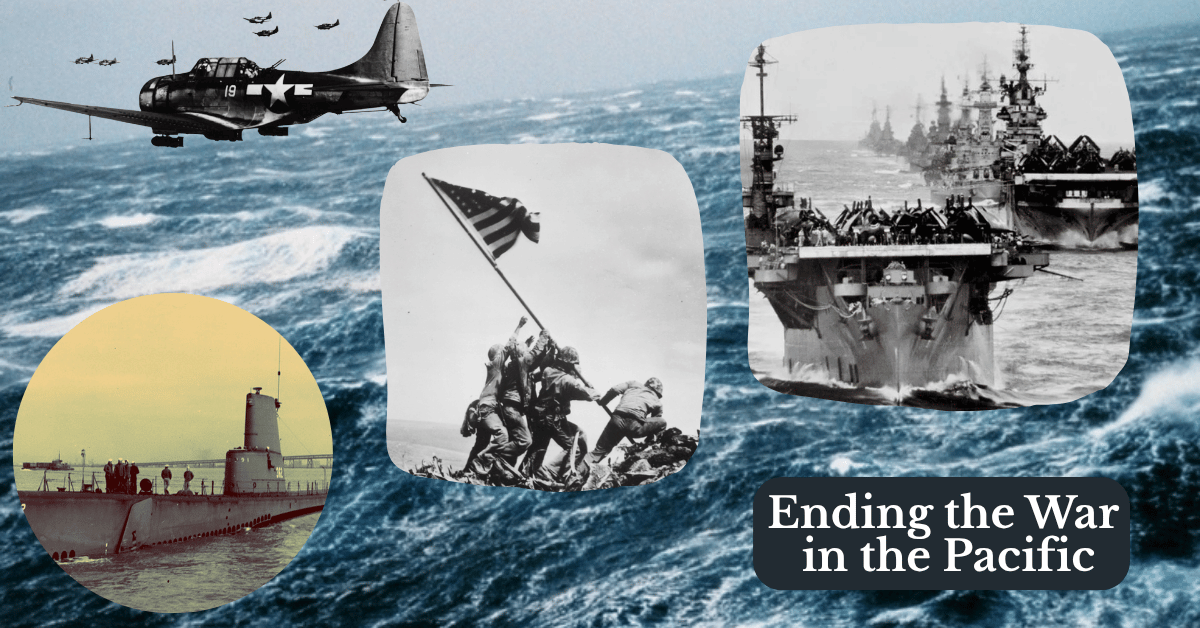
Image credit: various photographs from Naval Aviation Museum, National World War II Museum, and US Navy Archive
Discover more from friarmusings
Subscribe to get the latest posts sent to your email.
 friarmusings