
If you would like to read an interesting online short story, consider Scott Alexander’s “Sort by Controversial.” The author imagines a west coast marketing company that accidentally creates an algorithm to generate what comes to be called the “Scissor.” The name scissor seems appropriate as the algorithm is used to create a statement, an idea or a scenario that will create a perfect fissure in and among people. It goes well beyond generating discussion and disagreement. It seeks a nuclear wasteland, take no prisoners kind of fissure. The kind that can leave you absolutely flummoxed that your best friend could possibly disagree with your interpretation of the controversy, followed by escalating fury and paranoia and polarization, until the debate creates the intended goal: nuclear wasteland.
The short story’s protagonist explains the nuclear acceleration: “at first you just think they’re an imbecile. Then they call you an imbecile, and you want to defend yourself. … You notice all the little ways they’re lying to you and themselves and their audience every time they open their mouth to defend their imbecilic opinion. Then you notice how all the lies are connected, that in order to keep getting the little things like the Scissor statement wrong, they have to drag in everything else. Eventually even that doesn’t work; they’ve just got to make everybody hate you so that nobody will even listen to your argument no matter how obviously true it is.”
Sound familiar? The work is fiction, but it makes one wonder.
(p.s. – there is some profanity)


 Today is the
 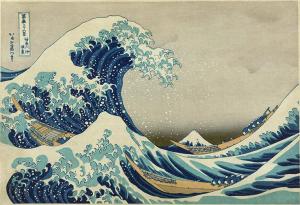 There has always been ocean lore that proclaims rogue, monster waves rising 80, 90, or 100 feet high or more. Of course, these are not eye-witness accounts. Men in wooden ships don’t survive such an encounter. There was the story of the Alaskan Tlingit Indian woman who returned from berry picking to find her entire village disappeared. The debris field evidence on the shoreline indicated that the ocean had risen up and fell upon the village. The wave would have been more than 100 feet high to cause the damage. Experts of the day dismissed stories about such waves because they seemingly violated basic principles of ocean physics.
  friarmusings