
 Unless you happen to be like my muse, Calvin, in the comic strip, I suspect you are about to make some New Year’s resolutions. How did you do on last year’s resolutions? About the same as the rest of us? One ad hominem wisdom saying defines “insanity” this way: to keep doing the same thing and expect a different result. Perhaps 2021 is a time to consider changing the way resolutions are considered, made, and hopefully, kept. Continue reading
Resolutions and habits
2
 One of the great gifts to the Church are the heretics. I use that one-liner in order to grab people’s attention. It mostly generates the question: “what possible good could come from a heretic,” right? The thing about heretics is that they ask great questions, sometimes the critical questions. The problem is they get the wrong answers. They take a road leading away from Truth. And in the beginning it always looks like a promising direction.
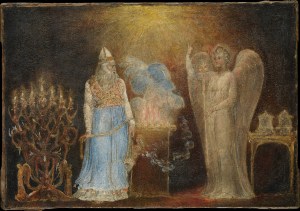 Hopefully you know the backstory to
  On this day in 1944, during the World War II
 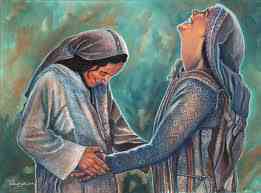 In the season of Advent and Christmas, we will hear a lot about Mary, the mother of Jesus. We’ll hear about her obedience, her purity, her faith, her consent. We’ll see her in outdoor Nativity displays, draped in blue, with downcast eyes and a beatific smile. We’ll enjoy watching our children dramatize her story in “virtual pageants” on Christmas Eve. We’ll honor her legacy with some of the most beloved prayers, liturgies, and carols we know. All of it true and right. But this morning let us consider Mary, the prophet. Mary, the voice of the downtrodden. Mary, the singer of the Magnificat, God’s gorgeous justice song.
 Given that it is the end of Advent and we are just days away from Christmas, given the title of this post, perhaps your mind immediately conjured up “Hark the Herald Angels Sing.” That wasn’t what I intended, but so that one might not be disappointed, I can at least offer several choices of YouTube videos of the classic Christmas hymn:
 So far this Advent, every Monday’s musing has explored one of the many gifts that await us under the tree, that is, the cross of Christ. And there are some awesome gifts – to name the ones mentioned in previous weeks – forgiveness and mercy. Now we have arrived at the doorstep of Christmas! Like any kid in the days leading up to Christmas you have begun to peer under the tree, assessing the shapes, sizes and weight of gifts – and guessing what could possibly be under wraps. You have to wonder what other awesome gift is waiting right there under the tree, the cross of Christ. Let’s open up another gift! But wait…it’s not Christmas yet. What’s the rush? Christmas is only a few days away. Of course, when I was 7 years old, “only a week” seemed liked a lifetime. Now that I am…ah… a lot older than 7, “only a week” is but the blink of an eye. I am much more patient about most things…. Not all things, most things. So, what’s the rush? Maybe we should practice a little patience?
  friarmusings