
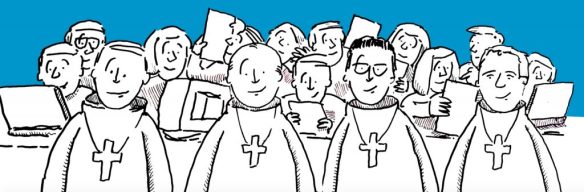
 All families and households in the parish by now should have received a mailing from Bishop Parkes about the 2020 Annual Pastoral Appeal (APA). If you did not receive it, that means you are not registered here at Sacred Heart – or – you have changed addresses and not updated your information with the parish – or – perhaps you are not registered anywhere? Perhaps you are thinking, “That’s OK, I am registered with my parents.” True, that’s OK, unless you are a young professional already living on your own, with your own career. There are registration forms in the back of the church (Or click here). Take one, fill it out, and come visit with us the second and fourth Sunday mornings of the month and complete your registration by visiting our “Parishioner Welcome and Registration” events. Continue reading
What’s going on…
1
 Today’s
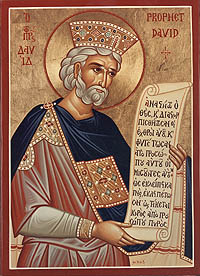
  Franciscan sister and scientist Ilia Delio (my master’s thesis professor), has written a wonderful autobiography. In it she recounts how her parents decided to name her Denise. (She would have been named Denis had she been a boy.) Later in life, she was delighted to find a meaningful connection with the man who first approached theology in an explicitly mystical way in his text Mystical Theology. Delio writes:
  Yesterday’s
  Normally I muse about one thing or another here in the “pastor’s column” but only from time-to-time use the space to report on this or that. But this week I wanted to take a look ahead at what’s going on in this amazing parish and our future. One of the first things that comes to mind is our “Vision: True North” (
 Given our location in downtown Tampa, we encounter a range of people — individuals and families, poor and needy — that present their needs and hopes. Our parishioners experience one aspect of those petitions every Sunday as folks gather at or near our church: people asking for money, people selling palm crosses, folks asking for assistance of all kinds. A smaller group of parishioners who make up the Hands of Hope Ministry, see another view as each Saturday they prepare, meet, greet, and feed about 150-200 people. The crowds are always larger at the end of the month when money is a little tighter. The parish staff sees another aspect of the needs from people who daily and constantly come to the office, call, or are referred to us by another charitable entity. Some of these people we can assist, some we cannot because of the request, some we help discern what agency is better equipped to assist them and their need.
  It was a Holy Day of Obligation and my husband was at work, so there was no one to help me at Mass with our three kids, then ages 4, 2, and newborn. I didn’t just “have” to be at Mass; I wanted to be there. I wanted my children to know that we go to Mass because we love Jesus, because we want to be with Him, and that their mommy has been taking them to see Jesus since they were little.
  As part of formation for solemn vows as a Franciscan friar, you spend a whole year living outside the world of formation and studies. You live with a friar community involved in full-time ministry. I was assigned to a large parish in Raleigh, N.C. It is a large parish with almost 5,000 households and lots of ministries, meetings, activities, and all manner of things that occurred day and night.
 This time of year, one often spends some time at the boundary of the past and the present. We look to the past and from that view we make New Year’s resolutions. We might look to the past and see what needs to be done as we move ahead in time. “Time” magazine helps us look to the past in its annual accounting of famous people who have passed away in the year. And sometimes in the same swath of days, we refresh our newly minted calendars with dates of celebration for all the events of the living.
  friarmusings