
 At that time Jesus exclaimed: “I give praise to you, Father, Lord of heaven and earth, for although you have hidden these things from the wise and the learned you have revealed them to the childlike. Yes, Father, such has been your gracious will. All things have been handed over to me by my Father. No one knows the Son except the Father, and no one knows the Father except the Son and anyone to whom the Son wishes to reveal him.” (Mt 11:25-27)
The “wise and learned” are not named, but I suspect they are the folks in the towns mentioned in yesterday’s gospel: “Jesus began to reproach the towns where most of his mighty deeds had been done, since they had not repented. ‘Woe to you, Chorazin! Woe to you, Bethsaida!’” Too wise and learned to be taken in by that huckster from Galilee. Continue reading
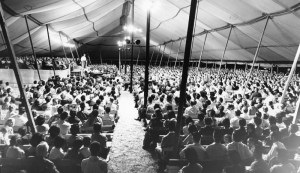 Jesus began to reproach the towns where most of his mighty deeds had been done, since they had not repented. “Woe to you, Chorazin! Woe to you, Bethsaida!” (Mt 11:20)
 In the 2004 movie, The Incredibles – and if you haven’t seen it… well, just stop reading this, go find a copy, and watch a great movie. Anyway, where was I…. there is a scene in the movie when Dash Parr, the super-powered speedster son of Bob Parr (Mr. Incredible) and his wife Helen (Elastigirl), has just been told to hide his incredible speed and let the other kids have a chance at winning so that he can fit in and be normal. When Dash resists the suggestion noting that his speed makes him special, this dialogue ensues:
 I have to admit that I never wondered about the depiction of saints and their halos. It was just the way things were. True, but it is not the way things always were. Ever wonder why halos? Philip Kosloski over at
  Fatima: How July 13, 1917 “changed” the Church
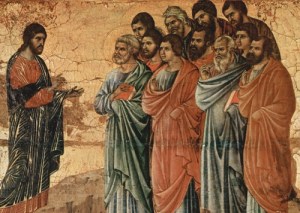 Unlike Mark (Mark 3:13–14) and Luke (Luke 6:12–16), Matthew has no story of Jesus’ appointing the Twelve, he assumes that the formation of the group is already known to the reader. “Jesus summoned his Twelve disciples and gave them authority over unclean spirits to drive them out and to cure every disease and every illness. The names of the Twelve Apostles are these: first, Simon called Peter, and his brother Andrew; James, the son of Zebedee, and his brother John; Philip and Bartholomew, Thomas and Matthew the tax collector; James, the son of Alphaeus, and Thaddeus; Simon the Cananean, and Judas Iscariot who betrayed Jesus.” (Mt 10:1-4)
 July 9th is the feast day of St. Mark Ji Tianxiang, a Chinese layman who was murdered in 1900, along with dozens of other Catholics in his village, in the vicious persecution of Christians during the Boxer rebellion. What’s unusual about St. Mark is that he was an opium addict. To be clear, he was an opium addict. Not had been an opium addict. He was an opium addict at the time of his death.
 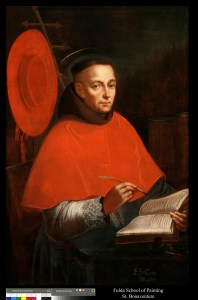 Saturday, July 15th marks the feast day of one of the great figures in Franciscan history – St. Bonaventure of Bagnoregio – as well as the twelfth anniversary of our Franciscan presence in this historic downtown parish. St. Bonaventure is a good model of what it means to be a Franciscan, while at the same time being a priest in leadership positions in a parish. Bonaventure reminded the friars of his day that our first vocation is as “brother.” At the core of our charism, we are a fraternity in mission to the People of God striving to continue our Order’s 800-year-old mission: bringing the Gospel into the everyday experience of men and women through our life in fraternity and compassionate service to all.
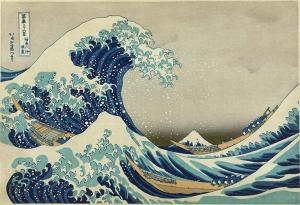 There has always been ocean lore that proclaims rogue, monster waves rising 80, 90, or 100 feet high or more. Of course, these are not eye-witness accounts. Men in wooden ships don’t survive such an encounter. There was the story of the Alaskan Tlingit Indian woman who returned from berry picking to find her entire village disappeared. The debris field evidence on the shoreline indicated that the ocean had risen up and fell upon the village. The wave would have been more than 100 feet high to cause the damage. Experts of the day dismissed stories about such waves because they seemingly violated basic principles of ocean physics.
  friarmusings