 During the final week of February, the parish staff participated in an overnight retreat led by Fr. David Convertino, OFM, one of our Franciscan brothers. We are a busy staff whose ministry and schedules do not often see the whole staff in the office most days. Given some ministries require weekend work and some do not, it turns out Tuesday is the only day the whole staff is present. So, it was a wonderful time to be away together as brothers and sisters in Christ without the ebb and flow of life and service in the weekday parish office.
In his opening remarks, Fr. David asked, “What do St. Francis, Pope Francis, and home have in common?” He then led us through a series of talks about the connected values of poverty, mercy, and belonging as revealed in the stories of St. Francis of Assisi. I certainly would not attempt to condense the retreat into this column – besides, I am still thinking about Fr. David’s question. And here are some thoughts.
In March 2013, Pope Francis famously, and perhaps controversially, said that he wanted a “poor church for the poor.” Not surprisingly, this raised an eyebrow or two. Many online commentaries have excoriated the pope as an opponent of capitalism, socialist-in-religious clothing, or another South-American-reactionary-liberation theologian. Equally, many have concluded that Pope Francis wants Catholics to devote greater attention to poverty-alleviation social programs. Both miss the deeper meaning Francis attaches to poverty.
No one should be surprised Pope Francis is so vocal about material poverty. After all, he comes from Latin America: a part of the world in which millions seem locked into dire poverty. You would have to be less-than-human not to be disturbed by the contrast between Buenos Aires’s beautiful Recoleta district which gives the city the appellation “Paris of the South,” and the misery of a Buenos Aires slum like Villa Rodrigo Bueno. The pope has made it clear that indifference in the face of such disparities is not optional. But in understanding Francis’s words about poverty, we should remember his conception of poverty and the poor goes far beyond conventional secular understandings of these subjects.
Pope Francis said this about Christianity and poverty: “For us Christians, poverty is not a sociological, philosophical, or cultural category. No, it is a theological category. I would say, perhaps the first category, because God, the Son of God, abased Himself, made Himself poor to walk with us on the road. And this is our poverty: the poverty of the flesh of Christ, the poverty that the Son of God brought us with His Incarnation. A poor Church for the poor begins by going to the flesh of Christ. If we go to the flesh of Christ, we begin to understand something, to understand what this poverty is, the poverty of the Lord.”
It is strange to think about the “poverty of the flesh of Christ,” but in this view, the pope and St. Francis share a common view. The pope uses the language of the humility of Christ to come take on our flesh; St. Francis speaks of the condescending of Christ using the Latin condescendere – the stepping down to the posture of a servant. Each paints a verbal portrait of the beloved Son of our Heavenly Father becoming one of us to serve us that we might join the table. Each points to the Eucharist as the earthly invitation to the table. Each challenges us to our own condescendere in the way we invite others. Pope Francis posed two questions to his listeners: “Tell me, when you give alms do you look into the eyes of the man or woman to whom you give alms? And when you give alms, do you touch the hand of the one to whom you give alms, or do you toss the coin?”
What do St. Francis, Pope Francis, and Belonging have in common? I hope you weren’t expecting a one-sentence summary – I am still working on it. But I can see a way forward. There is a part of the Eucharistic prayer said in silence during the Mass. That’s too bad, because it is amazing. It comes as the priest adds a small part of water to the chalice of wine. “Through the mysteries of this water and wine, may we come to share in the divinity of Christ who humbled himself to share in our humanity.” It is moment of poverty, mercy, and belonging, all pointing the way home. It is the moment we are called to replicate in the world, to be Christ for others.
What are the “two questions” for your life? Do you condescendere? Do you look in their eyes? Do you touch their hands? This is the beginning of understanding poverty. It is the beginning of the way home.

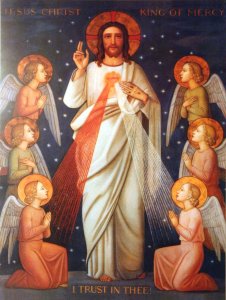 Pope Francis has declared a Jubilee Year of Mercy to begin on the Solemnity of the Immaculate Conception this December 8th . In Judaism and Christianity, the Jubilee is a special year of remission of sins, forgiving debts, and reconciling broken relationships. It is a year in which the people of God are asked to especially make manifest the mercy of God. So maybe, here at the beginning, it is a good time to think about the meaning of “mercy.”
 “Death, be not proud, though some have called thee Mighty and dreadful, for thou are not so; For those whom thou think’st thou dost overthrow Die not, poor Death…. One short sleep past, we wake eternally, And death shall be no more, Death, thou shalt die.” So wrote the 17th century poet John Donne about the freedom from the seemingly unsurpassable power of death and the promise of new life, eternal life at the core of our Easter celebrations.
  “When I was a child I used to walk five miles to school in the snow, just to let them know that I was too sick to come to school that day.” So my father used to tell me. Hmmm…? Really – but hey, dad was really old, right? He probably grew up in the ice age and maybe the weather was very different back then. Such are the stories of our youth as parents try to teach us the lessons of life, sometimes wrapped in yarns, tall-tales, and memories of a different time and place. I still wonder how the to-and-from the store was uphill both ways.
  Lately, during weekday Mass celebrations, I have been asking people, “So…how’s your Lent going? Are you getting there?” It is just under three weeks until we celebrate the Mass of the Lord’s Supper on Holy Thursday. So…. how’s your Lent going? A lot of the time people tell me that they have given up such and such for Lent and they are still good, sticking to the plan. That is a good thing. But I wonder, and often ask, “does that make room in your life for God?”
  I arise today
 Last week there was a bit of an “exchange” between Pope Francis/ Vatican and Donald Trump/his campaign team. Someone asked me what I thought about it all. I had nothing to offer since it is my experience that the press accurately quotes the Pope but then again, any text without a context is generally a pretext for what one wanted to say in the first place. What did the Pope say, in context? The context was following the celebration of Mass at the US-Mexican border while returning to Rome. Keep in mind, this Pope has built his pastoral response to the world around the model of St. Francis’ compassion for the poor, suffering, or marginalized. His response should not have been too surprising. Pope Francis said, a “person who thinks only about building walls, wherever they may be, and not building bridges, is not Christian. This is not in the Gospel. As far as what you said about whether I would advise to vote or not to vote, I am not going to get involved in that. I say only that this man is not Christian if he says things like that. We must see if he said things in that way and in this I give the benefit of the doubt.”
  The playwright Oscar Wilde once wrote, “I can resist anything except temptation.” The humor of the remark is mixed with a sad recognition that we fail so often to resist the temptations that come our way each day and from every direction. Of course, there are temptations and then there are temptations writ large. What are people’s greatest temptations? Why? What are their “favorite” sins – indicated by frequency and repetition? Why do we so often find ourselves in the same position as St. Paul? “What I do, I do not understand. For I do not do what I want, but I do what I hate.” (Romans 7:15) During this Lenten season, each of us is called to name our temptations as part of a moral and ethical struggle in trying to live a holy and righteous life. Then once we name that temptation, to begin to unfold and inspect, to then start to answer what it is about this temptation that becomes especially alluring. Such are the first steps to healing.
  ” Bless me Father, for I have sinned….” So often people confess anger as a sin which plagues them. But often their description leaves me wondering. “You mentioned anger, but it sounded more like exasperation.” The person agrees and in the discussion mentions that they said nothing to the other person, we’re not uncharitable to them, and it did not affect their relationship. I offer that perhaps that moment is one of the most Christian of moments. They faced a choice: do what their inner emotion would have them – perhaps say a harsh word, sever the relationship, etc. – or choose what God asks and act in charity. But…
 friarmusings