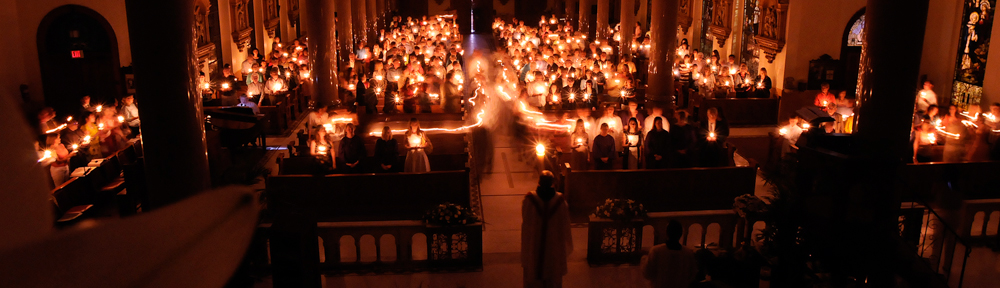
Why are you called?

Today is the Feast of St. Matthew the Apostle, the author of the Gospel of Matthew. He is identified as a tax collector for the Roman authorities (Mt 9:9 and 10:3) In similar passages both Mark 2:14 and Luke 5:27 describe Jesus’ calling of the tax collector Levi, the son of Alphaeus, but Mark and Luke never explicitly equate this Levi with the Matthew named as one of the twelve. However, that is well established in Tradition.

As a tax collector, his fellow Jews would have despised him for what was seen as collaborating with the Roman occupation force. The Pharisees lumped them with “sinners” (Mt 9:11-13). If Jesus had used a Public Relations firm to help him select the 12, I am pretty sure Matthew would have been judged to have too many “negatives” in public perception and would thus be a liability “to the team and mission.”

But then again, Jesus’ mission was to call sinners to redemption and to the renewed covenant with God.

Why did Jesus call Matthew, the tax collector? I don’t think it was for someone to keep accounting records and make sure the taxes were paid. What was Matthew’s contribution to the nascent Christian community? At the beginning, it was hard-to-impossible to say. At the end, under the gift of the Spirit, he produced the inspired Gospel of Matthew, plus took the gospel out into the world on mission.

Why did God call me? Trust me, lots of people who knew me back in the day would have been surprised. But after all these years of mission and ministry, one hopes the Good has come from it.

This is what I do know: “But grace was given to each of us according to the measure of Christ’s gift. And he gave some as Apostles, others as prophets, others as evangelists, others as pastors and teachers, to equip the holy ones for the work of ministry.” (Eph 7,11-12)

You are equipped for the work of ministry…. Are you doing it?  Just asking….


Image credit: Call of St. Matthew by Caravaggio, Public Domain, San Luigi dei Francesi, Rome
A morning psalm

Hubble Marks 30 Years in Space With Tapestry of Blazing Starbirth

When I see your heavens, the work of your fingers,
the moon and stars that you set in place—
What is man that you are mindful of him,
and a son of man that you care for him?
Psalm 8:4-5


Image Credit: NASA Goddard Photo, CC-BY 2.0

Lawn Care

It is an old story that still amuses me

GOD:   Frank, you know all about gardens and nature. What in the world is going on down there on the planet? What happened to the dandelions, violets, milkweeds and stuff I started eons ago? I had a perfect no-maintenance garden plan. Those plants grow in any type of soil, withstand drought and multiply with abandon. The nectar from the long-lasting blossoms attracts butterflies, honey bees and flocks of songbirds. I expected to see a vast garden of colors by now. But, all I see are these green rectangles. Continue reading →

The fiery serpents

The first reading today is from the Book of Numbers 21:4-9:

With their patience worn out by the journey, the people complained against God and Moses, “Why have you brought us up from Egypt to die in this desert, where there is no food or water? We are disgusted with this wretched food!” In punishment the LORD sent among the people saraph serpents, which bit the people so that many of them died. Then the people came to Moses and said, “We have sinned in complaining against the LORD and you. Pray the LORD to take the serpents from us.” So Moses prayed for the people, and the LORD said to Moses, “Make a saraph and mount it on a pole, and if any who have been bitten look at it, they will live.” Moses accordingly made a bronze serpent and mounted it on a pole, and whenever anyone who had been bitten by a serpent looked at the bronze serpent, he lived.

The Book of Numbers is the title of the book in English, but the Hebrew title is, more commonly, bemiḏbar, “in the wilderness [of]”). “In the wilderness” describes the contents of the book much better than “numbers,” which is derived from the censuses described in later chapters. Our passage occurs after God has assigned them to wander in the desert for a generation because of their rebellion against the leadership of God. They seem to have to fight their way through the wilderness.  Continue reading →

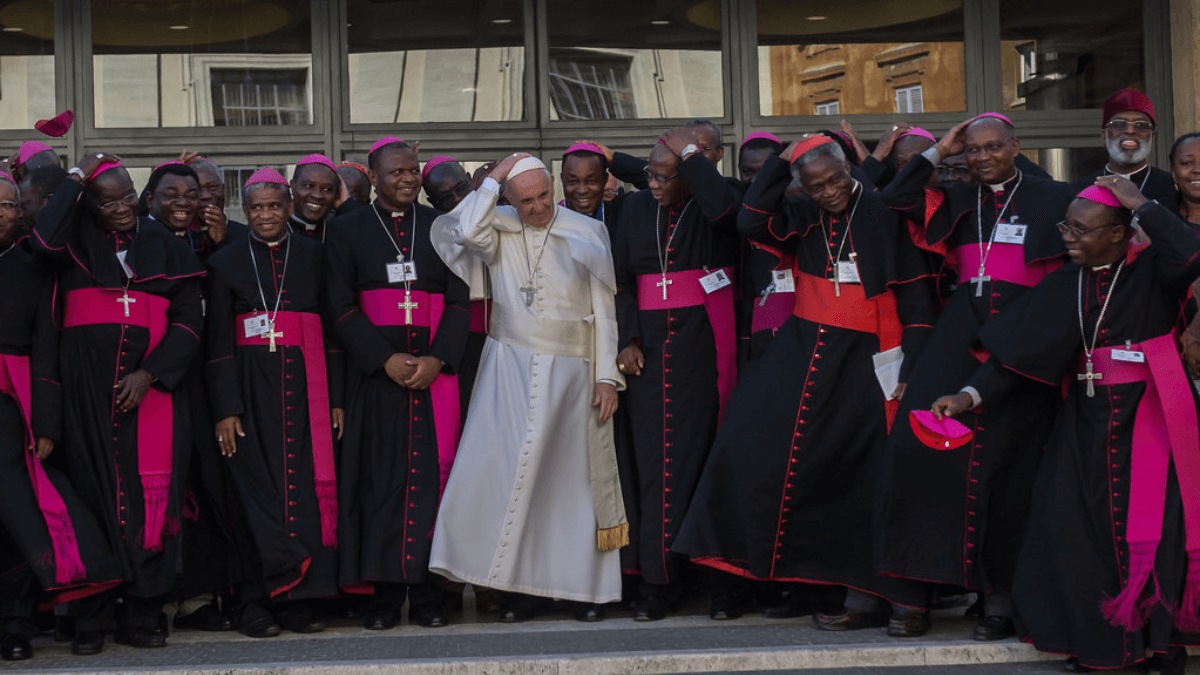
Equipping the Saints

The Feast of St. John Chrysostom

St. John Chrysostom (“golden tongue”) was known for his oratory skills. John gained popularity because of the eloquence of his public speaking at the Golden Church, Antioch’s cathedral, especially his insightful expositions of Bible passages and moral teaching. He emphasized charitable giving and was concerned with the spiritual and temporal needs of the poor. He spoke against abuse of wealth and personal property:

Do you wish to honor the body of Christ? Do not ignore him when he is naked. Do not pay him homage in the temple clad in silk, only then to neglect him outside where he is cold and ill-clad. He who said: “This is my body” is the same who said: “You saw me hungry and you gave me no food”, and “Whatever you did to the least of my brothers you did also to me”… What good is it if the Eucharistic table is overloaded with golden chalices when your brother is dying of hunger? Start by satisfying his hunger and then with what is left you may adorn the altar as well. (In Evangelium S. Matthaei)

His straightforward understanding of the Scriptures, as opposed to an allegorical interpretation – meant that the themes of his talks were practical, explaining the Bible’s application to everyday life and yet inspiring.

Some 1500 years ago, St. John Chrysostom, writing to a young man on the eve of his wedding, told him to take Christ as their teacher. He urged them to always have Christ in the midst of his marriage that together his bride and he might learn from the life of Christ, especially what it means to seek the good of the other – at whatever the cost. He urged them to take as the teacher the One who lived and died for love, in freedom, and in his unquenchable desire for our good – and that what he asked of them – and of us an “unquenchable desire.”

In our first reading, St Paul wrote of the grace and gifts given to each of the baptized: “And he gave some as Apostles, others as prophets, others as evangelists, others as pastors and teachers, to equip the holy ones for the work of ministry, for building up the Body of Christ, until we all attain to the unity of faith and knowledge of the Son of God, to mature manhood, to the extent of the full stature of Christ.” (Eph 4:11-12)

May we come to know the grace and gifts we’ve been given, seek the opportunity to use those gifts to build up the Body of Christ, and seek to do so with an unquenchable desire.


Image credit: Catholic News Service, CC-BY-ND

The centurion and his servant

The gospel reading for today is the well known account of the Roman centurion encountering Jesus on behalf of his servant. Stories like this one from Jesus’ ministry were crucial during the debate of the early church concerning the mission to the Gentiles. The nationality of the centurion is not given, but he was not a Jew. He would have been a member of Herod’s peacekeeping force rather than a member of the imperial army, which had no forces in Galilee at this date. In Luke, this incident foreshadows the various statements in Acts that God knows no partiality; rather, “The man of any nation who fears God and acts uprightly is acceptable to him” (Acts 10:34–35; see 15:9). If even the observant Jews of Jesus’ own time brought a non-Jew to Jesus, and if Jesus went to him without quibble — the church’s argument must have run — why shouldn’t Jewish Christians accept Gentiles? Continue reading →

Can your car go 160 mph?

Probably not – not even downhill with a tailwind. But then why do many automobile speedometers have a display that shows the top-end at 160 mph? Turns out automakers want speedometers to be easy to read, so there’s value in placing the typical operating speed of American cars, 45 mph to 70 mph, near the top of the speedometer where it is easily read by the driver. To do this — while maintaining a visually-appealing, symmetrical speedometer — requires a gauge that displays well past operating speeds.  ….of course you may have an all digital display making this post rather obsolete.