In today’s gospel, we hear the familiar narrative of the encounter of Mary Magdalene and Jesus later in the morning after the Resurrection. She mistakes Jesus for a gardener. Why a gardener? John writes: “Now in the place where he had been crucified there was a garden, and in the garden a new tomb, in which no one had yet been buried.” (Jn 19:41) So, it was natural that the one person who might have been working on site in the early morning, was the gardener. Continue reading →
This coming Sunday is the 2nd Sunday of Easter, Divine Mercy Sunday. The gospel is taken from John 20:19-31, the scene in the Upper Room on the evening of the Resurrection. Our gospel contains the second and third appearances of the risen Jesus in John’s gospel. These three appearances take place in Jerusalem. There is a fourth and final appearance of Jesus later in a section referred to as the “Epilogue” of John. This appearance is at the “Sea of Tiberias” in Galilee (John 21). Continue reading →
Based on a true story, Father Stu is an unflinchingly honest drama about a lost soul who finds his purpose in service to other. From a dysfunctional family life, a misspent youth, an injury ending his amateur boxing career, and a rash of poor choices, this movie is a story of redemptive suffering.
“Death, be not proud, though some have called thee Mighty and dreadful, for thou are not so; For those whom thou think’st thou dost overthrow Die not, poor Death…. One short sleep past, we wake eternally, And death shall be no more, Death, thou shalt die.” So wrote the 17th century poet John Donne about the freedom from the seemingly unsurpassable power of death and the promise of new life, eternal life at the core of our Easter celebrations. Continue reading →
There have been many a Good Friday in the course of my life. I have heard the Passion narrative. I led the Passion narrative during Good Friday liturgies. Over the many years of Bible study I have covered the Passion narrative more than a few times. And now thru the gift of my friends Jerry and Maureen, I experienced Good Friday in a way not to ever be forgotten. Continue reading →
At funerals and graveside interments, I often speak to families about the importance of telling stories of their loved ones so that generations will know the stories, the wisdom, and all that enters into that which shapes our lives and the lives of those who follow. I wonder what stories we will tell of our time during the “great pandemic”. What were the struggles, the successes, the stories of heroic response, and so much more. Allyson Chui, a writer for the Washington Post, wonderfully captured a perspective on the experience of the pandemic among different generations. What follows are her musings. Continue reading →
Our world has a long history of secular power attempting to co-op religion, religion seeking to become the central secular authority, and most permutations and combinations in between. It rarely goes well in the long run. But in the short run it can be a rallying cry for whatever cause needs such support. Such is the promotion of “Holy Rus.” Continue reading →
Every year Christians commemorate the week before Easter Sunday with special traditions and devotions that help them enter into the Passion, death and resurrection of Jesus Christ. It is a special time of the year, culminating in the biggest feast of the Church’s calendar – Easter. Here are the basics of what Catholics look forward to during the week that precedes Easter Sunday.
Palm Sunday. This day inaugurates Holy Week with the triumphal entrance of Jesus in Jerusalem. In the Gospels Jesus comes to the city riding upon a donkey with the people placing palm branches in front of him. At Mass on this day the congregation relives this event with a procession in the church and a solemn blessing of palm branches. The Passion narrative is also read on this day. Continue reading →
If you are a frequent reader of this blog you know that I am a big fan of The Bible Project. The project/website is a great way to begin or deep dive into Sacred Scripture. Appropriately here on Palm Sunday of the Lord’s Passion, they offer a great video (<5 minutes) on the Gospel of the Kingdom. You can find it here.
If you are a frequent reader of this blog you know that I am a big fan of The Bible Project. The project/website is a great way to begin or deep dive into Sacred Scripture. As you can see from the menu there are videos to watch, an app to download, podcasts, detailed studies, a blog – and an opportunity to support their mission and ministry.
Today’s blog post was super interesting: “God has a Name” Here is the opening paragraph:
Have you ever read the Bible, especially the Old Testament and thought God seems to be called by a lot of names? Who is this Yahweh, Elohim, El Roi, Adonai, Savior, Redeemer, and Angel of the Lord? What happened to the simple Trinity: Father, Son, and Holy Spirit? There are in fact, dozens of ways in which the people of Israel referred to God. Many of these names are revealed to us in Genesis and the rest of the Torah. This multiplicity of names can be a little confusing for those who don’t know ancient Hebrew. So we thought we’d do our best to open up this fascinating can of worms and show you why it’s important to understand the many ancient names of God.
Enjoy!
If you would like to see a video version you can find it here.

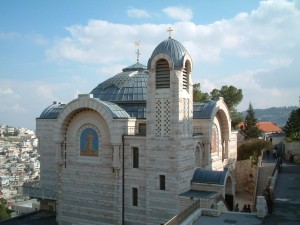 There have been many a Good Friday in the course of my life. I have heard the Passion narrative. I led the Passion narrative during Good Friday liturgies. Over the many years of Bible study I have covered the Passion narrative more than a few times. And now thru the gift of my friends Jerry and Maureen, I experienced Good Friday in a way not to ever be forgotten.
  Every year Christians commemorate the week before Easter Sunday with special traditions and devotions that help them enter into the Passion, death and resurrection of Jesus Christ. It is a special time of the year, culminating in the biggest feast of the Church’s calendar – Easter. Here are the basics of what Catholics look forward to during the week that precedes Easter Sunday.
 friarmusings