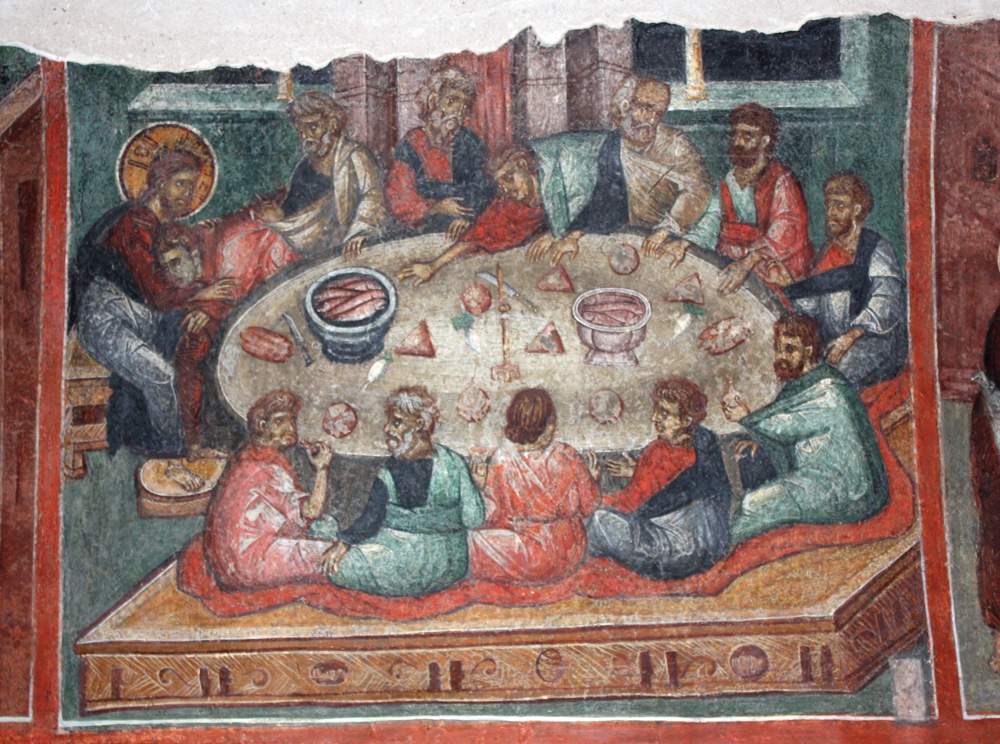
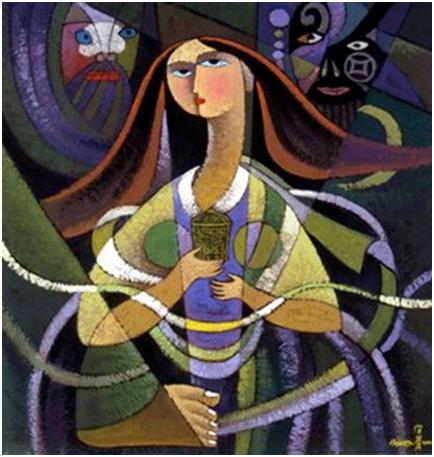
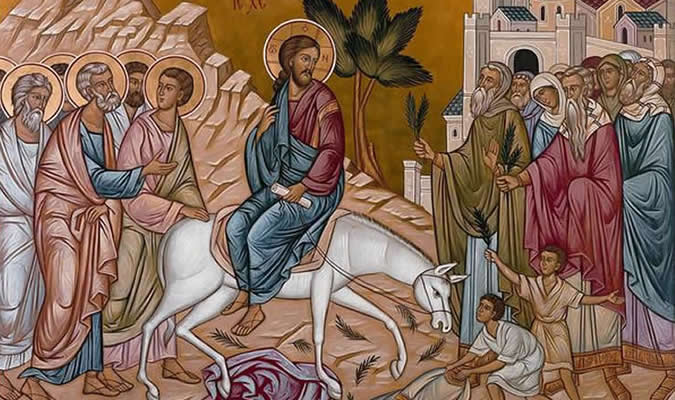
22 While they were eating, he took bread, said the blessing, broke it, and gave it to them, and said, “Take it; this is my body.” 23 Then he took a cup, gave thanks, and gave it to them, and they all drank from it. 24 He said to them, “This is my blood of the covenant, which will be shed for many. 25 Amen, I say to you, I shall not drink again the fruit of the vine until the day when I drink it new in the kingdom of God.” 26 Then, after singing a hymn, they went out to the Mount of Olives.
The actions and words of Jesus are expressed within the framework of the Passover meal but also point to and indicate a transition to a new covenant that is sealed in the shedding of blood – as are all covenants (cf. Ex 24:1-8; Heb 9:19-21; 10:9-30). But as Jesus has been predicting, he will be the sacrificial offering and it will be his blood that will be shed as part of his passion and death. There are strong allusion to the rite described in Exodus 24:4-8 and thus indicates the new community that the sacrifice of Jesus will bring into being (Matthew 26:26–28; Luke 22:19–20; 1 Cor 11:23–25). Continue reading →

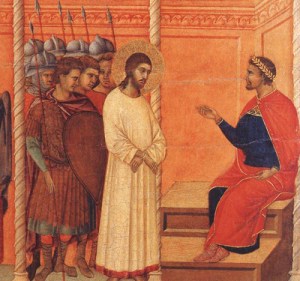 1 As soon as morning came, the chief priests with the elders and the scribes, that is, the whole Sanhedrin, held a council. They bound Jesus, led him away, and handed him over to Pilate. 2 Pilate questioned him, “Are you the king of the Jews?” He said to him in reply, “You say so.” 3 The chief priests accused him of many things. 4 Again Pilate questioned him, “Have you no answer? See how many things they accuse you of.” 5 Jesus gave him no further answer, so that Pilate was amazed. Continue reading
 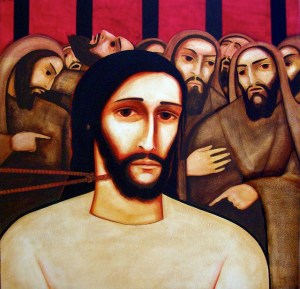 53 They led Jesus away to the high priest, and all the chief priests and the elders and the scribes came together. 54 Peter followed him at a distance into the high priest’s courtyard and was seated with the guards, warming himself at the fire. 55 The chief priests and the entire Sanhedrin kept trying to obtain testimony against Jesus in order to put him to death, but they found none. 56 Many gave false witness against him, but their testimony did not agree.
  43 Then, while he was still speaking, Judas, one of the Twelve, arrived, accompanied by a crowd with swords and clubs who had come from the chief priests, the scribes, and the elders. 44 His betrayer had arranged a signal with them, saying, “The man I shall kiss is the one; arrest him and lead him away securely.” 45 He came and immediately went over to him and said, “Rabbi.” And he kissed him. 46 At this they laid hands on him and arrested him. 47 One of the bystanders drew his sword, struck the high priest’s servant, and cut off his ear. 48 Jesus said to them in reply, “Have you come out as against a robber, with swords and clubs, to seize me? 49 Day after day I was with you teaching in the temple area, yet you did not arrest me; but that the scriptures may be fulfilled.” 50 And they all left him and fled. 51 Now a young man followed him wearing nothing but a linen cloth about his body. They seized him, 52 but he left the cloth behind and ran off naked.
  32 Then they came to a place named Gethsemane, and he said to his disciples, “Sit here while I pray.” 33 He took with him Peter, James, and John, and began to be troubled and distressed. 34 Then he said to them, “My soul is sorrowful even to death. Remain here and keep watch.” 35 He advanced a little and fell to the ground and prayed that if it were possible the hour might pass by him; 36 he said, “Abba, Father, all things are possible to you. Take this cup away from me, but not what I will but what you will.” 37 When he returned he found them asleep. He said to Peter, “Simon, are you asleep? Could you not keep watch for one hour? 38 Watch and pray that you may not undergo the test. The spirit is willing but the flesh is weak.” 39 Withdrawing again, he prayed, saying the same thing. 40 Then he returned once more and found them asleep, for they could not keep their eyes open and did not know what to answer him. 41 He returned a third time and said to them, “Are you still sleeping and taking your rest? It is enough. The hour has come. Behold, the Son of Man is to be handed over to sinners. 42 Get up, let us go. See, my betrayer is at hand.”