
Luke 23:35-43. 33 When they came to the place called the Skull, they crucified him and the criminals there, one on his right, the other on his left. 34 (Then Jesus said, “Father, forgive them, they know not what they do.”) They divided his garments by casting lots. [The above is not part of the Sunday reading, but is generally considered within the narrative.] 35 The people stood by and watched; the rulers, meanwhile, sneered at him and said, “He saved others, let him save himself if he is the chosen one, the Messiah of God.” 36 Even the soldiers jeered at him. As they approached to offer him wine 37 they called out, “If you are King of the Jews, save yourself.” 38 Above him there was an inscription that read, “This is the King of the Jews.” 39 Now one of the criminals hanging there reviled Jesus, saying, “Are you not the Messiah? Save yourself and us.” 40 The other, however, rebuking him, said in reply, “Have you no fear of God, for you are subject to the same condemnation? 41 And indeed, we have been condemned justly, for the sentence we received corresponds to our crimes, but this man has done nothing criminal.” 42 Then he said, “Jesus, remember me when you come into your kingdom.” 43 He replied to him, “Amen, I say to you, today you will be with me in Paradise.”
Context. Here on the last Sunday of Ordinary Time the Church celebrates Christ the King Sunday. The title is given several places in Scripture: king of ages (1 Timothy 1:17), King of Israel (John 1:49), King of the Jews (Mt. 27:11), King of kings (1 Tim 6:15; Rev. 19:16), King of the nations (Book of Revelation 15:3) and ruler of the kings of the Earth (Rev. 1:5). The solemnity has been celebrated on the Roman calendar since 1925 and was instituted as a culmination of the liturgical year and a reminder that in His suffering and death, Christ ascended to his throne. Continue reading →

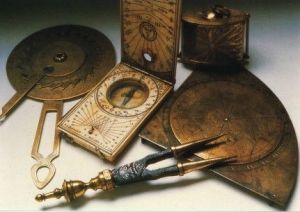 In the beginning – the Garden of Paradise, all is pristine, pure, good, whole, and holy
 I wasn’t too sure what to expect for my first Christmas in the slums of Nairobi, Kenya. Certainly, the slum in which I lived was devoid of any of the commercial excess. There were no malls, no black Friday, none of the things mark our Advent season. Occasionally, you could hear Christmas carols, traditional and tribal, float out of one of the wood sheds/tin roofed stores. But most the familiar signs and markers that Christmas was coming were missing.
 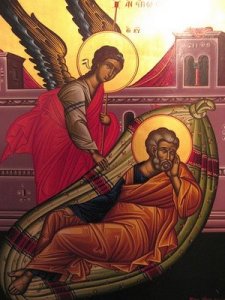 “…Mary was betrothed to Joseph, but before they lived together, she was found with child through the Holy Spirit.” (Matthew 1:18) And of course, we know the rest of the story… the angel comes and tells Joseph what is expected of him – to take Mary and the child into his home – to be husband and father. “When Joseph awoke, he did as the angel of the Lord had commanded him” (Matthew 1:24). Great! Problem solved and now we can turn the page to Matthew 2 because in that chapter Jesus is born, the magi visit and we are all set for Christmas.
  During the holiday season with winter storms roaring about, one can be quite happy that the airplane finally got off the ground; yesterday in Chicago, 1000 flights were cancelled. So if you got airborne, you were indeed happy. A new round of happiness came when the pilot finally found smooth air. And even if it was 6 hours late, you are happy that you have arrived. When you finally get off the plane, pass thru security, and at last see your spouse, your kids, your parents or grandparents, your fiancé, or whomever you have longed to see…. that is not happy. That is Joy. You hear it in the tone and energy of the voices, the embraces, and the hugs. And even when the reunion is right in the middle of everyone else’s way, when the reunion is clogging up the entire flow of foot traffic trying to get somewhere, you can’t help but notice even the most curmudgeon-y of travelers, however reluctantly, is giving evidence of a smile. Joy is embedded in the warp and woof, in the very fabric of relationships. Just like Mary and Elizabeth.
  “Repent, for the kingdom of heaven is at hand!” – so cried out John the Baptist to those gathered in the desert of Judea. It is a scene we are all familiar with – but it doesn’t seem very much in the Christmas spirit. It is not in tune with the décor of the stores, malls, offices, and homes. It does not match the seasonal music available on radio, Pandora, or other streaming services. I can’t imagine receiving one of those talking Christmas card that would shout out “Repent!!” when it should play a pleasant and familiar holiday standard.
 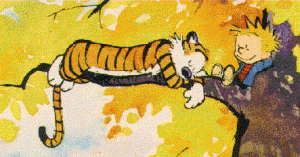 “To sleep, perchance to dream” such are the words of the great William Shakespeare written for his character Hamlet. It is only in such dreams can we mark the passage of sleep. Short of dreams, we really do not know we are asleep until we wake. We can be aware of the long glide path to sleep – the yawns, the stretching, the telling ourselves “just one more chapter in this book….” Or perchance, our afternoons when we think “I am just resting my eyes.” The thought gives away to the sweet rapture of the most awesome afternoon ever. Perhaps the reverie of our daydreams leave unperturbed the here and now. One short sleep past and we awake and the here-and-now is like our pet dog at the end of the bed or couch waiting for us to get up and fetch them a doggie treat.
 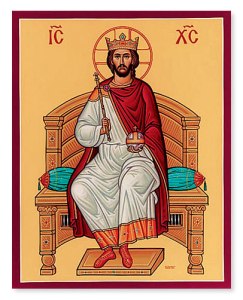 Kings are an interesting concept. When someone tries to impose their will upon us, one of our tried-and-true responses is, “Who died and made you king?” Maybe our American spirit has a bias against unbridled power in the hands of the one. Yet there is something within in us that wants a king when we want a king – you know – the times we feel uncertain, times are turbulent, and we are just a tad frightened.
 Well… the elections are done. Half the country celebrates, while half the country mourns. The Democrats will do a post mortem, regroup and get ready for 2020. The Republicans have the tiger by the tail…and now have to figure out what to do with it… as governance of a divided nation tasks them. Both sides can rightly say, “it ain’t over.”
