The Canaanite Woman: a context

canaanite-womanMatthew 15:21-28 21 Then Jesus went from that place and withdrew to the region of Tyre and Sidon. 22 And behold, a Canaanite woman of that district came and called out, “Have pity on me, Lord, Son of David! My daughter is tormented by a demon.” 23 But he did not say a word in answer to her. His disciples came and asked him, “Send her away, for she keeps calling out after us.” 24 He said in reply, “I was sent only to the lost sheep of the house of Israel.” 25 But the woman came and did him homage, saying, “Lord, help me.” 26 He said in reply, “It is not right to take the food of the children and throw it to the dogs.” 27 She said, “Please, Lord, for even the dogs eat the scraps that fall from the table of their masters.” 28 Then Jesus said to her in reply, “O woman, great is your faith! Let it be done for you as you wish.” And her daughter was healed from that hour.

Between the 19th and 20th Sundays in Year A, Mt 15:1-21 are passed over. In order to provide a context let us briefly describe the events which leads us to Jesus’ encounter with the Canaanite woman. Continue reading

What is Found in Lost

LostnFoundA routine anchors us in life, but sometimes the problem is that it anchors us in life. Keeps us from those wide swaths of life where things are unpredictable. Where things get lost. Once in a while we need to get lost.

Elijah the prophet is lost. Alone, isolated, without friends or support. King Ahab and Queen Jezebel have the army out trying to hunt down Elijah – and they mean to do him harm, to take his life. Elijah is lost and on the edge of gone – and he encounters God. Continue reading

What do you want?

What do you wantIn many and varied ways, we are so often asked: “What do you want.” Often the question is asked around the topic of food: what do you want for dinner tonight; at restaurants “what can I get you” or “what’ll you have.” We are sometimes asked what we want for birthdays or Christmas. There are many times and circumstances we hear the word: “What do you want?”

God comes to King Solomon in a dream and basically asks, “What do you want?” And suddenly the stakes are a whole lot higher than dinner or birthdays. And it raises the question for us – are we remotely prepared to answer that question? Are we ready to stand before God who is always reaching out to us and saying: “Ask something of me and I will give it to you” ? Continue reading

Peas, Pigweed, and Prayer

pigweedBack in the day when I owned a home in the Catoctin hills of Northern Virginia, one summer I decided to plant a garden. I knew nothing about the endeavor, but I did check a book out of the library. I decided to try only three things: tomatoes, yellow squash and peas. It wasn’t going to be a large project, but I have to admit I had an inner vision of this garden, rows in prefect, soil turned up just so, and weed free – all due to my meticulous care and fastidiousness in proper vegetable garden maintenance. My neighbor Bill Leigh, came over one day. He explained the difference between peas and this other thing in my garden which he called pigweed. There was difference that he could see and that I could pretend to see. Of course I wanted to weed the whole thing right then and there. Bill said it was too late to do that as I would just uproot my entire crop of peas. Continue reading

Can I get an “Amen?”

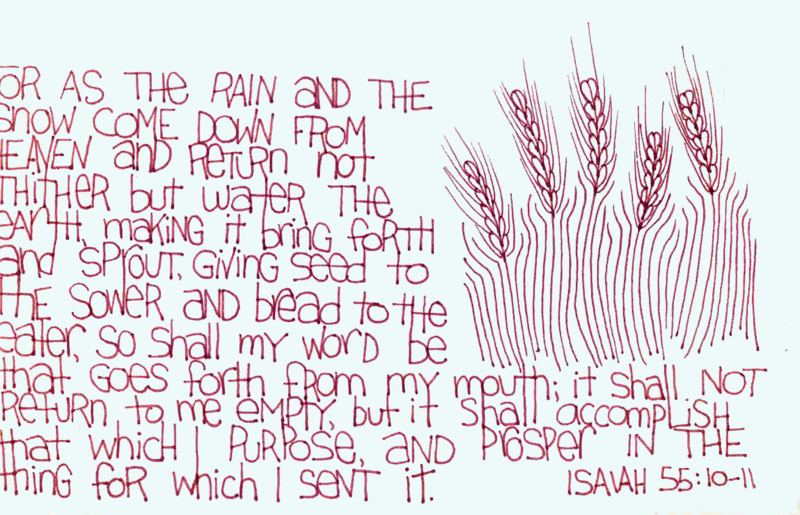
isaiah55As you probably know, this summer we have been taking a look at the people, events and issues of the Protestant Reformations of the 16th century. Among the Reformers there was a far greater emphasis placed on Scripture and preaching the Word. John Calvin’s typical Sunday homily seems to have been about 2 hours. John Knox’s homilies often had intermissions. Hard to imagine, heh? But it was a different era – not just because Sunday was dedicated to church, worship, and little else – but because for that generation of people, Scripture was coming alive for the first time. When the Zurich reformer Zwingli first began to preach he started at the beginning of the Gospel according to Matthew. Sunday after Sunday he worked his way through the whole Gospel, proclaiming, teaching, cajoling, and encouraging people to embrace and be embraced by God. The Word of God set people ablaze. Continue reading

The Guide We Choose

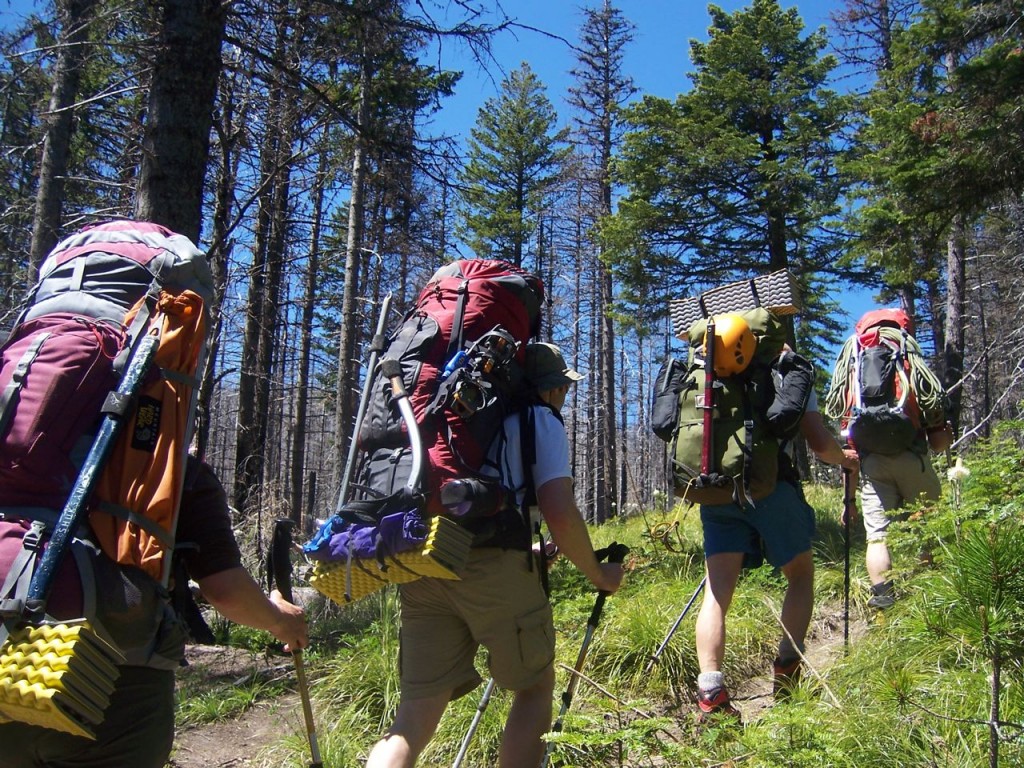
BackpackingEverything you need to know about life you can learn from backpacking and camping… Back in the day, I used to camp and backpack in Virginia and West Virginia. Generally it was just for a weekend – maybe two or three days. We would carry everything in/out. I remember having fun, enjoying it all, but I always felt like I need a day to recover. There was always a stiffness about my neck, arms, shoulders, upper back and all the rest that is connected to those parts. I could still feel the after effects of the pack’s burden. “Come to me, all you who labor and are burdened, and I will give you rest.” – There were treks when I would have been more than happy to let Jesus carry that burden. Continue reading

The house He is building

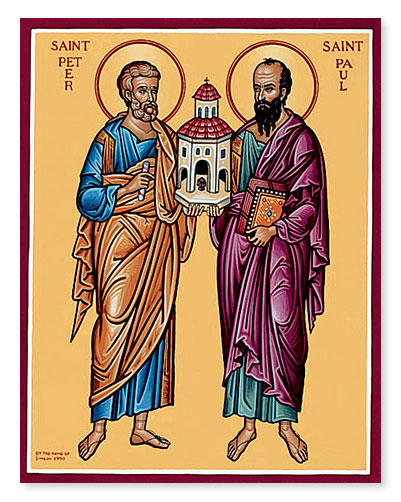
sts-peter-and-paul-1“…you are Peter, and upon this rock I will build my church” Let’s be honest, at first glance, Peter seems a bit shaky to be the one to lead Christ’s Church. Peter stumbled, fell, and he denied – and for good measure, denied a few more times. Peter did not always “get it;” he struggled to understand. And even when he did understand, there was often a slight hesitation— unsure what to do, some fear that he would get it wrong. A lot like you and me. “…you are John or Jane, Jack or Jill, and upon you I will build my family, my company, my hopes and dreams,

And then people made demands upon us and tasked us spiritually, emotionally, physically. Peter was someone who knew fatigue, knew failure, and reached that place where just like us he thought to himself: “give me a break; just give me an hour to myself…..” In those moments we do not feel like anyone’s “rock.” Continue reading

Differences and divisions

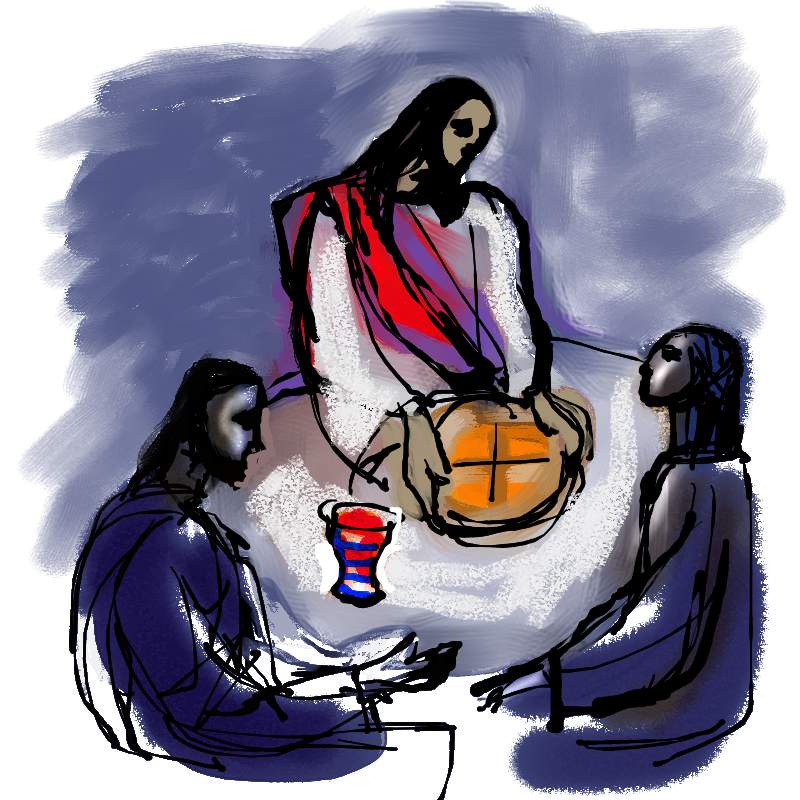
emaus02There is a fine line between differences and divisions. Think about our own families – the kids are different, unique and that what makes them remarkable and fascinating. In my family growing up, the middle child Patricia, very different from her older sister Kathy, and her favorite brother – that would be me – and the fact that I was the only brother is but a secondary detail. Patricia was always aware of the differences and, on occasion, would proclaim, “I am adopted.” On occasion we would agree, although she was a dead ringer for Grandma Kate at the same age. Those differences were part of what made us unique and what made us family. They never became divisions. Continue reading

Corpus Christi – its liturgical history

This weekend the Church celebrates the Solemnity of the Body and Blood of Christ, a feast perhaps better known by the Latin Corpus Christi. At its core, the solemnity is a celebration of the Tradition and belief in the Eucharist as the Real Presence of the Body and Blood of Jesus Christ. Many folks wonder why this celebration is not part of Holy Thursday, and it was, mixed in with other themes, e.g., institution of the priesthood. And, all this occurs in the shadow of Good Friday. The placement of the celebration is not one that necessarily lends itself to a joyful celebration.

Saint Juliana of Liège, O.Praem, was the one who became the spark leading to a joyous celebration of Corpus Christi. For her devotion, life, and efforts, she is known as the “Apostle of the Blessed Sacrament.” Liège was already a center for devotion to the Eucharist, so from her early youth, Juliana had great veneration for the Eucharist and longed for a special feast day in its honor. In 1208 at age 16, she began having visions of the moon in its full splendor, crossed diametrically by a dark stripe. In time, she came to understand that the moon symbolized the life of the Church on earth, the opaque line, on the other hand, represented the absence of a liturgical feast in honor of Christ’s Body and Blood. Not having any way to bring about such a feast, she kept her thoughts to herself, except for sharing them with Blessed Eve of Liège, who lived in a cell adjacent to the Basilica of St. Martin, and a few other trusted sisters in her monastery. The vision was repeated for the next 20 years, but she maintained it as a secret. When she eventually relayed it to her confessor, he relayed it to the Bishop of Liège, Robert de Thorete. Eventually, the celebration of Corpus Christi became part of the annual celebrations in the diocese.

The archdeacon of the diocese, Jacques Pantaléon of Troyes was also won over to the cause of the Feast of Corpus Christi during his time in the Diocese of Liège. He eventually became Pope Urban IV in 1264. He instituted the Solemnity of Corpus Christi on the Thursday after Pentecost as a feast for the entire Latin Rite, by the papal bull Transiturus de hoc mundo.

Become what you see…

I-love-TriniyyWe are a people who profess a faith in a God that has revealed God’s self as a Trinitarian God. In the history of the Church there were many who looked at the same Scriptures and denied that God was one, yet three divine persons. Back in the 4th century, a very large movement called the Arians said Jesus and the Holy Spirit were divine, but kind of a second- and third-tier God, divine but not as divine as the Father. The Sabellians held a belief that the Father, Son, and Holy Spirit are three characterizations or modes of being one God, rather than three distinct “persons” in one God. They were also a pretty large group. A very small and short-lived group were the Pneumatomachians (“Spirit fighters”) – while accepting the divinity of Jesus Christ they denied that of the Holy Spirit which they saw as a creation of the Son, and a servant of the Father and the Son. These were all people who held the New Testament to be the Word of God. Continue reading