Christ the King – background

Here on the last Sunday of Ordinary Time the Church celebrates Christ the King Sunday. The title is given several places in Scripture:  king of ages (1 Timothy 1:17), King of Israel (John 1:49), King of the Jews (Mt. 27:11), King of kings (1 Tim 6:15; Rev. 19:16), King of the nations (Book of Revelation 15:3) and ruler of the kings of the Earth (Rev. 1:5). The solemnity has been celebrated on the Roman calendar since 1925 and was instituted as a culmination of the liturgical year and a reminder that in His suffering and death, Christ ascended to his throne. Continue reading →

His Most Holy Work

In Jesus’ day when standing on the Mount of Olives there was one thing that dominated the skyline of Jerusalem – the Temple – hovering over the Old City, and visible from every balcony in the upper city. It was the great building project of King Herod the Great who enhanced the existing Temple to be a “wonder of the world.” The temple occupied a platform twice as large as the Roman Forum and four times as large as the Athenian Acropolis.  Herod reportedly used so much gold to cover the outside walls that anyone who gazed at them in bright sunlight risked blinding herself. It is no surprise that “… some people were speaking about how the temple was adorned with costly stones and votive offerings (Luke 21:5).  And so, there are the disciples taking in the view – the Temple and all its glory. It was a structure that held religious memory, anchored an identity as a people chosen by God. It was a sign of their Covenant with God. The Temple was the sign of the one, true God, home of scriptures and the commandments. The Temple and all it promised was their desire and fulfillment of their dreams.

Continue reading →

Crucible

Today’s “Word of the Day” from Merriam-Webster is “crucible.”  I like to see if I can guess at the etymological origin of the words. My guess for “crucible” was founded on the Latin cruc (“cross”). Alas it was not. It is based on the Medieval Latin crucibulum, a noun for an earthen pot used to melt metals, and in English it first referred to a vessel made of a very heat-resistant material (such as porcelain) used for melting a substance that requires a high degree of heat. But It’s possible that the resemblance between cruc- and crucible encouraged people to start using crucible to mean “a severe trial,” as that sense is synonymous with one meaning of cross.

The Fall of Jerusalem

This coming Sunday is the 33rd Sunday in Ordinary Time, Lectionary Cycle C. Throughout this week of posts we have considered St. Luke’s extended commentary on Jesus’ warning of the coming destruction of Jerusalem and its Temple. While our gospel reading ends at Luke 21:19, most commentaries include an additional five verses as part of the commentary. Continue reading →

The Divine Plan for Discipleship

This coming Sunday is the 33rd Sunday in Ordinary Time, Lectionary Cycle C. In yesterday’s post we discussed what is essentially a “theology of history.” Today we focus on the preparation of the disciples for what is coming: the Kingdom of God even as the kingdom of men falls. But before all these things will come persecution. Disciples will need to stand prepared for its coming. “Before all this happens, however, they will seize and persecute you, they will hand you over to the synagogues and to prisons, and they will have you led before kings and governors because of my name.” (v.12) Continue reading →

Both And

One of the hallmarks of Catholic theology is that is rarely falls into the dynamic of it must be this or be that. Most often the true Catholic expression is a “both-and” position. When that perspective carries out into the modern landscape of life in secular America is will inevitably face push back or rejection from a world that is increasingly this or that. There are two options and no middle ground. Sound familiar? A friend of mine was recently called a CHINO (Catholic in name only) because they expressed frustration with their political choices in that they wanted a candidate the was pro-life, fully pro-life, and a candidate that has a social agenda of charity and compassion. When my friend was telling me the story my thought was that we as Catholic Christians and not shaping the world, but the world is shaping us. Continue reading →

Feast of the Dedication of the Lateran Basilica in Rome

The Lateran Basilica in Rome is not the oldest church in Rome – that honor seems to belong to Santi Quattro Coronati (314); but then that depends on what sources you believe. Old St. Peter’s, the original church on the spot where the current St. Peter’s stands dates to 324, the same year as St. Lorenzo and St. John Lateran. Did you know that the Lateran Basilica is the Cathedral of the Diocese of Rome – the place from where the Bishop of Rome, Pope Francis, leads his diocese even as he leads the church universal. Continue reading →

Portents, Signs and These Things

This coming Sunday is the 33rd Sunday in Ordinary Time, Lectionary Cycle C. In yesterday’s post we explored the significance of the Temple in the mind and perspective of the Jewish people. Today we begin exploring the passage itself: While some people were speaking about how the temple was adorned with costly stones and votive offerings, he said, “All that you see here—the days will come when there will not be left a stone upon another stone that will not be thrown down.” 7 Then they asked him, “Teacher, when will this happen? (Luke 21:5-6) Continue reading →

The Subtle Doctor

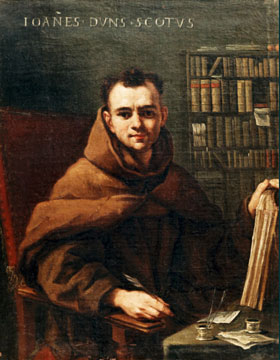
Duns Scotus1November 8th is the feast day of Blessed John Duns Scotus, a Franciscan friar from Scotland noted for his theological and philosophical work in the high-middle ages (late 13th and early 14th centuries). Scotus’ work was in the generation that followed Thomas of Aquinas and Bonaventure. His work was complex and nuanced, and he is generally considered to be one of the three most important philosopher-theologians of his time. He was given the medieval accolade Doctor Subtilis (Subtle Doctor) for his penetrating and subtle manner of thought. Continue reading →