This part is truly “extra credit” for those that want to dive into the “deep end.” This section uses Boring’s model as a way to consider Matthew 5:17-37. It is long and detailed.
21 “You have heard that it was said to your ancestors, ‘You shall not kill; and whoever kills will be liable to judgment.’22 But I say to you, whoever is angry with his brother will be liable to judgment, and whoever says to his brother, ‘Raqa,’ will be answerable to the Sanhedrin, and whoever says, ‘You fool,’ will be liable to fiery Gehenna.23 Therefore, if you bring your gift to the altar, and there recall that your brother has anything against you,24 leave your gift there at the altar, go first and be reconciled with your brother, and then come and offer your gift.25 Settle with your opponent quickly while on the way to court with him. Otherwise your opponent will hand you over to the judge, and the judge will hand you over to the guard, and you will be thrown into prison.26 Amen, I say to you, you will not be released until you have paid the last penny.
The Law Reaffirmed. Jesus begins with a direct quotation of the command in the Decalogue against murder (Exod 20:13; Dt 5:18). The supplementary “whoever kills will be liable to judgment” is not found exactly in the Old Testament, but presents a paraphrasing summary of several texts in the Torah (Exod 21:12; Lev 24:17; Num 35:12; Deut 17:8-13). It is likely Matthew composed it in order to introduce the word judgment, which plays a decisive role in Jesus’ pronouncement.
Both France and Boring point to the movement towards righteousness as expressed in a deepening of relationship with God – not by external observance alone – but by a conscious movement of conversion to the deeper observance to the root (radix) of things: seeking out the Divine will it in fullness in order to live that out in the world. In other words, to more fully be the people of God – that is, to be the covenant people that God has always intended them to be.
And perhaps most radical of all, let us not lose sight, this portion of the Sermon on the Mount also marks Jesus’ assertion of authority. But it is not simply claiming a new contribution to the exegetical debate among rabbis, Jesus is making a definitive declaration of the will of God. Such a claim demands (and receives, 7:28–29) the response, “Who is this?”
A Final Thought
And all the above is but an introduction to the “Sermon on the Mount.” Perhaps it is good to recall the beginning of this commentary.
The sermon is not, though, a comprehensive manual or rule book, not a step-by-step “how to” book. Rather it offers a series of illustrations, or “for examples,” or “case studies” of life in God’s empire, visions of the identity and way of life that result from encountering God’s present and future reign. (p.128)
For those who belong to the minority and marginal community of disciples of Jesus, the sermon continues the gospel’s formational and envisioning work. It shapes and strengthens the community’s identity and lifestyle as a small community in a dominant culture that does not share that culture’s fundamental convictions. The community is reminded that the interactions with God, with one another, and with the surrounding society are important aspects of their existence which embraces all of life, present and future. Mission to, love for, and tension with the surrounding society mark their participation in this society. Integrity or wholeness defines their relationships with one another. Prayer, accountability, and the active doing of God’s will are features of their relationship with God and experience of God’s empire. (Warren Carter, Matthew and the Margins; p.129)
As covenant people, we have the promise of God – much of which is unconditional – that our right relationship with Him provides a wholeness for life by which we can freely enter into a full relationship with God and with his people. The arc of Scripture shows God building for Himself a people. From family (Adam), clan (Noah), tribe (Abraham), federation of tribes (Moses), a nation (David), the covenants point in line and in pattern to the whole of the world as the people of God in and through the Covenant in Jesus. If one loses sight of this, then one forever asks “what do I have to do” instead of “what am I becoming.”
The Sermon on the Mount is the guideline to becoming holy and righteous before God.
Image credit: Sermon on the Mount (1877) by Carl Heinrich Bloch | Museum of National History | Frederiksborg Castle, Public Domain
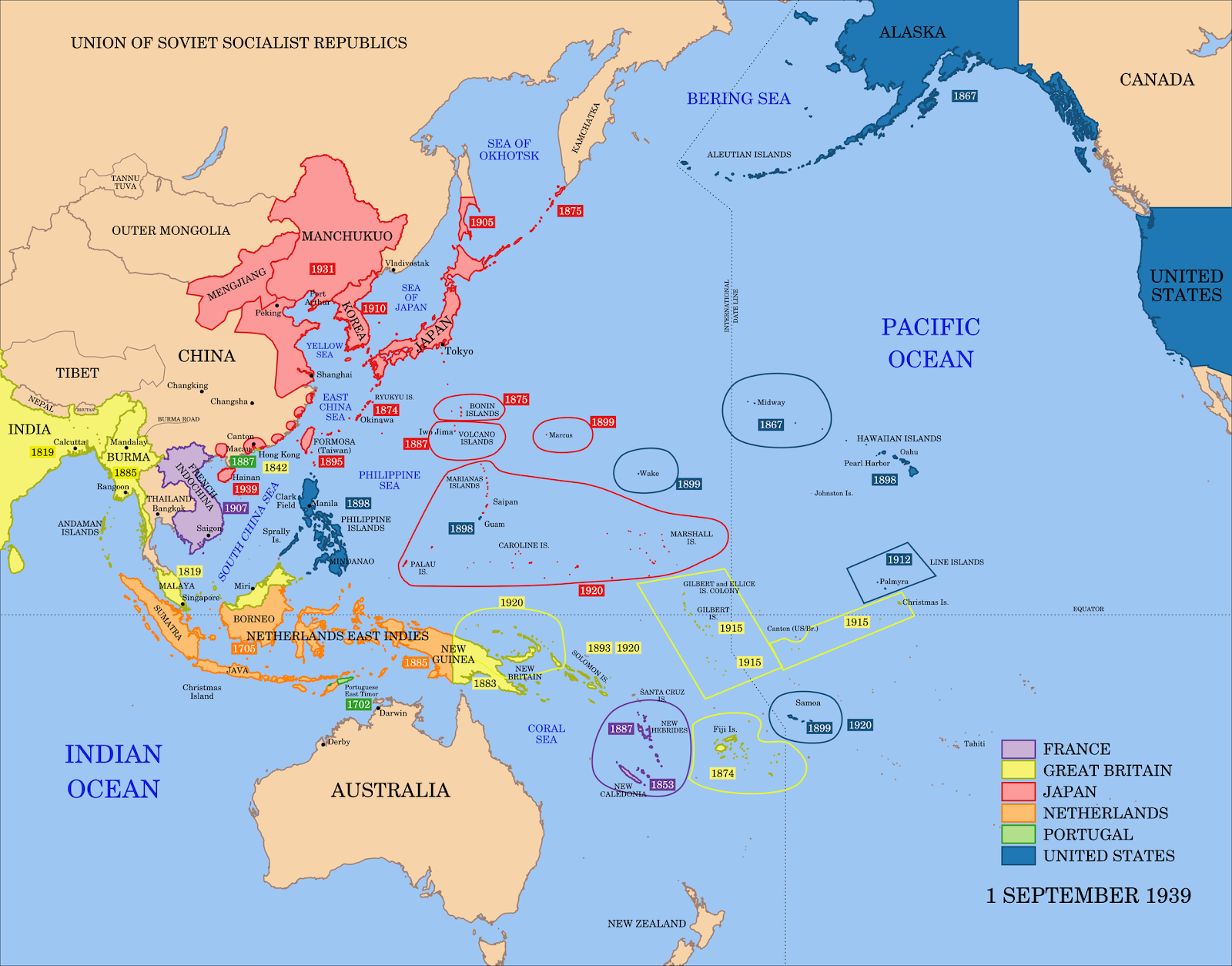
In the summer of 1939 Japan was increasingly bogged down in combat with China. As you can see in the map below, Japan controlled not only Manchukuo (Manchuria) but swaths of Inner Mongolia and China. Importantly, Japan also controlled almost all major seaports facing the East and South China Sea. Manchukuo presented its own control issues, largely centered around rampant banditry, but all the other areas required the Kwantung Army (Imperial Japanese Army on the mainland) to provide occupation and policing forces in areas they had conquered. At the same time the Kwantung Army continued offensive operations in Northern China.
Notice that Japan also had an extensive border with the Soviet Union as well as a history of conflict with czarist Russia that extended some 60 years back in time including the 1904-1905 Russo-Japanese War which removed Russian presence in Manchuria and Korea. Russia lost the warm water ports in Darien and Port Arthur, access to the resources of Manchuria, and was often required to transport goods and resources via the Trans-Siberian Railway rather than via ship. In addition Russia was required to cede the lower half of Shanklin Island (just north of Japan). All of this fit into Japan’s “strategic buffer” concept keeping China and Russia/Soviet Union at “arm’s length” from the home islands.
The Nomonhan Incident
Also known as the Battles of Khalkhin Gol, the Nomonhan Incident was a major but undeclared border war fought between Imperial Japan and the Soviet Union’s Mongolian forces from May to September 1939. It occurred along the poorly defined frontier between Japanese-controlled Manchukuo and Soviet-aligned Mongolia. Though officially termed an “incident” by Japan to avoid acknowledging a formal war, the conflict involved tens of thousands of troops, armor, artillery, and aircraft, making it the largest land battle Japan fought before the Pacific War. The fighting ended in a decisive Soviet victory, delivering a shock to the Japanese military and reshaping Japan’s strategic direction on the eve of World War II.
The Background
At the root of the conflict was a disputed, ambiguous border. Japan claimed the boundary lay along the Khalkhin Gol (Halha River), while the Soviets and Mongolians insisted it lay several miles east. The area was remote, sparsely populated, and economically marginal but symbolically important as a test of sovereignty and power. It was also extremely remote from the Imperial Japanese Army (IJA) Staff and Ministry in Tokyo. All of this was simply ingredients of a toxic stew only awaiting the flame to start a boil. And the Kwantung Army was only too happy to ignite the flame.
The Kwantung Army had a well earned reputation for acting autonomously from Tokyo, initiating aggressive actions to force what it believed were the necessary political outcomes, and viewing itself as the vanguard of Japan’s continental destiny. This attitude led to the Mukden Incident (1931), the Marco Polo Bridge Incident (1937), and the quagmire of the Second Sino-Japanese War. By the summer of 1939 the IJA was already stretched thin, had terrible logistics support, and was lacking in combined arms capability – meaning tanks, artillery and ground support from aviation assets. Financially, Japan was stretched thin in trying to keep the IJA funded at the same time funding the Navy’s capital intensive shipbuilding efforts.
Nonetheless, by 1939 the bane of IJA’s existence – an independent, insubordinate junior officer corps believed that controlled escalation against the Soviets could secure Japan’s northern frontier, expand the strategic buffer or even open the door to expansion into resource-rich areas of Siberia. In the view of Japan, the majority of the peoples in Siberia and Mongolia were Asiatic and thus properly best served under the Imperial Protection of the Emperor. They did not bother to ask the people of those areas about their preference.
Northern Expansion Doctrine (Hokushin-ron)
Within Japan’s strategic debates, the Army strongly favored Hokushin-ron, the idea that Japan’s future lay in expanding northward against Russia rather than southward into Southeast Asia. This belief rested on overconfidence from victories in China, an underestimation of Soviet military modernization, and a deep seated anti-communism which was, at this time, being suppressed in the home islands. Nomonhan emerged from a belief that the Red Army could be tested, pressured, and defeated through limited engagement. It was less a grand strategy and more a tactical escalation.
In part it was also pushing back on the evolving southern expansion doctrine being proposed by the Imperial Japanese Navy (IJN) whose interest lay in the resource-rich Southwestern Pacific, especially the oil fields of Borneo, Malay and Java.
The local IJA commanders were confident that Japanese infantry superiority would compensate for weaknesses in armor and logistics. In addition, they believed that the Soviets would avoid a major escalation. The Kwantung Army assumed that a sharp, localized victory would strengthen Japan’s hand diplomatically and militarily.
The IJA horribly misread Soviet intentions. The Soviets retained the memory of the humiliating defeat by Japan of czarist Russia. It was a lingering shame that the Soviets would never let happen again. They were more than willing to fight. They also had superior tanks and artillery and a capacity for combined arms operations with their ground forces. Japan also failed to recognize that the Soviets had the same essential “strategic buffer” view as Japan. Mongolia as part of that buffer and the Soviets would respond decisively to any threat in that region.
Combat
In the period May–June 1939, the initial clashes involved cavalry and infantry skirmishes for small areas of land as well as an island in the middle of the border river. Japanese forces crossed into disputed territory, driving out Mongolian units. Early successes reinforced Japanese confidence.
In June, the Soviets appointed General Georgy Zhukov to command. Zhukov rose to prominence with his leadership at Nomonhan. He was a brilliant tactician and field commander later becoming the most prominent and successful Soviet military commander during World War II often credited as the key strategist behind major Eastern Front victories against Nazi Germany. He rose to the position as Chief of the General Staff and a Marshal of the Soviet Union, leading the defenses of Moscow, Leningrad, Stalingrad and commanding the final assault on Berlin. He was formidable.
Long story, told short, Zhukov prepared a coordinated counteroffensive rather than piecemeal retaliation, amassing artillery, tanks, and aircraft supported by secure logistics/supply lines. In late August, Zhukov launched a classic double-envelopment, using tanks and mechanized infantry to encircle Japanese forces who lacked effective anti-tank weapons, were undersupplied, and relied on infantry assaults against armor. The result was catastrophic. Entire Japanese formations were destroyed or rendered combat-ineffective. It was a clear battlefield defeat involving some 20,000 Japanese casualties with the loss of experienced officers and elite units. Japan agreed to a ceasefire in September 1939, restoring the status quo but psychologically, the damage was done. It was the first unequivocal defeat suffered by Imperial Japan since the Meiji era.
Unintended Consequences
Nomonhan should have shattered Japanese assumptions – but it did not. Japan continued to believe that Japanese fighting spirit and bushido were enough to triumph and could overcome material inferiority and weak logistics. This would plague them all the way through 1945. They also continued to believe that wars could be tightly controlled and limited.
The defeat decisively undermined the Northern Expansion faction within the Army. After 1939 all plans for war against the Soviets were shelved, a defensive posture was adopted along the Manchurian frontier, and Japan avoided conflict with the Soviets for the remainder of WWII. This shift paved the way for Nanshin-ron (southern expansion), pushing Japan toward Southeast Asia and the Dutch East Indies’ oil. It was the path to confrontation with Western colonial powers. In this sense, Nomonhan helped set Japan on the road toward Pearl Harbor.
Perhaps the most profound unintended consequence was for the Soviet Union. Stalin gained confidence that Japan would not attack in the east and soon enough the two nations signed the Soviet–Japanese Neutrality Pact (1941) allowing Soviet divisions to later be transferred west to defend Moscow against Germany. The Nomonhan incident influenced the outcome of the European war, not just Asian geopolitics.
The Nomonhan Incident stands as a warning ignored about the limits of aggression driven by ideology rather than sound political and military strategy and tactics. It revealed the dangers Clausewitz warned of: wars initiated for political symbolism without a clear path to decisive victory would ultimately end in disaster for those who initiated the action.
Nomonhan was not merely a border clash. It was Japan’s strategic crossroads. Historians have come to now recognize Nomonhan as one of the most consequential “incidents” of the twentieth century – even though it largely remains unknown in the West.
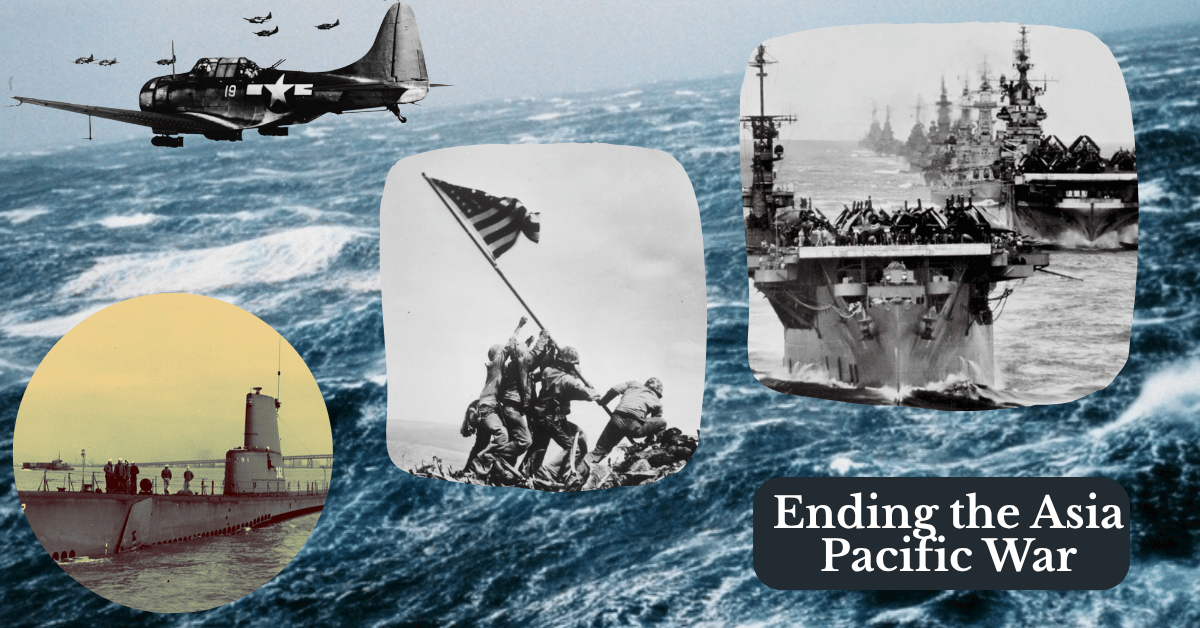
Image credit: various photographs from Naval Aviation Museum, National World War II Museum, and US Navy Archives. | Pacific area map of 1939 courtesy of MapWorks via Wikipedia Commons.
In v.20 Jesus calls for a greater righteousness. Eugene Boring sees vv.21-47 as offering six concrete instances from which the disciples can discern a way forward to that greater righteousness. In Jesus’ teaching a three-fold structure appears (what follows is quoted from Boring, 189):
Reaffirmation. Matthew reassures those who fear that Christians advocate the abolition of the Torah that this is a misunderstanding. Jesus’ commands do not transgress the Law, but radicalize it—they go to the radix, the root of the command. The one who puts into practice what Jesus teaches in Matthew 5 will not violate any command of the Torah, which is not abolished but reaffirmed.
Radicalization. The fulfillment of the Law brought by the advent of the messianic king does not merely repeat the Law, but radicalizes it. The ultimate will of God was and is mediated by the Law, but sometimes in a manner conditioned by the “hardness of heart” of its recipients (cf. 19:3-9). The legal form fostered a casuistic approach, which Matthew opposes, since it does not go to the root of the matter (i.e., is not radical), but touches the surface, not the heart, of the ethical problem. (For Matthew’s opposition to casuistry, see 23:16-21, the longest “woe” against the Pharisees, entirely “M” material.) Jesus’ teaching deals with the inner springs of human conduct, which Law as such cannot regulate. Like the prophets of Israel, Matthew declares the unqualified will of God, which sometimes deepens or broadens the Law, expressing its ultimate intent, and sometimes qualifies or even negates its limitations, while affirming the ultimate will of God to which it pointed.
Situational “Between the Times” Application. The call to live by the absolute will of God is not a counsel of despair. Prophets announce the absolute will of God and leave it to others to work out how this can be lived out in an imperfect world. Jesus spoke in this prophetic mode, and it had been continued by Christian prophets, including those in Matthew’s tradition and church. But Matthew is a scribal teacher who is concerned not only to declare the absolute will of God as expressed in Jesus’ radicalization of the Torah, but also to provide counsel for day-by-day living for imperfect people who fall short of this call to live by the perfect will of God. Thus, without negating the call to perfection, Matthew selects other sayings of Jesus from his tradition that provide situational applications for disciples who both believe that the kingdom of God has come with the advent of Jesus and pray for its final coming (6:10). The new age has come in Jesus, but the old age continues and Christians live in the tension between the two. Disciples can take the antitheses seriously as models for their life in this world in the same way that they take the advent of the kingdom of God seriously as both present and yet to come. Most important, for Matthew, commitment to the messianic king means more than proper confession; it results in a changed life (repentance). But the messianic king, who makes these demands and who will use them as the criteria of the final judgment, which he will conduct, both lives them out himself during his earthly ministry and continues with the community in its struggle to discern and do God’s will in ever-new situations (28:18-20). In the first set of three antitheses (5:21-32), the reality of Christian existence “between the times” of the Messiah’s appearance and the eschatological coming of the kingdom is addressed by giving examples for the creative application of Jesus’ teaching by his disciples. These examples are not casuistic new laws, but models for the disciples to adapt to their varied post-Easter situations. In the second set of antitheses (5:33-48), the concrete models are omitted, and the disciples are left to their own responsibility to be “Jesus theologians.”
Image credit: Sermon on the Mount (1877) by Carl Heinrich Bloch | Museum of National History | Frederiksborg Castle, Public Domain
Matthew 5:21-47 is clearly designed to be read as a whole, consisting of six units of teaching each introduced by ‘You have heard that it was said … But I say to you …’, and rounded off with a summary of Jesus’ ethical demand in v. 48 (“So be perfect, just as your heavenly Father is perfect.”). It is neither a complete ethic, nor a theological statement of general ethical principles, but a series of varied examples of how Jesus’ principles, enunciated in vv. 17–20, work out in practice. And this practical outworking is set in explicit contrast with the ethical rules previously accepted. In each case it is more demanding, more far-reaching in its application, and more at variance with the ethics of man without God; The teachings concern a person’s motives and attitudes more than literal conformity to the rules. In this sense, it is quite radical.
The Introductory Phrasing
The formula with which Jesus’ demand is made is unvarying: “But I say to you.” The other side of the contrast varies from the full formula “You have heard that it was said to your ancestors” (vv. 21, 33) to the more abbreviated forms “You have heard that it was said” (vv. 27, 38, 43) and even simply “It was also said” (v. 31). But there is no discernible difference in intention: the full formula, once introduced in v. 21, does not need to be repeated in order to make the same point.
Two aspects of the wording of this formula are important. First, “it was said” represents a relatively rare passive form of the verb errethe, which is used in the NT specifically for quotations of Scripture or divine pronouncements. This means it is not likely that we can simply assume Jesus’ reference is the teaching of a group such as the Pharisees. The rare errethe points to a divine declaration. Secondly, this declaration was made to the ancestors; the reference cannot then be to any contemporary or recent tradition. These features suggest strongly that in the first half of each contrast we should expect to find a quotation of the Mosaic law, as it would be heard read in the synagogues.
This construction seems to imply that Jesus is setting his teaching in opposition to the divine law – as noted before Jesus claims not to abolish the law (v.17), insists that even the least of the commandments remains important (v.18) and that the community is to “obey and teach these commandments” (v.19). The intent of the construction may become clearer when we consider the peculiar nature of the “quotations” of the Law.
After the Marco Polo Bridge Incident (July 1937) the United States took measured but meaningful actions in support of China, while still stopping well short of alliance or military intervention. The pattern is best described as moral, diplomatic, and limited material support, shaped and heavily limited by existing U.S. neutrality laws and the general sense of isolationism among the American people and Congress.
Given the mood and legal constraints facing the Roosevelt administration there was little to be done if the goal was to avoid military actions. What actions were taken are best described as nonrecognition and positioning. To that end the U.S. refused to recognize Japanese territorial gains in China, continued to uphold and advocate the Open Door Policy regarding commercial trade with China, and treated China as the legitimate sovereign power throughout the conflict.
This stance mattered because it denied Japan international legitimacy as virtually all nations followed the U.S. lead in this matter. It also gave China an enhanced standing in international diplomatic forums. The actions, limited as they were, did signal U.S. sympathy without military commitment. While Secretary Cordell Hull worked the diplomatic world, striking a balance that applied limited international pressure in a moral sense to Japan, he also had to temper calls from Britain for concrete economic sanctions. Britain was at the threshold of war in Europe (which began September 1939) and was concerned with Japanese aggression in the Asia Pacific area against British colonies and interests.
A Divided Asian Policy
In the post “American Diplomacy in 1937” we considered some of the key figures in determining the U.S. diplomatic response to Japanese aggression in China: President Franklin D. Roosevelt; Cordell Hull, Secretary of State; Stanley Hornbeck who headed the Far East Department; Nelson Johnson, Ambassador to China; Joseph Drew, Ambassador to Japan; and key advisors to Hull – J. Pierpoint Moffat and Hugh Wilson. Moffat was the son-in-law of Joseph Drew. Wilson had served in Japan in the mid-1920s.
Roosevelt, Hornbeck and Johnson can be viewed as members of an “activist camp” although in varying degrees. Hull, Grew, Moffat and Wilson would be viewed as members of a “don’t aggravate Japan” camp who wanted to confine U.S. responses to diplomatic channels while avoiding economic sanctions of any form as well as military action. At this point “military action” primarily meant action by naval and marines forces stationed in Shanghai as protection of U.S. citizens and interest in Shanghai’s International Settlement as well as citizens and interests upstream on the Yangtze River.
Hull’s position was to do nothing to antagonize Japan but nothing to assist them either. President Roosevelt did not like Hull’s Asian policy. While he accepted them as prudent the President was frustrated by a policy that let Japan get away with blatant aggression. Roosevelt was known to keep his own counsel and on occasion “go his own way.” In October 1937 he gave what came to be known as the Quarantine Speech that implicitly condemned Japan’s aggression (alongside Italy and Germany). In the speech he framed Japan as a disturber of international order but deliberately avoided naming Japan to prevent escalation. But his meaning was clear: “The present reign of terror and international lawlessness… [means that] the very foundations of civilization are seriously threatened…international anarchy destroys every foundation of peace…This situation is of universal concern.” Roosevelt went on to compare the terror and lawlessness to a contagion becoming an epidemic and note that the only reaction to an epidemic is quarantine. “War is a contagion, whether it be declared or undeclared…There must be positive endeavors to preserve peace.”
The speech did everything that Hull was trying to avoid. First, it exacerbated diplomatic relations with Japan. Although Roosevelt never named Japan, Japanese leaders and the press immediately understood that Japan was one of the principal targets. From Tokyo’s perspective, the speech signaled that the United States was morally siding with China, Japan was being described as a threat to international order, not merely a regional power pursuing interests, U.S. neutrality was becoming conditional rather than detached, and this signaled a shift from U.S. disapproval to U.S. warning.
The Japanese Foreign Ministry responded with measured, non-confrontational statements. This restraint reflected a desire to avoid provoking sanctions, an awareness that Japan still depended heavily on U.S. trade, and a hope that American isolationism would reassert itself. In the Cabinet it was viewed as a trial balloon for later economic sanctions. Within the military it added to the view that the U.S. viewed them as a second-rate nation. The Japanese Army dismissed it as moralizing. Within the Navy the speech confirmed fears that American opinion was shifting and that the current moral pressure could evolve into economic or naval measures – but still considered armed conflict years away.
Hull was also concerned that the speech would have the western signatories to the Nine Power Treaty call for an international conference (which it did) and that the U.S. would be thrust into the leadership role. Within domestic politics/policy it marked the beginning of a division within the nation’s foreign policy with Roosevelt pushing for something more dynamic and assertive – and yet not giving any concrete substance to the notion – while at the same time Hull was trying to maintain the established policy.
This difference would prove to be somewhat problematic as Roosevelt tended to think in broad, sweeping terms while avoiding detailed plans. Hull tended to think in categories of fundamental goals without incremental steps towards that end.
Proposals and Next Steps
Among the activists, Hornbeck shared Hull’s conviction that diplomatically Japan was not an honest dialogue partner, but also understood Japan’s foundational interests: economic and political security in her area of interest. While much of the U.S. Department of State believed Japan had “taken on more than it could chew,” Hornbeck understood that with every bite, Japan’s appetite increased, but that there were very different levels of “appetites” between the nationalist/militarists in Japan and their moderate counterparts in civil governance and diplomacy. Hornbeck wanted to actively approach Japan with the “carrot” that would give them the security they desired, but needed a “stick” to forestall further Japanese aggression in China. In this he was aligned with President Roosevelt, but the President in 1937 did not believe he had the support of either Congress or the public for any form of “carrot.”
While the U.S. internal debates continued and Japan aggressively moved in China, an element of the Japanese government initiated “feelers” from offices in Tokyo, Washington DC, and Paris. They wanted to see if the U.S. would help present Japan’s terms for peace and moderate Sino-Japanese talks. Unfortunately, Japan’s offer matched their history of vague diplomacy, asking for specific current actions from China while pinning their commitments to future events that might or might not happen. Ambassador Grew in Japan, in general more positive about Japan than others, acknowledged that his analysis of the terms to China were really full capitulation couched in ambiguous language. Grew attempted to get Japan to commit to “details” consistent with the Nine Nations Treaty of which Japan was a signatory. Eventually the initiative “died on the vine.”
By December 1937, Treasury Secretary Morgenthau, of a like mind with Roosevlet and Hull, raised the possibility of beginning to seize Japanese assets held in the U.S. as a first step. Roosevelt was initially keen on the idea, but by late January 1938 that initiative “died on the vine.”
There were other initiatives but in the end all suffered the same fate. The U.S. was not able to field a policy for Japan other than Hull’s “don’t aggravate, just wait.” Some of the division and lack of action was certainly tied to U.S. politics with the American people largely isolationists, still suffering from effects of the Great Depression, and mid-term elections being close by. But a good deal was connected to the divisions with the State Department. Ambassador Grew, long serving in Japan, had a belief in the moderates of the party – people he had known since the 1920s. Historians agree that he placed too much emphasis on the standings of the moderates, who by the 1930s were largely sidelined. With Washington DC, the Far East Department (FED) firmly believed that the nationalists and military elements held key control of Japan’s policies. FED believed that Japan had not only regional but global aspirations and foresaw in the spring of 1938 that Japan would formally partner with Germany and Italy – which they did in the September 1940 Tripartite Treaty.
By the Spring of 1938, China was holding its own…to some degree. Hull concluded that Japan was overextended, lacked the resources to capture China, much less control China, and concluded that Japan would never win the war. And that they might even lose the war over time. This “betwixt-and-between” view was supported by General Joseph Stillwell, US Army, an advisor to Chiang Kai-shek. The next effect was to further convince Hull that his policy of waiting while not aggravating Japan was the right course of action.
As a result, a routine was established: Japan took some action which required Ambassador Grew to protest. Japan offered conciliatory words with no concrete actions apart from a renewed request for the U.S. to moderate peace talks (as before). In the end, with no actions forthcoming, the U.S. would formally protest. Japan did not respond. It was a cycle of rinse and repeat as each incident came along.
In May 1938, Japan initiated a campaign of strategic bombing of Chinese civilian populations. This campaign was extensively covered by U.S. news outlets and American missionaries. At the movies, new reels and reports of the campaign were seen by the American public. It is estimated that in 1938, in urban America, the average adult saw two movies in-theatre each week. It did not take long for a wave of public outcry to arise. From that came the calls for U.S. companies to stop their “blood trade” with Japan. The outcry forced Hull to initiate a “moral embargo” asking U.S. companies to voluntarily stop trade with Japan in aircraft, aviation maintenance items, aviation fuel, and key resources and tools needed for the production of war goods. Hull’s goal was to calm the U.S. public. At the same time Hornbeck and other departments in State wanted the U.S. to abrogate the 1911 U.S.-Japan Trade Agreement.
The war in China continued through the summer and into the autumn. The Chinese lost the city Xuzhou at the end of May but the battle proved the Chinese strategy of attrition that increasingly made Japan pay an ever increasing costs in terms of casualties and equipment. The Japanese were drawn into the Battle of Wuhan which involved over 1 million soldiers and great loss, but marked the end of Japan’s rapid advance and the beginning of a long-term strategic stalemate. This advance was also forestalled when Chinese forces breached the dikes of Yangtze River, creating a massive, man-made flood to block the Japanese advance.
In November 1938, the Prime Minister of Japan, Prince Konoe, gave what is called the “New Order” speech that made public what the Far East Department (FED) had long promoted – Japan’s ambitions were super regional and also global. This was the start of a coming change within the State Department, the Treasury Department and Congress to make loans to China and begin to discuss abrogating the 1911 U.S.-Japan trade agreement. Withdrawing from this agreement made later sanctions and embargoes possible.
Of interest is also at this time, Ambassador Grew was vacationing in the United States, and when asked the Charge of Affairs Doorman reported that the military and nationalists were in complete control of the governance of Japan. This March 1939.
Image credit: various photographs from Naval Aviation Museum, National World War II Museum, and US Navy Archive
19 Therefore, whoever breaks one of the least of these commandments and teaches others to do so will be called least in the kingdom of heaven. But whoever obeys and teaches these commandments will be called greatest in the kingdom of heaven. 20 I tell you, unless your righteousness surpasses that of the scribes and Pharisees, you will not enter into the kingdom of heaven
Like the previous two verses, v.19 warns the disciples against altering or setting aside any part of the law, however small. Although our translation uses “break,” the underlying Greek word is lyō which means “loose, untie or relax” (and is from the same root as abolish in v. 17) The word typically means to ‘set aside’ or ‘teach against’ a commandment, rather than to disobey it. It is the same ‘loose’ used in 16:19; 18:18 when describing the authority of Peter and the Church. To set aside or to relax the Law would show disrespect for the Old Testament and Jesus. The implication is that it would make a poor Christian.
“Least” is used chiefly for its rhetorical effect echoing the least commandment, though clearly within the kingdom of heaven there are those who are more or less consistent and effective in their discipleship; the thought is of quality of discipleship, not of ultimate rewards. The good disciple will obey and teach the commandments: he will go beyond lip-service, to be guided by them in his life and teaching. Does this mean literal observance of every regulation? Not if we may judge by vv. 21–48 and e.g. Jesus’ attitude to the laws of uncleanness. The question of interpretation and application remains open: it is the attitude of respect and obedience which is demanded, and to this no single commandment can be an exception.
Verse 20 dispels any suspicion of legalism which v. 19 might have raised. The scribes (professional students and teachers of the law) and Pharisees (members of a largely lay movement devoted to scrupulous observance both of the Old Testament law and of the still developing legal traditions), whose obedience to ‘the least of these commandments’ could not be faulted, do not thereby qualify for the kingdom of heaven (whereas the disciple who relaxes the commandments does belong to it, though as the ‘least’). What is required is a greater righteousness, a relationship of love and obedience to God which is more than a literal observance of regulations. It is such a ‘righteousness’ which fulfils the law and the prophets (v. 17), and which will be illustrated in vv. 21–48 (in contrast with the legalism of the scribes) and in 6:1–18 (in contrast with the superficial ‘piety’ of the Pharisees).
An Interim Summary
R.T. France (1989, p.116) offers a paraphrase to make the point clear: “‘17I have not come to set aside the Old Testament, but to bring the fulfillment to which it pointed. 18For no part of it can ever be set aside, but all must be fulfilled (as it is now being fulfilled in my ministry and teaching). 19So a Christian who repudiates any part of the Old Testament is an inferior Christian; the consistent Christian will be guided by the Old Testament, and will teach others accordingly. 20But a truly Christian attitude is not the legalism of the scribes and Pharisees, but a deeper commitment to do the will of God, as vv. 21ff. will illustrate.”
Matthew 5:17-20 does not say that every Old Testament regulation is eternally valid. This view is not found anywhere in the New Testament, which consistently sees Jesus as introducing a new situation, for which the law prepared (Gal. 3:24), but which now fulfills it. The focus will be on Jesus and his teaching, and in this light the validity of any particular Old Testament rule must now be examined. Some will be found to have fulfilled their role and be no longer applicable (see especially Hebrews on the ritual laws, and Jesus’ teaching on uncleanness, Mark 7:19), others will be reinterpreted. Matthew 5:21ff. will be dealing with this reinterpretation, and vv. 17–20 can only truly be understood as an introduction to vv. 21ff. To assert, as these verses do, that every detail of the Old Testament is God-given and unalterable, is not to preempt the question of its proper application. If the law pointed forward to a new situation which has now arrived, that question of application arises with new urgency, and vv. 21-22 and following will go on to indicate some answers to it (“You have heard that it was said to your ancestors…But I say to you). Their answers will be the opposite of legalism (the literal and unchanging application of the law as regulations) but will reveal the deeper meaning of covenant.
Image credit: Sermon on the Mount (1877) by Carl Heinrich Bloch | Museum of National History | Frederiksborg Castle, Public Domain
In the gospel Jesus tells the crowd that what truly defiles a person is not what comes from the outside, but what comes from within. What comes out is likely an indicator of the conversion happening within. Take someone’s intentions, attitudes, choices, words – what do they reveal? Holiness? Evil? Either can be rooted in one’s heart.
At the same time Jesus challenges the crowd’s comfortable assumptions about the purity and holiness rituals and laws. They are the external acts that are meant to call people to holiness, to keep them clean and acceptable. But Jesus pushes them beyond that familiarity and says: holiness is not about what goes on outside of you. It is about what is going on inside your heart and are you willing to make that journey of conversion.
The first reading presents a striking image: the Queen of Sheba traveling a great distance to see Solomon. She is drawn by what she has heard: reports of wisdom, order, and blessing. When she arrives, she is overwhelmed. The splendor of the court, the clarity of Solomon’s answers, the abundance of his kingdom and more. Scripture tells us it quite literally takes her breath away. She is impressed.
But at the core of these readings is the challenge we face to understand the difference between what impresses us vs. what converts us.
What matters most is not that the Queen is impressed, but that she is willing to leave what is familiar in order to seek what is true. She risks the journey. She asks hard questions. And in the end, her admiration leads her beyond Solomon himself to praise the Lord who is at work through him. What begins as amazement becomes recognition of God.
That movement from being impressed to being converted is exactly where Jesus leads us in the Gospel. Our encounter with this life is meant to be transformative.
Let’s be honest, we are easily impressed. We are impressed by appearances, by success, eloquence, beauty, efficiency, even by religious performance. We can be impressed by the look of faith without allowing faith to change our hearts.
Conversion, however, works quietly. It does not always look dramatic. It happens when pride gives way to humility, when resentment gives way to mercy, when self-protection gives way to trust. Conversion shows itself not in what we display, but in what flows out of us. Especially when no one is watching.
External practices are easier to manage. They can be seen, measured, and admired. Interior conversion is harder. It requires honesty. It asks us to confront our intentions, our resentments, our fears, and the ways we protect ourselves.
The danger Jesus points to is subtle but real: we can remain impressed by faith without ever allowing it to change us. We can admire holiness from a safe distance while avoiding the inner work of conversion.
The Queen of Sheba models something different. She does not stay where she is comfortable. She does not rely on secondhand knowledge. She seeks God beyond what is familiar, and because she does, her encounter leads to praise and transformation, not just admiration.
Faith always asks us to move, to travel beyond ease, beyond routine, beyond the exterior practice of religion. What impresses us may catch our attention. But only what converts us reshapes the heart.
Image credit: Salomon recevant la reine de Saba | Jacques Stella, 1650 | Museum of Fine Arts of Lyon, France | PD
So far in this series we have worked our way up to 1937. From the summer of 1937 until Pearl Harbor the conflict in mainland China is the dominant factor that drives and animates Japan’s relationships (or lack thereof) with China, the United States, Britain, the Netherlands, and all the nations of the Asia-Pacific region. The ebb and flow of this conflict known as the Second Sino-Japanese War is really the beginning of the Asia Pacific War that will become World War II upon the 1939 outbreak of war on the European continent and the entry of the United States into the war after the attack on Pearly Harbor in December 1941.
The Second Sino-Japanese War began not as a formally declared conflict but as a local military clash that escalated beyond political control, reflecting the structural weaknesses of both Chinese sovereignty and Japanese civilian authority over the Imperial Japanese Army (IJA). From the Marco Polo Bridge Incident in July 1937 to the summer of 1941, the war evolved from a short punitive campaign into a protracted, brutal struggle that reshaped East Asia and set Japan on an increasingly irreversible path toward wider war.
The Marco Polo Bridge Incident and the Slide into War
Since 1905 and the Boxer Revolt in China, foreign nations, including Japan, had the right to station troops to protect their nationals and legations. For the Japanese this included guarding key railway lines connecting Beijing to the port of Tianjin. The Marco Polo Bridge spanned the Yongding River and sat on the main rail and road routes linking Beijing and Tianjin. As such it was of high strategic importance to Japan and a tactical chokepoint. Because of this Japanese units frequently patrolled and trained nearby. Night exercises were common and technically permitted under treaty arrangements.
On July 7th, Japanese troops were conducting a night training exercise near the bridge when one soldier failed to return, Japanese officers suspected detention by Chinese forces and demanded entry into a local city to search for their comrade; the Chinese refused. Shots were exchanged, and the situation escalated.
Similar incidents had occurred before and had been defused diplomatically. What made 1937 different was not the presence of troops, but the political climate surrounding the incident.
By 1937 Chiang Kai-shek’s coalition of northern and central warlords was deemed to be weakening in the view of the Japanese. This gave the Japanese field commanders (junior officers) the opportunity to aggressively respond as was their inclination. As discussed previously, by this time the field commanders knew that the civilian leaders in Tokyo were reluctant to restrain the Kwantung Army and so they pressed ahead. But they had misread the resolve of the Chinese leaders. So to speak, this time the incident was a bridge too far. The system that once contained incidents had broken down. Neither side was willing or able to step back once violence occurred. Mutual distrust, heightened nationalism, and the absence of firm political restraint allowed the confrontation to spiral.
Neither Tokyo nor Nanjing initially sought full-scale war. Japanese civilian leaders hoped to localize the conflict, while Chiang Kai-shek remained cautious, wary of Japan’s military superiority. Yet Japanese field commanders continued to press forward, and political leaders in Tokyo, fearful of appearing weak and constrained by past precedents of insubordination, ratified military escalation rather than restraining it.
By late July, Japanese forces had seized Beijing and Tianjin. What might once have ended in diplomatic compromise instead became a test of national will.
Shanghai and the Expansion of the War
The conflict escalated dramatically with the Battle of Shanghai (August–November 1937) a key seaport and source of income to the Chinese government. The Marco Polo Bridge incident ignited the conflict; Shanghai made it irreversible. Before August 1937, both governments still claimed to want containment and find a “local solution.” But locally, the Japanese approach into the region was a punitive campaign initiated by local field commanders and Shanghai was the goal.
Shanghai was China’s economic and financial center. It was a major port for foreign trade and it controlled the Yangtze River which was the “highway” into Central China. By 1937, Japan had a large civilian population and commercial interests in Shanghai including banking and shipping. As well, Japan had naval facilities and marines stationed in their part of the International Settlement. Any fighting in or near Shanghai could be framed as protecting Japanese nationals and treaty rights giving them a legally defensible pretext for military involvement. The hope was to draw Chiang Kai-shek into battle, force him to negotiate resulting in a collapse of Chinese Nationalist morale, and bring the war to a quick end. This reflected a persistent Japanese belief that China would not endure sustained pressure. That working theory had not proved true in Manchuria which Japan still struggled to control. It would not provide true now nor would it prove true at any point over the next 8 years.
Chiang Kai-shek understood the Japanese intent and chose to commit his best German-trained divisions in China’s most international city. His aim was to demonstrate Chinese resistance to the international community with its large contingent of foreign press and media. While the Marco Polo Bridge was “out of sight”, Shanghai would force Japan to fight in full view of the world. Video of the fighting became a staple in US movie theatres in the news trailers that preceded the feature film. Chiang hoped the result would be foreign mediation and that they might intervene diplomatically.
Japan responded with overwhelming force, deploying naval, air, and ground units. Once fighting began, Japanese prestige and military logic demanded escalation rather than withdrawal. The battle became one of the largest and bloodiest urban engagements of the interwar period. Although Japan ultimately captured Shanghai, the cost in casualties, time, and resources dashed Japanese assumptions of a quick victory. But it did not extinguish the IJA’s optimism about the glory or destiny of the war.
The Shanghai campaign marked a turning point as the war became total in scope, involving mass mobilization on both sides. At home as the Japanese press reported success while not reporting the tremendous losses, Japanese public opinion increasingly supported the war and the Army, making it even more difficult as diplomatic compromise became increasingly untenable. The intentional strategic bombing of civilian areas as a means of breaking morale exacerbated the breakdown.
Shanghai became a symbolic test of national honor. In China, the battle unified the Chinese factions in the common cause against Japan – even the Communists joined. In Japan, the narrative fed into the State Shinto program that the Army’s sacrifice demanded public support and sacrifice all the way to victory.
After months of brutal fighting any compromise would be perceived as betrayal as the war became morally and emotionally entrenched in the psyche of the nations. There were no diplomatic off-ramps. Japan rejected mediation efforts and were on the road to total victory. China could not accept terms without sovereignty remaining intact. Historians often note that before Shanghai, war was possible. After Shanghai, peace was politically unimaginable.
Nanjing and the Descent into Atrocity
Following the fall of Shanghai, Japanese forces advanced up the Yangtze River toward Nanjing, then the capital of the Nationalist government. The city fell in December 1937, after Chiang Kai-shek had withdrawn the government inland to Wuhan.
What followed, the Nanjing Massacre (also known as the Rape of Nanking) became one of the most infamous episodes of the war. Over several weeks, Japanese troops committed widespread atrocities, including mass killings, rape, and looting. Estimates of the dead range from tens of thousands to over two hundred thousand.
The significance of Nanjing extended beyond the immediate horror. It destroyed Japan’s international reputation, hardened Chinese resistance, made negotiated peace politically impossible for Chiang Kai-shek, and deepened Japan’s moral and diplomatic isolation. Within Japan, however, the massacre did not provoke accountability; rather, it was subsumed beneath censorship and nationalist narratives, reinforcing the pattern established after earlier acts of military excess.
Nanjing was the most visible atrocity of the Second Sino-Japanese War, but it was only one episode in a broader pattern of mass killing, terror, and repression that unfolded across China from 1937 to 1945. Most historians agree that atrocities were systemic, not accidental and that violence escalated as Japan failed to secure quick victory. The dehumanization of Chinese civilians became embedded in military practice and was demonstrated in the 1938 Wuhan Campaign and Yangtze Valley operations, the Sankō Sakusen (kill all, burn all, loot all) policy in Chinese Communist areas from 1940-1943, the 1943 Changjiao Massacre, and the list goes on.
Stalemate and the Failure of Decisive Victory
By early 1938, Japan controlled China’s major cities, ports, and railways but not China itself. The Nationalist government retreated first to Wuhan, then to Chongqing, deep in China’s interior. From there, Chiang adopted a strategy of protracted resistance and giving up territory to garner time while the Japanese were stretched even thinner. At the core, Chiang relied on China’s vast geography and population.
Japan faced a growing dilemma as military success did not translate into political control. The vastness of their conquest and occupation required ever-larger troop commitments. The IJA had been modeled on the Prussian system, and yet Japan failed to understand the noted war theorist, Hans Clausewitz who argued that merely occupying territory is not the same as defeating an enemy. If an occupier controls cities, roads, and fortresses but fails to destroy the enemy’s army, government, or will to resist, the population will turn to partisan guerrilla warfare. Such resistance can and will bleed the occupier over time, even when conventional victory seems complete. The fall of Wuhan in October 1938 failed to end the war. Instead, Japan found itself trapped in what many leaders privately acknowledged as a “China quagmire”, though publicly they insisted on eventual victory.
Ideology, Policy, and the Deepening War
As the war dragged on, Japan’s political and ideological posture hardened. In January 1938, Prime Minister Konoe declared that Japan would no longer deal with Chiang Kai-shek’s government, foreclosing diplomatic settlement. This decision, often cited by historians as a critical error, was driven by military pressure, nationalist public opinion, and the belief that China would eventually collapse internally. In practice, this policy eliminated Japan’s best chance for a negotiated exit.
Japan attempted instead to construct a “New Order in East Asia”, envisioning China as a subordinate partner under Japanese leadership. In reality, this meant expanded occupation, collaborationist regimes, and intensified repression.
Throughout this period, the United States remained formally neutral, but increasingly sympathetic to China. American responses included moral condemnation of Japanese aggression, loans and limited aid to the Chinese government, and growing public outrage after incidents such as the Panay Incident (1937) when the Japanese sank a U.S. gunboat involved in rescue operations of U.S. citizens along the Yangtze River. However, until 1940, U.S. actions remained cautious, constrained by isolationism and legal neutrality. Japanese leaders interpreted this restraint as reluctance to intervene militarily, reinforcing the belief that the China war could continue without provoking direct conflict with the United States.
The Road to Wider War, 1939–1941
By 1939–1940, the war in China had become institutionalized. Japan had mobilized society for long-term conflict. Military influence over government had deepened and political dissent was suppressed. The outbreak of war in Europe in 1939 altered Japan’s strategic calculations. With France defeated and Britain embattled, Japan turned increasingly toward southern expansion, while continuing the China war without resolution.
In 1940, Japan signed the Tripartite Pact with Germany and Italy, further alarming the United States. American responses escalated gradually to include export controls on aviation fuel and scrap metal, increased support for China, and increased strategic planning for potential conflict with Japan. In July 1941, Japan’s occupation of southern Indochina prompted the United States to impose a freeze on Japanese assets and an effective oil embargo. By this point, Japan was fighting an unwinnable war in China while facing mounting pressure from the world’s leading industrial power.
From the Marco Polo Bridge Incident to the summer of 1941, the Second Sino-Japanese War evolved from a local confrontation into a protracted, brutal, and strategically disastrous conflict. Japan’s inability to control its own military escalation, combined with nationalist ideology and structural flaws in governance, transformed early victories into long-term overextension. For China, the war became one of survival, unity forged through suffering. For Japan, it became the central trap from which all subsequent decisions would follow: southern expansion to the Southwest Pacific region, confrontation with the United States, and ultimately the full Asia Pacific War.
Image credit: various photographs from Naval Aviation Museum, National World War II Museum, and US Navy Archives.
18 Amen, I say to you, until heaven and earth pass away, not the smallest letter or the smallest part of a letter will pass from the law, until all things have taken place.” It is notable that “the prophets” are not mentioned again in Matthew 5; the focus seems to now be on the law alone. The statement is striking and perhaps somewhat puzzling. It is clearly a statement of the permanence of the law. The preservation of every least mark of the pen is a vivid way to convey that no part of it can be dispensed with. But the saying is complicated by two “until” clauses. It is not clear how these two clauses relate to one another, or whether they are making the same or different points. “Until heaven and earth pass away” is the equivalent of our modern “until hell freezes over” – a colloquial way of saying “never.” The phrase about “heaven and earth” appears as a positive in Jeremiah (cf. Jer 31:35-36; 33:20-21, 25-26) and Job 14:12. The expression is also used positively in Ps 72:5, 7, 17. The repetition of the verb “pass away” (parerchomai) links the law to the earth/heavens as equally permanent. Note that in Mt 24:35 Jesus’ own words are stated to be more permanent than heaven and earth.
The puzzling part comes with the use of the second “until.” Some see the repetition as just that, a repetition for emphasis. But the second “until” is contextualized by something happening, whereas the first is in the context of something that will not happen. The majority of scholars see the phrase “until all things have taken place” as typical Matthean use of eschatological fulfillment (as he does later in 24:34). If this is correct then fulfilling the law and the prophets is in terms of a future situation to which the law pointed. Then the text could be saying that the smallest detail of the law would be valid until the fulfillment arrived – and only valid until then.
This is the point at which some insist that Jesus is that fulfillment and since Jesus is there in their midst, then the law passes away. But in the light of Jesus claiming not to abolish the law (v.17), his insistence that even the least of the commandments remains important (v.18) and that the community is to “obey and teach these commandments” (v.19) – that understanding seems improbable.
The double “until” is perhaps awkward but is paraphrased by RT France (2007, p.186) as: “The law, down to its smallest details, is as permanent as heaven and earth, and will never lose its significance; on the contrary, all that it points forward to will in fact become a reality.” The new reality is present in Jesus, but not fully present as the kingdom of heaven. Still the law (smallest detail and all) have to be seen in a new light, but they still cannot be discarded. Matthew will make clear in 5:21-47 how the law will function in a new situation where they are not halakah but are pointers to a greater righteousness (relationship) in the family kinship (covenant).
Image credit: Sermon on the Mount (1877) by Carl Heinrich Bloch | Museum of National History | Frederiksborg Castle, Public Domain

 friarmusings